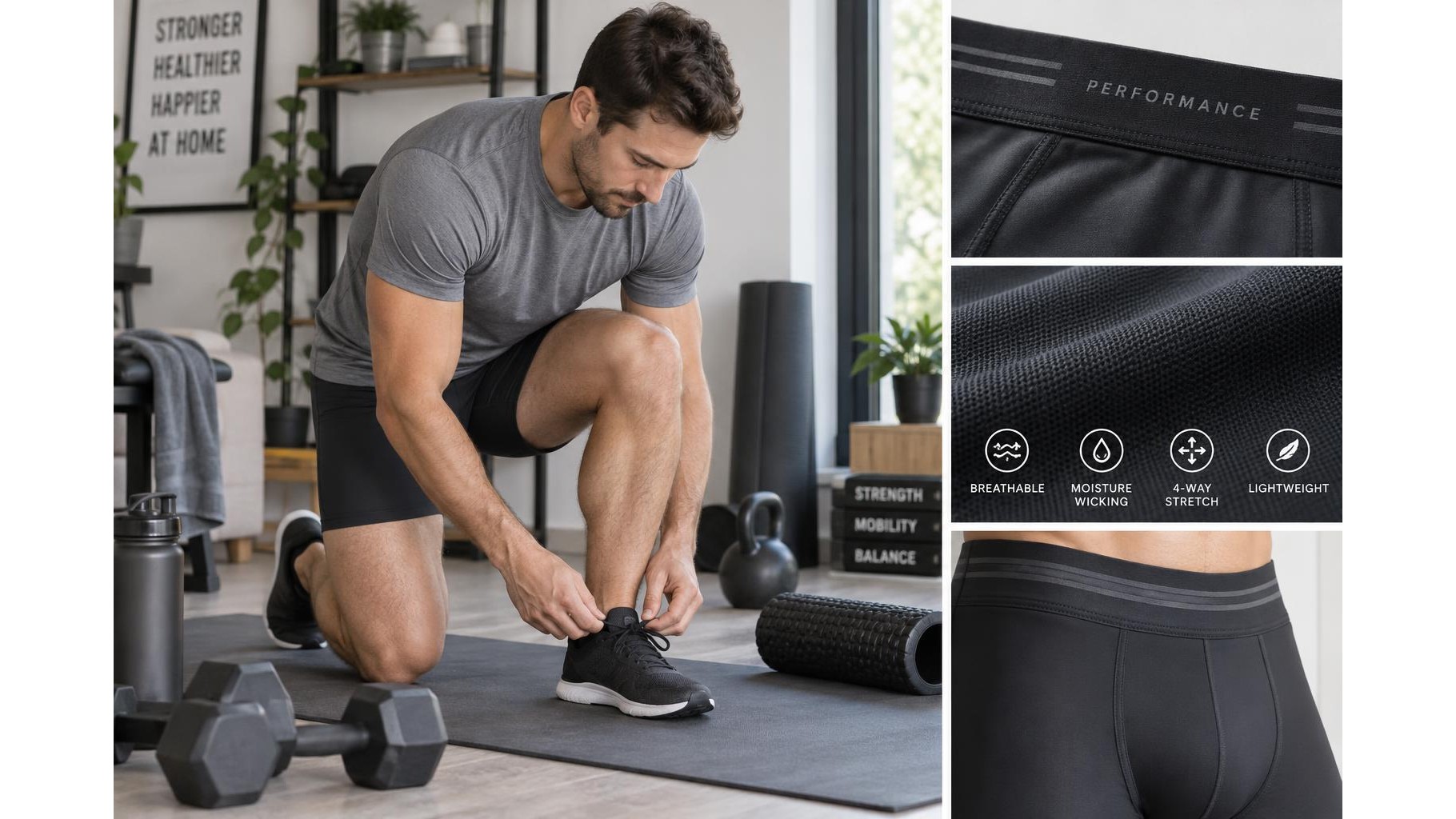
Workout underwear is easy to overlook until a waistband rolls, a seam rubs or damp fabric becomes distracting mid-session. At home, your routine may move from lifting to intervals to floor-based mobility, so the best choice should feel secure without restricting movement. Compare fabric, seams, waistband construction and moisture management, then use a few simple fit checks to find underwear that suits your body and training habits.
Choose fabric for the way you train
Technical underwear commonly uses synthetic fibres such as polyester or nylon blended with elastane. These fabrics tend to dry quickly and stretch with squats, lunges and cycling movements. Merino wool blends can feel soft and help manage odour, though they may cost more and need gentler care. Cotton can be comfortable for everyday wear, but it often holds moisture longer during sweaty cardio. Think about your typical session: for strength training or mobility, comfort and stretch may matter most; for high-intensity work, quick drying becomes more important. Check the care label too, since repeated heat can damage elastic fibres and shorten the garment’s useful life.
Look closely at seams and leg openings
Seams create pressure points where fabric meets skin, especially during repeated movement. Flat or low-profile seams can reduce rubbing compared with bulky raised stitching, while a smooth inner surface may feel better during floor work. Check the gusset area and the seam placement around the thighs, where friction often builds during cycling, jumping or deep squats. Leg openings should lie flat without pinching or creeping upward. If you are between sizes, compare the brand’s measurements rather than assuming that sizing is consistent across labels. A garment that twists or rides up during a few bodyweight squats is unlikely to feel better in a longer workout.
Assess the waistband construction
A waistband should hold the underwear in place without digging into your waist or folding when you bend. Wider waistbands can distribute pressure across a larger area, while a softer elastic edge may feel less restrictive during breathing drills and stretching. Look for a smooth finish and avoid designs that leave deep marks after a short wear test. If you prefer a higher or lower rise, make sure it stays positioned when you hinge, reach overhead and sit on the floor. The right amount of support is personal: secure does not have to mean compressive, and a firm fit should never limit comfortable breathing.
Match moisture management to session intensity
Moisture-wicking fabric moves sweat away from the skin, but performance also depends on fit and ventilation. Underwear that is too tight can trap heat; fabric that is too loose may bunch and rub. For short, low-sweat mobility sessions, a breathable, soft fabric may be enough. For intervals or longer strength circuits, look for quick-drying materials and a construction that does not stay clammy. Remember that underwear is only one layer: a cool room, airflow and changing promptly after training can also improve comfort. Wash technical garments after sweaty sessions according to their care instructions, and skip fabric softener if the label advises against it.
Use practical fit checks before committing
Try the underwear on and test it through the movements you actually do at home. Walk, squat, hinge, lunge, raise your arms and sit cross-legged. Notice whether the waistband rolls, the fabric pulls, the leg openings pinch or any seam scratches. A useful fit feels close to the body but allows a full range of motion, with no need to keep adjusting it. If possible, wear it for a short session before buying multiples. Keep track of the fabric blend, rise, leg length and size that work for you, so future purchases are easier to compare.
Comfortable workout underwear is a combination of a suitable fabric blend, smooth seams, a stable waistband and effective moisture management—not simply a tight fit or a performance label. Prioritise the movements and intensity of your home routine, then test the garment in motion. A few careful checks can help reduce rubbing, stay comfortable through sweaty sessions and make your training kit feel less distracting.