A compact adjustable kettlebell can bring the variety of a small weight collection into a single home-gym footprint. The right model should suit your exercises, current strength and plans for progression—not just promise the widest weight range. Compare how the plates or internal weights are changed, how securely they lock, and whether the handle feels comfortable during the movements you intend to train.
Choose a design that fits your routine
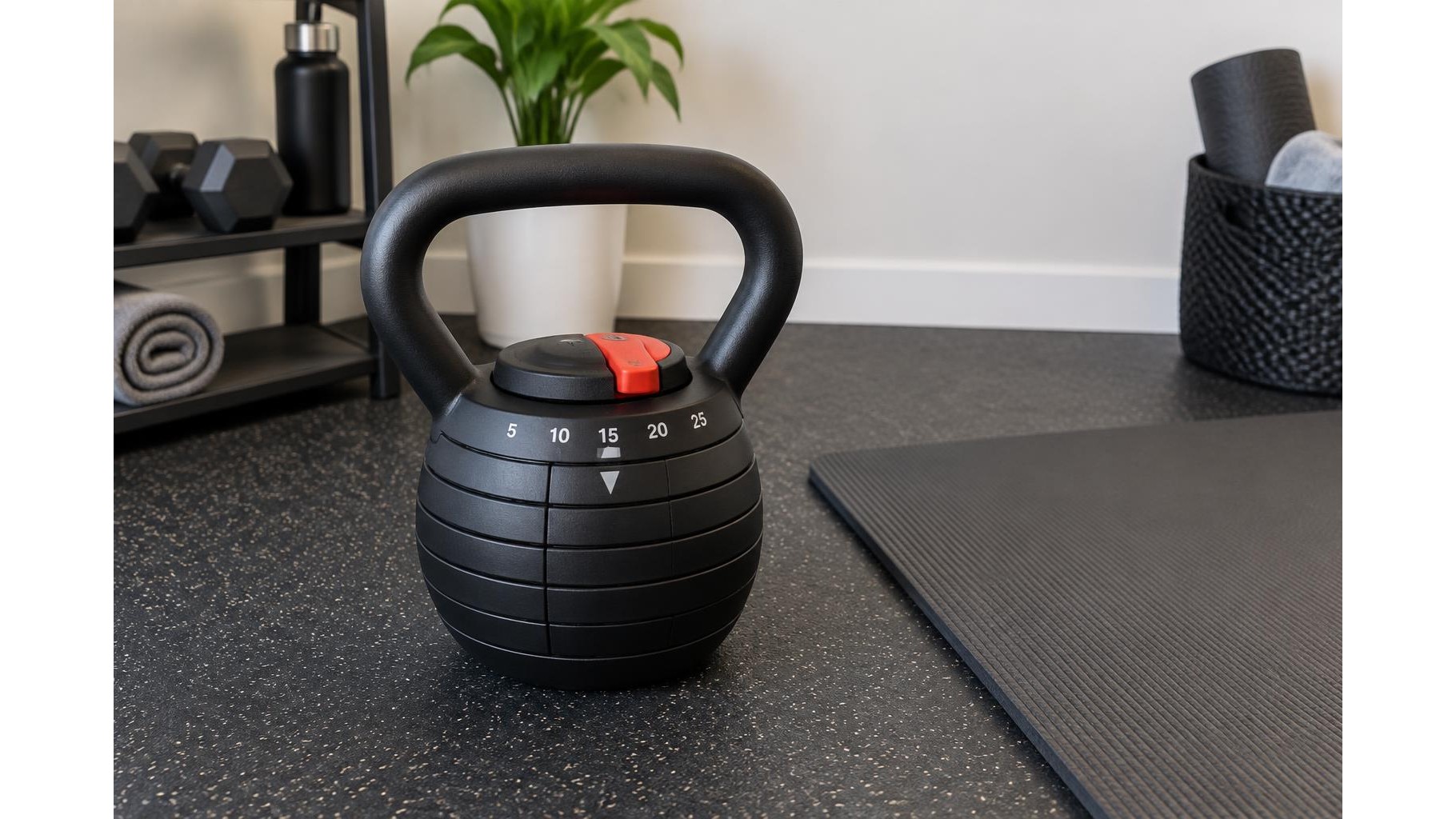
Adjustable kettlebells generally use either removable plates secured by a collar or a selector mechanism that changes the internal load. Plate-loaded designs are often straightforward and may offer smaller weight increments, but changing loads can take longer. Selector models are quicker to adjust between exercises and keep loose plates out of the way, though their mechanisms can add bulk and require careful handling. Check the manufacturer’s instructions, dimensions and storage requirements. A compact model should fit your available shelf or floor space while leaving room to lift, swing and set it down safely.
Match the weight range to your training
Look beyond the maximum load: the starting weight and the size of each increment matter just as much. Beginners may benefit from a manageable starting load and small steps that allow gradual practice of squats, presses and carries. More experienced lifters should check that the upper limit is challenging enough for their strongest intended movements. Remember that one weight will not suit every exercise. A load appropriate for a deadlift or goblet squat may be too heavy for a controlled overhead press. A useful range lets you train multiple movement patterns without forcing poor technique.
Inspect the locking mechanism
Because kettlebells move through dynamic paths, a secure locking system is essential. Find out exactly how the weight is selected and locked, and whether the manufacturer specifies a final check before lifting. The handle should not wobble, and plates or internal components should not rattle or shift when the unit is gently inspected. Do not assume that a selector dial alone proves the load is secured: follow the model’s instructions and confirm that every latch, pin or collar is fully engaged. If a part is damaged, loose or difficult to lock, stop using the kettlebell until it is repaired or replaced.
Prioritise grip and balance
A comfortable handle supports better control, especially during repeated swings, cleans and snatches. Check the handle’s thickness, shape and finish against your hand size. It should allow a firm grip without sharp edges, awkward seams or excessive slipping; chalk may help if the manufacturer permits it. Also consider the distance between the handle and the body, since cramped clearance can make two-handed holds uncomfortable. If possible, test the grip with both hands before buying. The kettlebell should feel balanced in a rack position and should not create an unexpectedly awkward wrist angle during presses.
Make progression and safety part of the plan
Choose a model that supports steady progression rather than encouraging rushed jumps in load. Small increments can help you build control before increasing resistance, while a clear weight indicator makes switching exercises simpler. Before every session, inspect the body, handle and locking components; confirm the selected load is secure; and check that the floor and training area are clear. Start with controlled repetitions, especially when learning ballistic movements, and avoid drops unless the product is explicitly designed to withstand them. Keep fingers clear of moving parts when adjusting the weight, and store the kettlebell where it cannot tip or become a trip hazard.
In summary, the best compact adjustable kettlebell balances a useful weight range with dependable locking, comfortable grip and convenient storage. Match its increments and maximum load to your experience and goals, then make a quick safety inspection part of every workout. A well-chosen model can support varied strength training at home while taking up far less space than a full set of fixed weights.