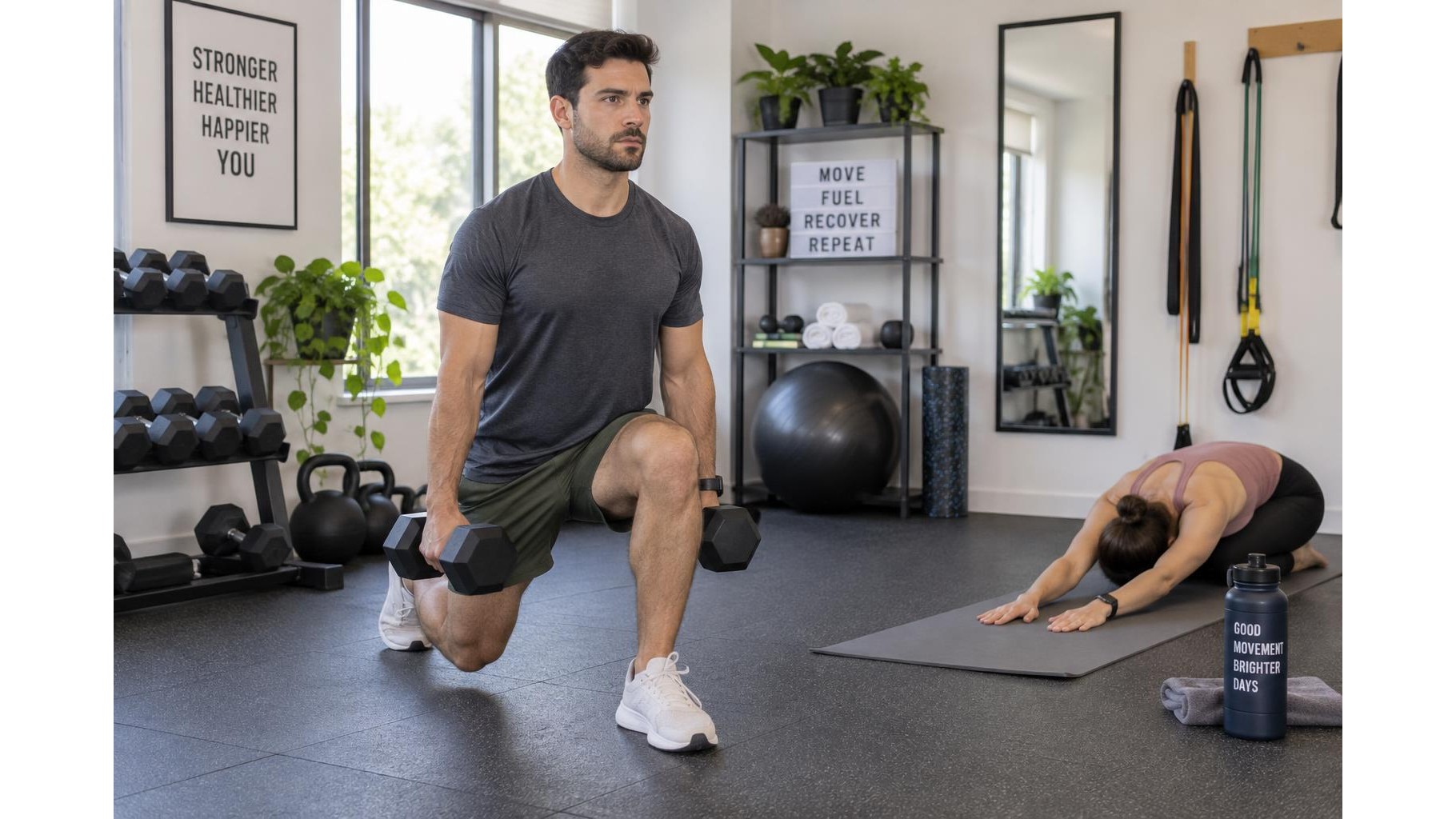
When the day is packed, a focused 30-minute dumbbell workout can keep strength and mobility in your routine without requiring a full gym setup. The key is to choose a few effective movements, keep transitions simple, and use brief mobility breaks to reset between exercises. Adjust the weights and pace to suit your experience, and aim for smooth, controlled reps rather than rushing.
Warm up with purposeful movement
Spend the first four minutes preparing your body. March in place or step side to side for a minute, then try eight bodyweight squats, eight hip hinges, and several gentle arm circles in each direction. Finish with alternating reverse lunges, using a comfortable range of motion. Keep moving at an easy pace and let your breathing gradually pick up. If you have a little more time, repeat the sequence rather than making each movement faster.
Choose a manageable strength circuit
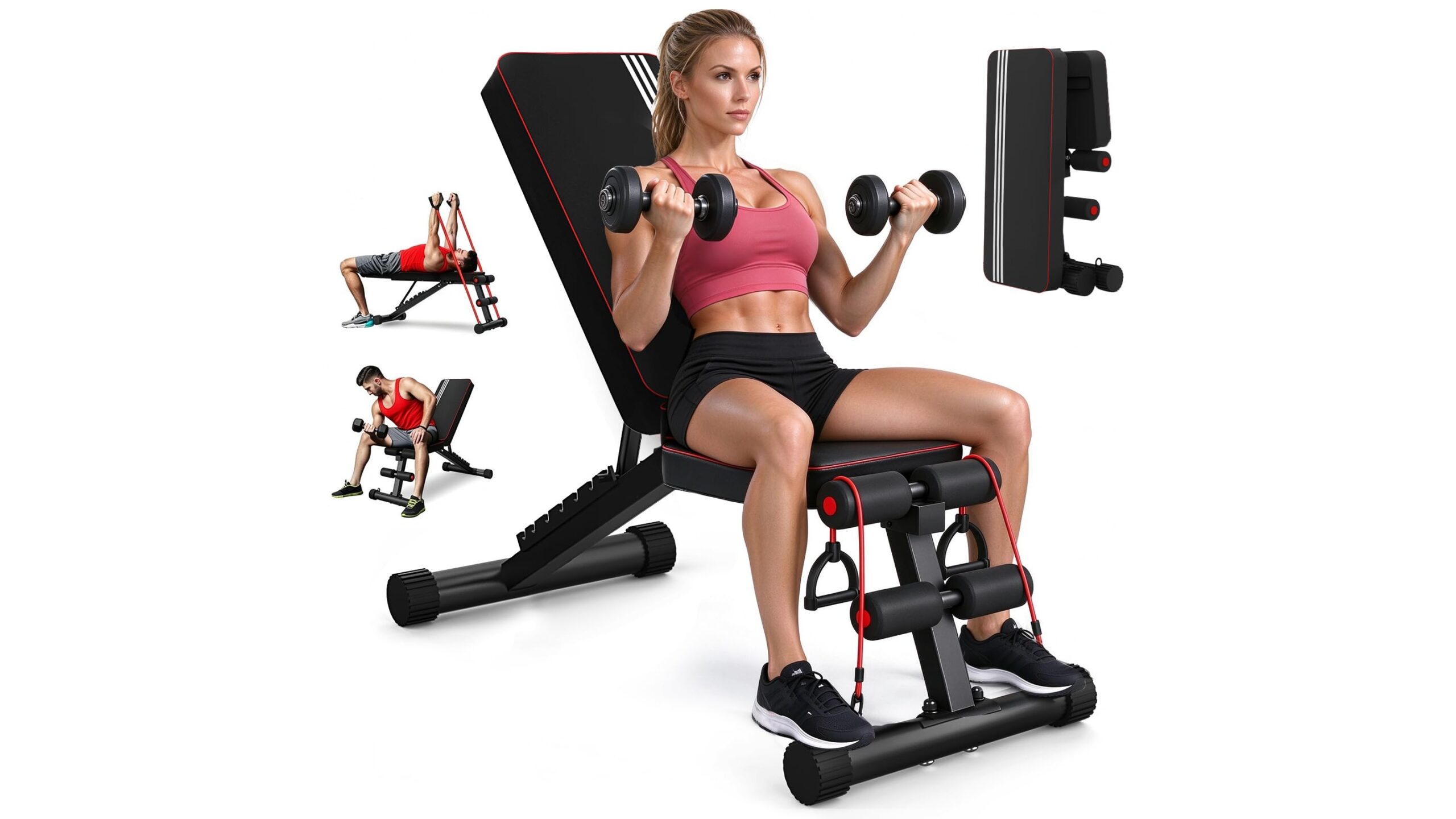
Set aside about 18 minutes for three rounds of four exercises: a dumbbell goblet squat, a one-arm dumbbell row on each side, a dumbbell floor press, and a Romanian deadlift. Work for 40 seconds per exercise, then take 20 seconds to rest or change position. After each round, rest for 60 seconds. Choose a load that lets you maintain good form and finish each interval with a few comfortable repetitions in reserve.
Scale each exercise to your level
New to strength training? Use one light dumbbell, reduce the work interval to 30 seconds, or complete two rounds instead of three. For squats, lower only as far as feels controlled; for rows, support one hand on a sturdy chair. If you do not have dumbbells, use bodyweight squats and hip hinges, and perform rows with a resistance band if available. More experienced exercisers can use heavier weights or a slower lowering phase, while keeping the same basic schedule.
Add short mobility breaks
Use transitions as mobility breaks rather than adding a separate, lengthy routine. Between rounds, spend 30 seconds on a comfortable hip-flexor stretch per side, then rotate your upper back gently from a hands-and-knees position. Keep stretches easy and breathe steadily; mobility work should feel relieving, not painful. If a movement feels uncomfortable, skip it or make the range smaller. These brief pauses help you reset your position and avoid turning the session into a race.
Cool down and check your effort
Reserve the final four minutes to bring your breathing down. Walk slowly around the room, then try a gentle chest stretch, a seated hamstring stretch, and a relaxed child’s pose, holding each for several breaths. You should finish feeling worked but not exhausted. If you are short on time, shorten the circuit slightly rather than skipping the warm-up or rushing through the final movements. Consistency and controlled technique matter more than squeezing in extra repetitions.
For a busy day, this plan combines a brief warm-up, a scalable dumbbell circuit, mobility resets, and a simple cooldown in half an hour. Keep the weights and intervals appropriate to your ability, and adapt the exercise choices to the equipment and space you have. A manageable session you can repeat is a practical way to build strength and maintain movement habits at home.