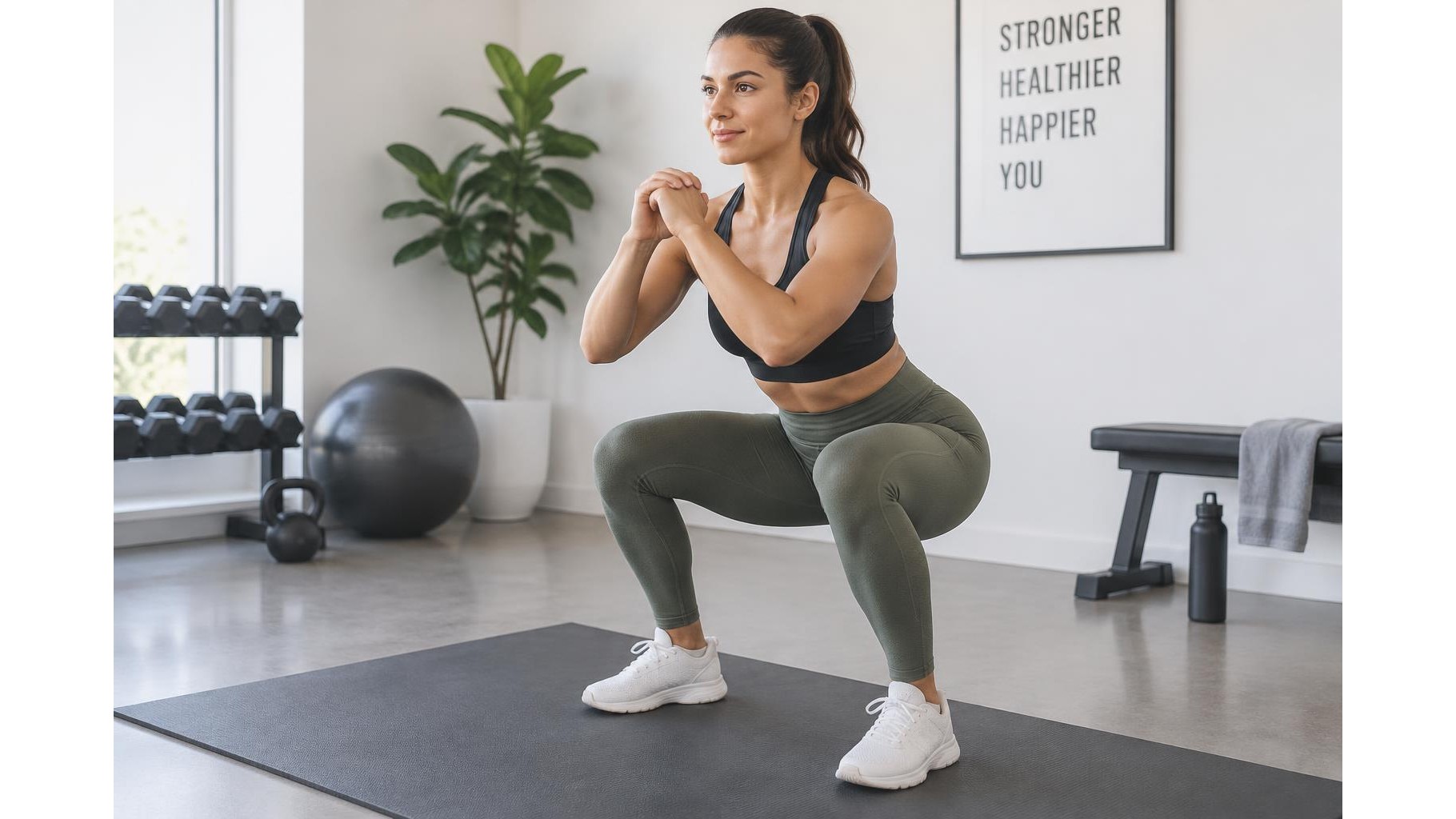
Indoor strength sessions put leggings through a wide range of movements: deep squats, lunges, glute bridges and stretches on the floor. The right pair should feel secure without trapping heat or restricting your range of motion. Rather than focusing on a single fabric claim, consider how fabric weight, stretch, waistband design, seams and fit work together during the exercises you actually do at home.
Choose a fabric weight that suits your workout
Fabric weight affects coverage, warmth and how substantial leggings feel. Lightweight materials can feel cooler during fast circuits, but very thin fabric may cling when damp or become less opaque under tension. A medium-weight, moisture-wicking blend is often a practical starting point for indoor strength training: it can offer coverage while still feeling comfortable as your body warms up. Look for a breathable knit that allows heat and perspiration to escape, and check whether the product description specifies a smooth, quick-drying finish. Fabric labels are useful, but the way the material feels against your skin matters too.
Check stretch and recovery
Leggings need enough four-way stretch to move with your hips and knees through a full squat or long lunge. A fabric that feels flexible while standing may still pull across the thighs or knees at the bottom of a movement. Try a few bodyweight repetitions: the material should move without digging in, sliding down or becoming uncomfortably tight. Recovery matters as well. After stretching, the fabric should return to shape rather than staying baggy at the knees or seat. A supportive fit should feel close to the body, not compressive to the point that breathing or movement feels restricted.
Assess the waistband in motion
A wide, stable waistband can help leggings stay in place during bending and floor work. Look for a comfortable rise that suits your torso and a waistband that lies flat without rolling when you hinge forward or sit back into a squat. A drawcord may provide extra adjustment, although some people prefer a smooth front with no ties or bulky details. Test the waistband through a few lunges and bridges: it should remain secure without pinching your abdomen. If you find yourself repeatedly pulling it up between sets, the cut or size may not be right for you.
Pay attention to seam placement
Seams influence both comfort and durability. Flat or low-profile seams can reduce rubbing where fabric meets skin, particularly around the inner thighs during repeated squats and lunges. Check that seams do not press into the hips or waist when you lie on the floor for core or glute exercises. Gusseted construction, where fabric is shaped to allow movement at the crotch, may improve comfort and reduce strain on seams. Turn the leggings inside out if possible and inspect the stitching: even, secure seams are a useful sign of considered construction.
Test opacity, fit and care
Use a few simple fit checks before committing to a workout. In bright light, bend, squat and stretch while checking that the fabric remains opaque and that the waistband stays put. Look for pulling, sheerness or excess fabric at the knees, seat and crotch. Follow the care label to help leggings stay comfortable over repeated sessions: wash them after sweaty workouts, use a gentle cycle and avoid high heat, which can affect elasticity. Skip fabric softener if the care instructions advise against it, as residue may reduce moisture-wicking performance.
For indoor strength training, the best leggings combine breathable coverage, dependable stretch, a stable waistband and smooth seams. Check opacity and comfort in the movements you perform most, then care for the fabric as directed. A thoughtful fit can help you focus on your workout instead of adjusting your clothing between sets.