Choosing adjustable dumbbells for a home gym is a balance between progression, usability and the amount of floor space you can spare. The right set should make it easy to increase resistance as you get stronger, while remaining comfortable and secure during everyday workouts. Compare the adjustment system, weight increments, handle feel and storage requirements before buying; a compact design is useful only if it also suits the exercises and loads you plan to use.
Choose an adjustment mechanism you will use
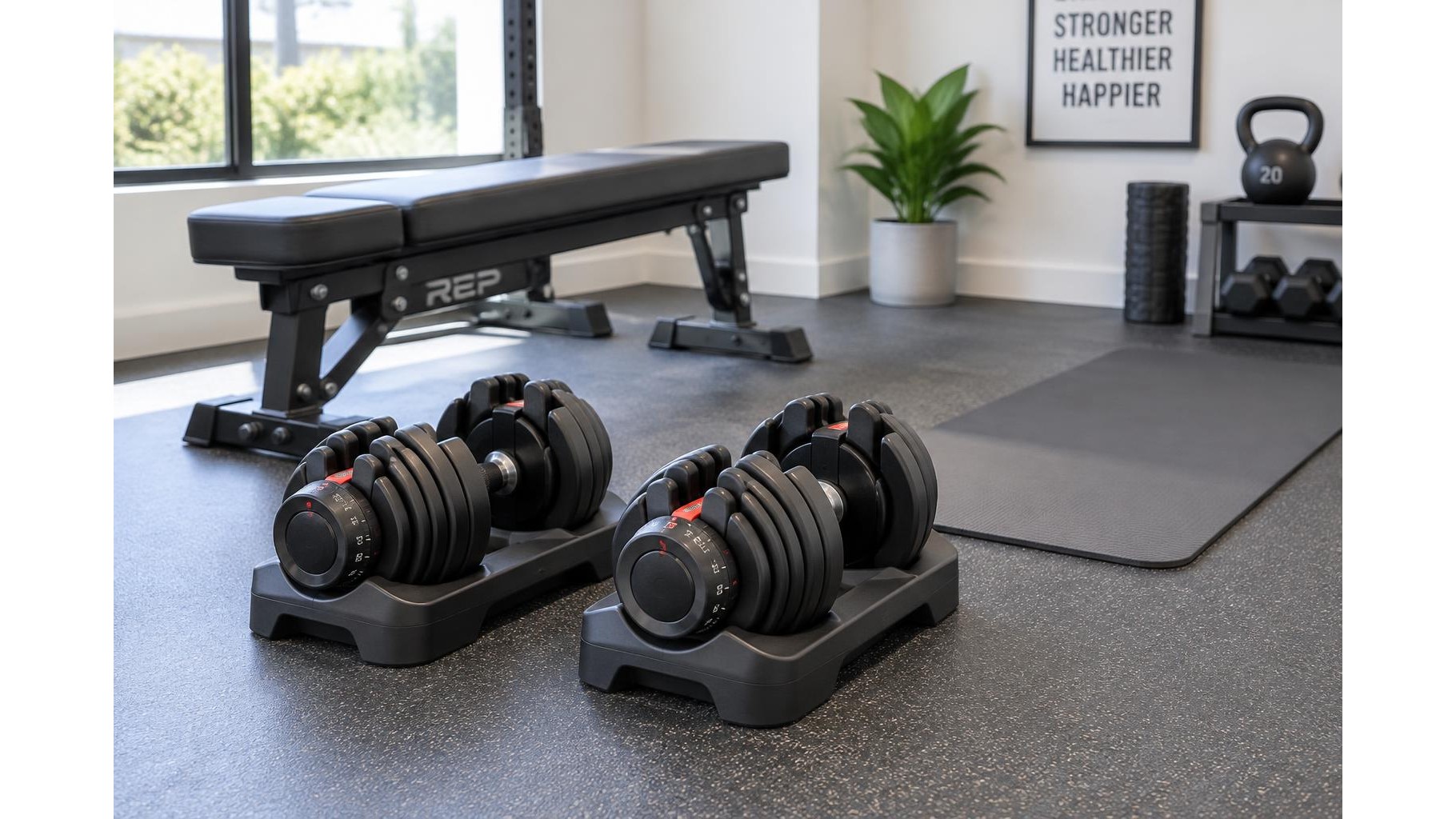
Adjustable dumbbells generally use a dial, selector pin, lever or spin-lock collars. Dial and selector systems can change the load quickly, which is convenient when alternating between exercises or using different weights for each hand. Spin-lock models usually require more time to change plates, but their straightforward design may appeal to people who prefer a familiar, simple setup. Whichever mechanism you choose, test how securely it locks and whether the adjustment is easy to operate without awkwardly handling the weight. Check that the dumbbell is returned to its cradle or base correctly before changing the setting, and follow the manufacturer’s instructions rather than forcing a stuck selector.
Match the weight range to your training goals
For progressive training, consider both the maximum load and the smallest available increase. Beginners often benefit from lighter starting weights and manageable increments that support good technique while strength develops. Intermediate lifters may need a higher maximum, particularly for lower-body movements such as goblet squats and Romanian deadlifts. Remember that different exercises require different loads: a weight suitable for rows may be too heavy for lateral raises. A set with fine increments can help you progress gradually, but there is little value in paying for a very high ceiling if it is unlikely to be used. Check whether the stated capacity applies to each dumbbell or to the pair.
Prioritise grip comfort and control
The handle is the part you touch throughout a session, so its diameter, surface and shape matter. A secure, comfortable grip helps you stay in control during presses, rows and carries. Knurled metal can provide traction, while a smoother or coated handle may feel gentler on the hands; preferences vary, so inspect product measurements and descriptions where possible. Check that the handle is long enough for your hand and that weight plates or housings do not press uncomfortably against your wrists. If you train with sweaty hands, consider whether the grip material is easy to clean and remains secure when damp. Good control is more important than decorative finishes.
Measure your storage space before buying
Compact dumbbells can free up room compared with a rack of fixed weights, but the base or storage tray still needs a stable, accessible place. Measure the intended shelf or floor area, including space to lift each dumbbell out and return it safely. Also consider the overall length of the selected weight: some adjustable models become wider as plates are added, which can affect close-grip movements and positioning on a bench. Store the set on a level surface, away from walkways and damp areas. A tidy home-gym layout makes it easier to train consistently and reduces the chance of tripping over equipment.
Check safety, warranty and practical details
Inspect how the plates are retained and whether the locking system prevents movement during a lift. Before each workout, make sure both dumbbells are set to the intended load and that all selectors, collars or pins are fully engaged. Avoid dropping adjustable models unless the manufacturer explicitly says they are designed for impact; repeated drops can damage the mechanism or floor. Review the warranty, replacement-part availability and any stated maintenance requirements. If possible, try the adjustment process in person, or choose a seller with a clear returns policy. These details can matter as much as the advertised number of weight settings over years of use.
For a beginner home gym, favour comfortable handling, secure locks and useful lighter increments; for an intermediate programme, make sure the maximum load will support your key exercises. Measure your storage space, compare the full dimensions and choose an adjustment system you can operate confidently. The best compact set is one that fits your room, encourages gradual progression and feels safe every time you train.