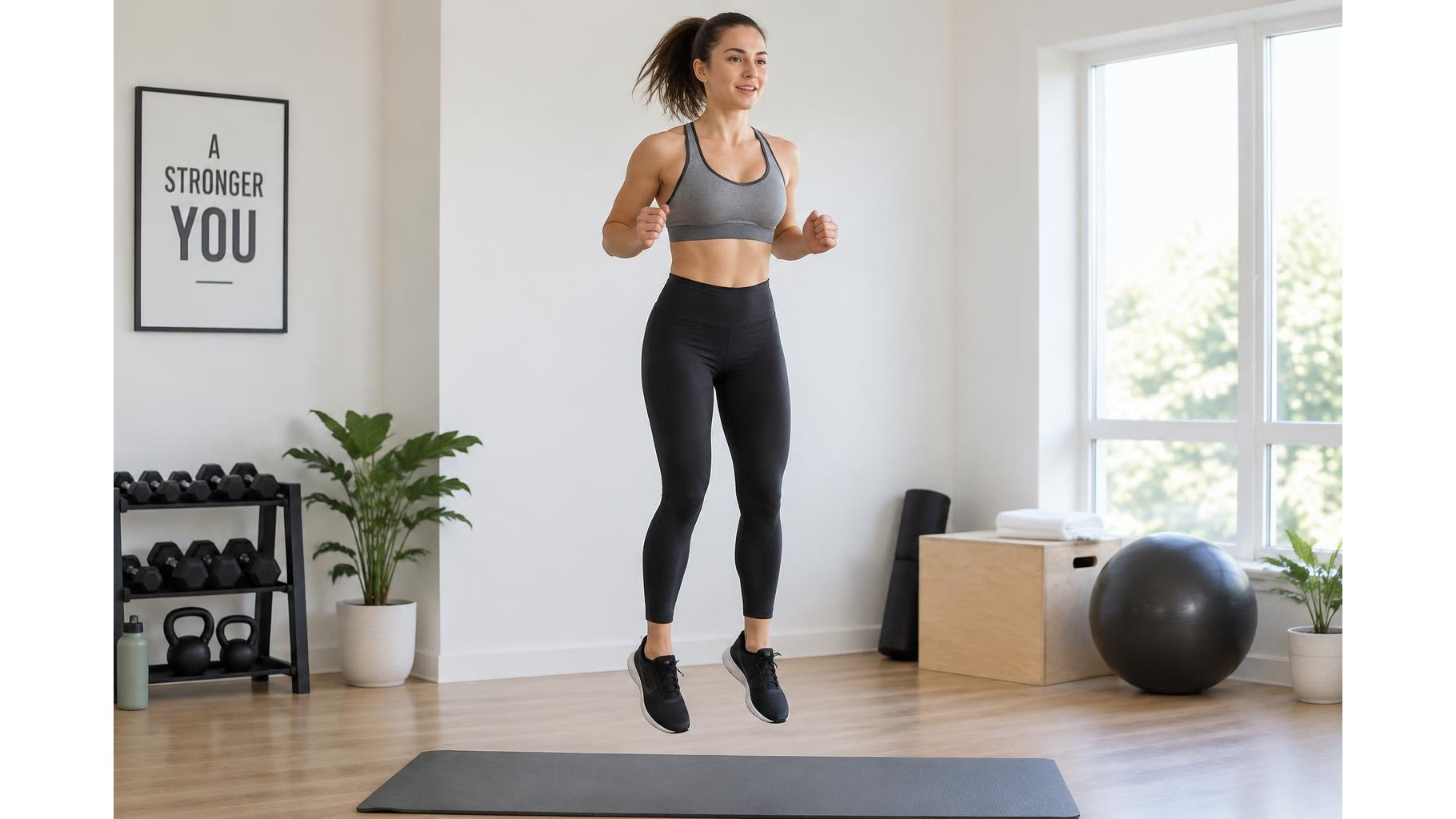
Jumping jacks, burpees and fast interval circuits put repeated force through the chest, so an everyday bra may not provide enough control. The right high-impact sports bra should feel secure without restricting breathing or movement. Fit matters more than a particular style: assess the band, cups, straps and fabric together, then test the bra with movements similar to your workout.
Start with a firm, level band
The band provides much of a bra’s support. It should sit level around your torso, feel snug and stay in place when you raise your arms, but should not make breathing uncomfortable. Check that you can slide a couple of fingers underneath it without forcing them. If the band rides up your back or shifts during a small jump, it may be too loose; if it digs in or leaves painful marks, try a larger band or a different cut. Fasten a new bra on its loosest hook where applicable, so you can tighten it as the elastic relaxes over time.
Choose cups that contain without compressing
For a fuller or more separated fit, moulded or encapsulation cups can support each breast individually. Compression styles hold the chest closer to the body and can suit many people, particularly at lower impact levels, but should not flatten painfully. In either design, check for spillage at the top or sides, empty fabric, wrinkling and seams pressing into breast tissue. The centre panel should sit comfortably against the chest when the bra is designed to do so. Remember that cup sizing varies between brands; use the size chart as a starting point and assess the fit on your body rather than relying on the label alone.
Look for straps that stay put
Straps should feel secure, lie flat and remain in place while you reach overhead or rotate your shoulders. Wider straps can spread pressure, while adjustable straps make it easier to fine-tune the fit. Racerback and cross-back designs may offer extra stability for some body shapes, but they are not automatically more supportive: check that they do not pull at the neck or limit shoulder movement. If adjusting the straps is the only way to keep the band or cups in position, revisit the overall size and shape instead of overtightening them.
Assess bounce control with movement
Try the bra before committing to a full session, using clean skin and any removable pads in their intended position. Jog on the spot, do several star jumps, reach overhead and perform a few burpees. Notice whether the chest feels controlled in every direction, the band stays level and the bra does not chafe or shift. Support should feel steady, not painfully restrictive. If possible, repeat the checks at workout intensity: a fitting-room walk is not a reliable test for interval training. A mirror can help reveal movement, but comfort and secure containment are the priorities.
Balance breathable fabric and easy care
Choose a moisture-wicking fabric that feels comfortable against your skin and dries reasonably quickly between sessions. Mesh panels can improve airflow, while smooth seams and soft edges help reduce rubbing during repeated movement. A bra that is too tight may trap heat and make breathing feel restricted; one that is too loose may allow damp fabric to shift and chafe. Check the care label, wash after sweaty workouts and avoid fabric softener if the manufacturer advises against it, since it may affect performance materials. Let the bra air-dry when possible to help preserve its stretch and support.
In summary, a supportive choice combines a snug, stable band, cups that contain comfortably, straps that stay in place and breathable, low-chafe fabric. Test the fit with jumping and interval-style movements before relying on it for a full home workout. If the bra causes pain, persistent rubbing or excessive movement, try another size or design; the best option is the one that keeps you secure while allowing you to breathe and move freely.