After a long stretch at a desk, your ankles may feel stiff when you stand, walk or begin a workout. A few minutes of gentle movement can help you explore a more comfortable range before training. This routine needs no special equipment: move slowly, use support where helpful, and avoid forcing a stretch. It is intended for general mobility, not to diagnose or treat an injury.
Start seated with controlled ankle circles
Sit near the front of a sturdy chair, with both feet lifted just clear of the floor. Make small, unhurried circles with one foot, moving from the ankle rather than swinging the whole leg. Try six to eight circles in one direction, then reverse; repeat on the other side. Keep the motion smooth and within a comfortable range. If a circle catches or feels uncomfortable, make it smaller or pause. The goal is easy movement, not a deep stretch or a test of flexibility.
Warm the calves with supported raises
Stand facing a wall or hold the back of a stable chair. Place your feet about hip-width apart and rise slowly onto the balls of your feet, keeping your weight even across both sides. Lower with control until your heels return to the floor. Begin with eight to ten repetitions, resting whenever you need to. Keep your knees relaxed rather than locked, and avoid bouncing at the top. These calf raises add gentle movement through the ankles while asking the lower-leg muscles to work. Use a smaller lift if that feels more comfortable.
Explore a supported knee-to-wall movement
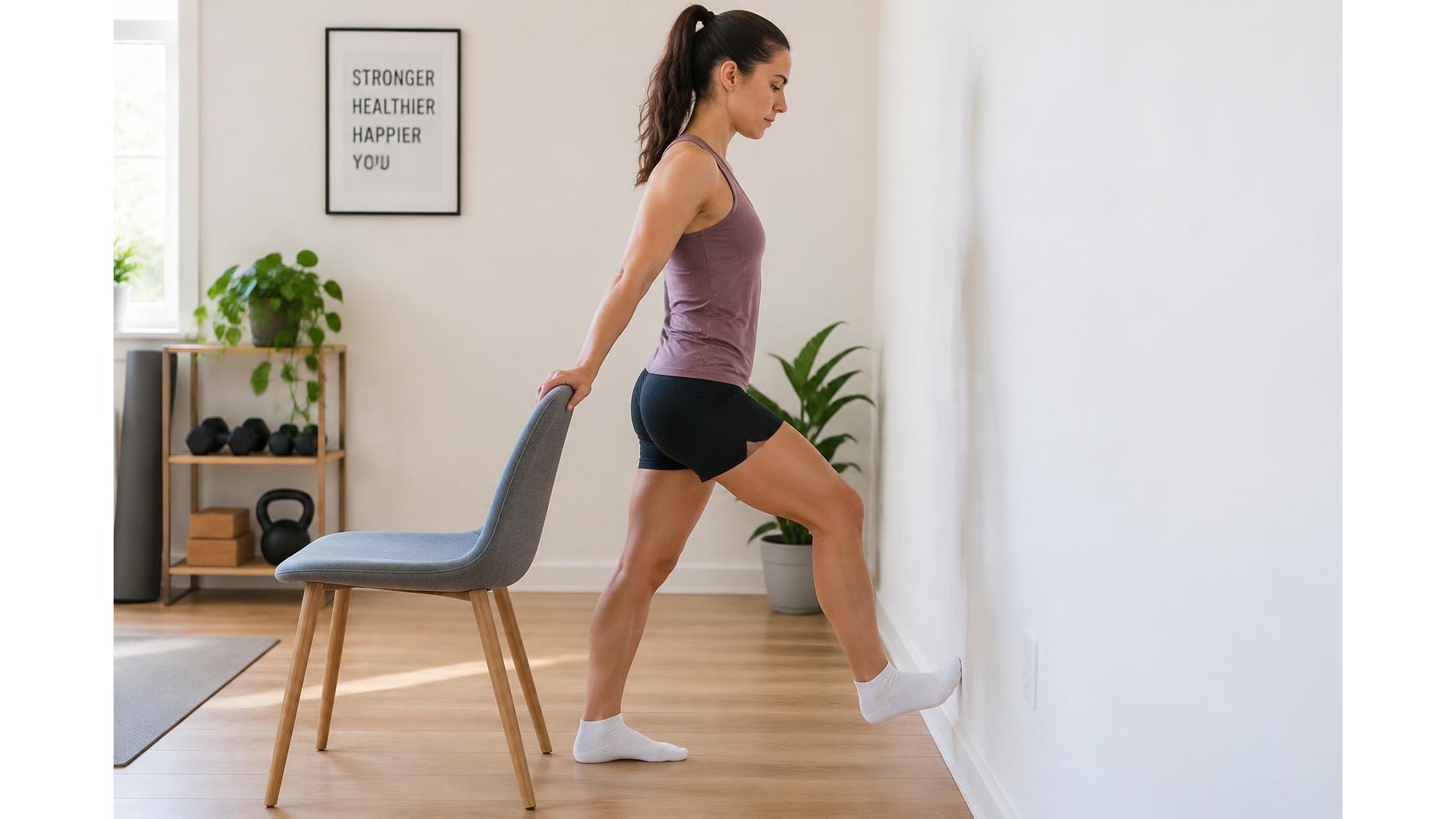
Face a wall and place one foot a short distance away, keeping the heel grounded. Hold the wall lightly for balance. Slowly bend the front knee toward the wall, tracking it in line with the middle toes. Move only as far as you can while the heel stays down and the motion remains comfortable; then return to the start. Try six to eight easy repetitions, then switch sides. If the knee does not reach the wall, that is fine: the distance is only a guide, not a target. Adjust your stance to find a gentle range.
Keep the range easy and the pace unhurried
Use a steady breath and avoid pushing into sharpness, pinching or strong discomfort. A mild sense of movement or stretch may be acceptable, but it should not build with each repetition. Reduce the range, slow down or stop if symptoms worsen. Do not try to compensate by lifting the heel, twisting the foot or forcing the knee forward. If you have a recent ankle injury, ongoing swelling, significant pain or uncertainty about what movement is suitable, seek advice from a qualified health professional before continuing.
Fit the routine into your day
One comfortable round may be enough after sitting; you can repeat it later if it continues to feel good. Consider standing up periodically during desk time and taking a few ordinary steps, rather than waiting until your ankles feel very stiff. Before a workout, use the routine as a gentle preparation, then progress into your usual warm-up. Notice whether both sides feel similar, but do not treat a difference as something to correct by force. Consistency and comfort matter more than adding repetitions or chasing a particular range.
A simple way to get moving again
This short sequence combines ankle circles, supported calf raises and controlled knee-to-wall movements to ease into motion after prolonged sitting. Keep each exercise slow, use support for balance and stay within a range that feels comfortable. Stop if pain worsens, and seek professional guidance if symptoms persist or concern you. Gentle, regular movement can be a practical start to a more comfortable warm-up at home.