When a standard weight increase feels too large, fractional plates can make strength training more gradual and manageable. These small plates—also called micro plates—let you add a little weight at a time, helping you keep progressing without compromising your technique. Choosing a set is about more than finding the smallest number: check the increments, bar compatibility, fit, materials and how you plan to load them.
Choose useful increments for your training
Fractional sets commonly include plates from around 0.25 kg to 1 kg, although the exact selection varies. A pair of 0.25 kg plates adds 0.5 kg to the bar; a pair of 0.5 kg plates adds 1 kg. Think in terms of the total increase across both ends, not the weight of one plate. Smaller steps can be especially useful for upper-body lifts, where a regular plate jump may represent a large percentage increase. For larger lifts, 1 kg or 1.25 kg increments may be more practical. Pick a range that suits your current training rather than paying for sizes you are unlikely to use.
Check the sleeve diameter and plate opening
Before buying, measure or verify the diameter of your barbell sleeve and compare it with the plate’s centre hole. Many home bars use sleeves designed for 2-inch (50 mm) plates, while some lighter or specialist bars use a different size. A loose fit can rattle or shift; an opening that is too small will not fit at all. Also check whether the set is intended for a standard barbell, an Olympic bar or both. Product descriptions should state the hole diameter clearly—do not rely on appearance alone.
Assess how the plates stay in place
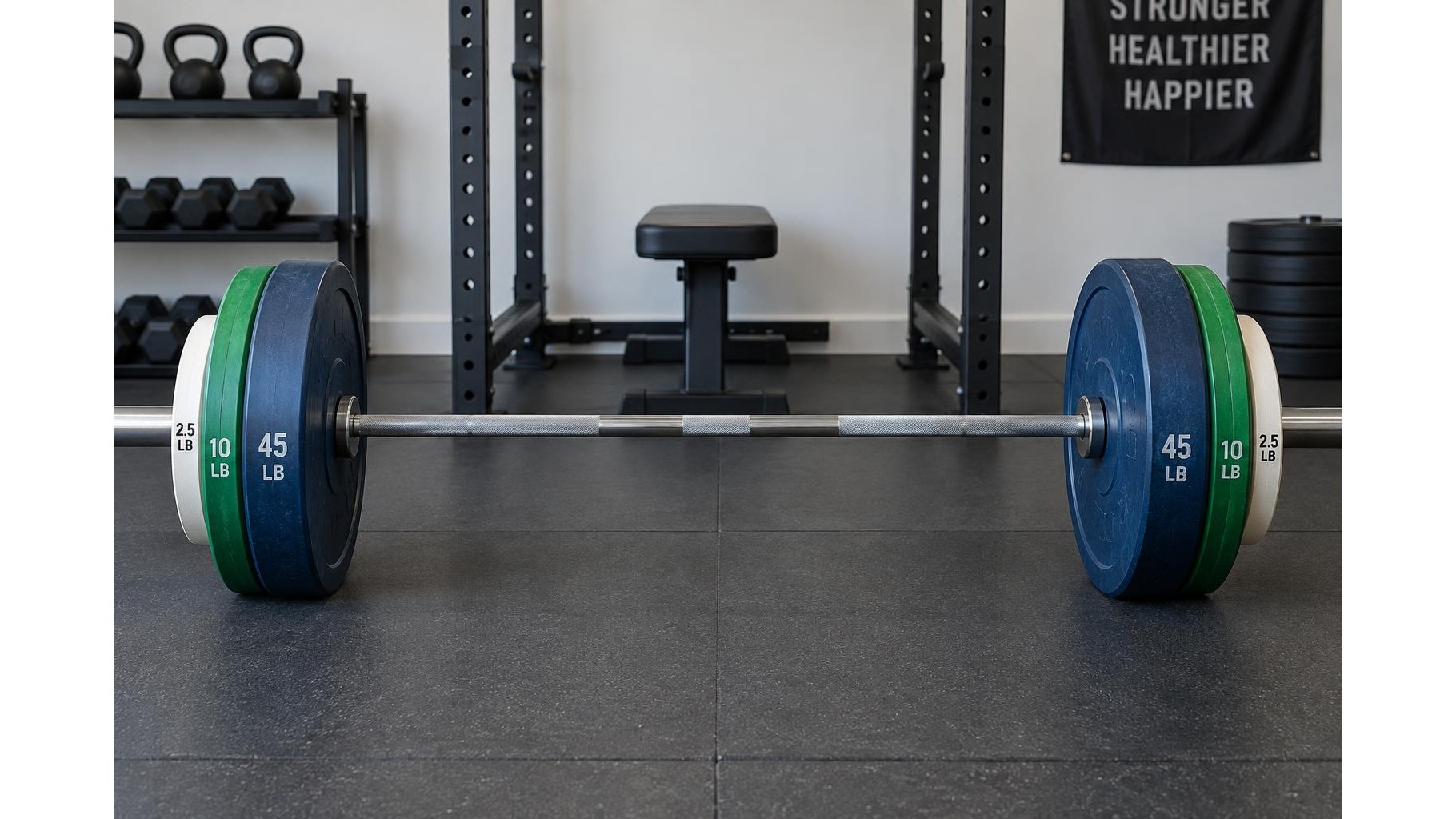
Small plates can move more easily than full-size plates, so consider how they are secured. Some sets use a compact plate shape that sits neatly on the sleeve; others may include a strap, clip or other retention method. Confirm what is included and whether it works with your bar and collars. Load plates evenly on both sides, keep them close to the larger plates and secure the collars before lifting. If a fractional plate does not sit stably, do not use it for dynamic movements or lifts where it could slide off.
Compare materials, coating and accuracy
Fractional plates may be made from steel, cast iron or another dense material, with painted, rubberised or coated finishes. A compact design can help preserve sleeve space, particularly when several small plates are loaded together. Look for clear weight markings and a finish that suits your training space: coatings can reduce noise and protect against scuffs, but they do not replace careful handling. Check the seller’s stated weight tolerance if precision matters. Small plates are useful only when their actual loads are consistent enough to make your planned increments meaningful.
Plan for safe, repeatable progression
Use microloading to support sound training, not to force progress every session. Add a small amount only when you can complete your planned repetitions with controlled technique and an appropriate level of effort. Keep a record of the load and reps so that tiny increases are easy to track. Before each set, confirm that both sides are balanced, the plates are fully on the sleeves and the collars are secure. Store the small plates together so they are easy to find and less likely to be lost among larger equipment.
A good fractional plate set matches your bar, offers increments you will actually use and stays secure during your lifts. Check the total increase made by a pair, the hole diameter, included retention hardware and stated weight accuracy before purchasing. With those details covered, fractional plates can make home strength progress more precise, gradual and repeatable.