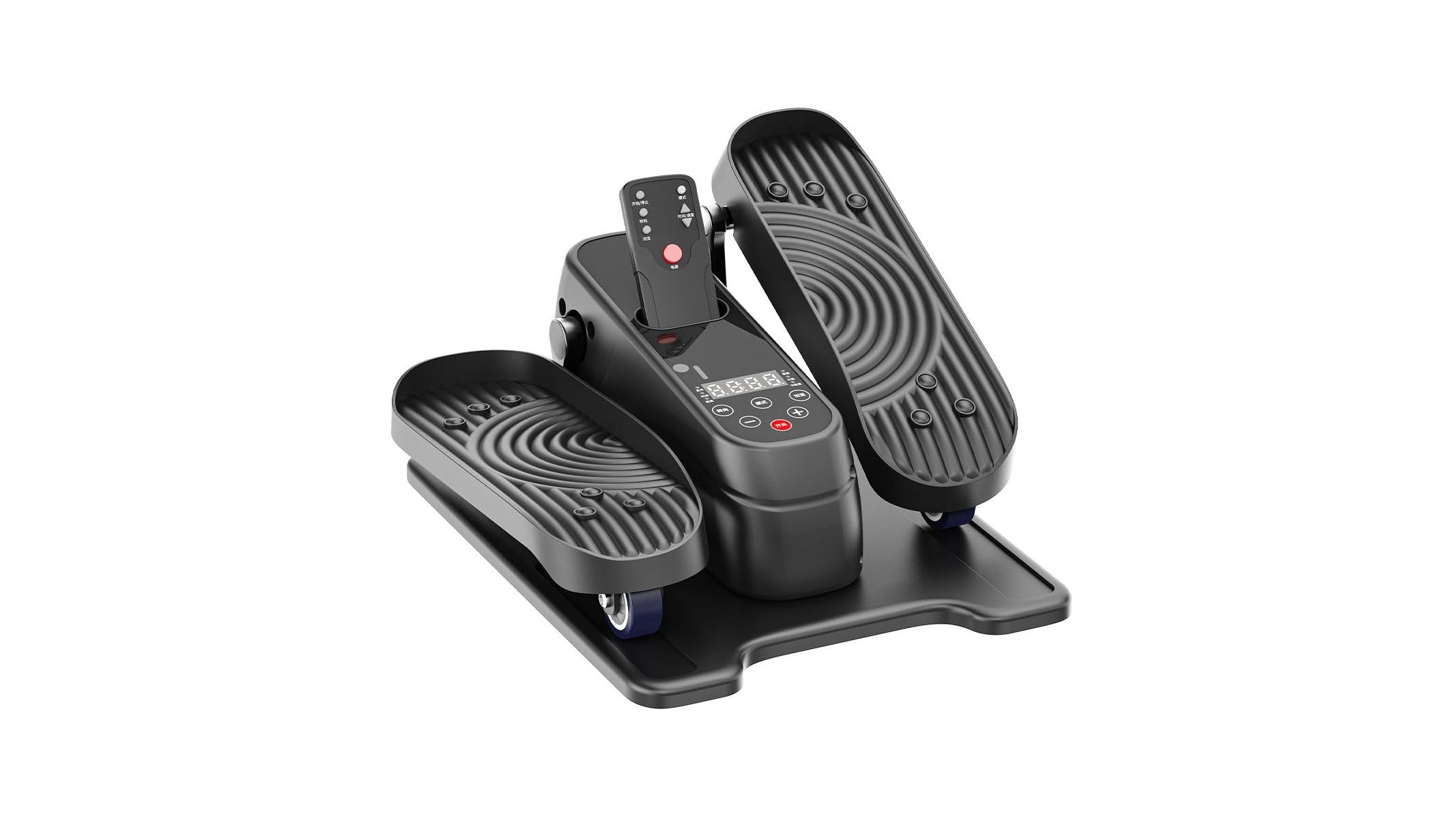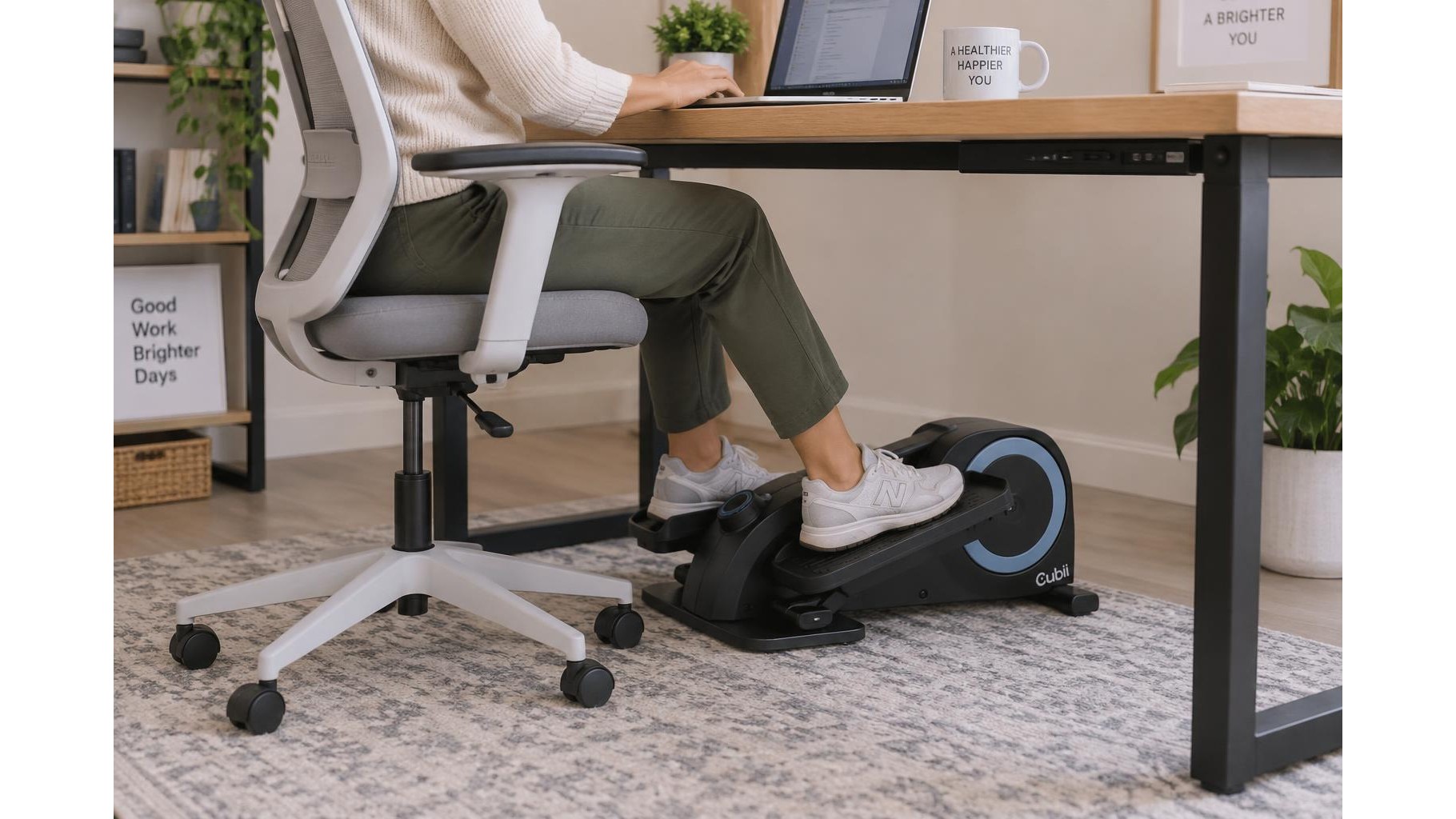
An under-desk elliptical can add gentle movement to a workday without taking up the space of a full exercise machine. The right choice depends on more than footprint: assess the pedal path, resistance range, knee clearance, stability and noise in the context of your desk and chair. Seated pedaling can support light activity, but it is not a complete substitute for varied exercise.
Start with pedal motion and stride comfort
Compare how the pedals travel: some machines create a compact circular motion, while others feel more like a shallow elliptical glide. There is no universally best path; comfort depends on your leg length, mobility and preferred cadence. Check the machine’s dimensions and, where possible, try the movement before buying. Your feet should remain supported, with no awkward reaching at the top or bottom of each rotation. A smooth, controlled motion is usually easier to sustain during desk work than a movement that feels jerky or forces you to pedal quickly.
Match resistance to seated use
Resistance settings determine how much effort pedaling requires. A broad range can make it easier to begin lightly and adjust as your fitness or comfort changes. For office use, prioritise small, predictable changes rather than assuming the highest setting is the most useful. If the resistance is too demanding, you may tense your legs or lose focus; if it is too low, the pedals may spin without much control. Consider whether adjustment is straightforward from your seated position and whether the mechanism uses a manual dial, buttons or a remote.
Check desk and knee clearance
Measure the space under your desk before choosing a unit. Account for the elliptical’s height, your shoes, the chair’s position and the movement of your knees throughout a full pedal cycle. A machine that fits when stationary may still cause your knees to hit the underside of the desk once your legs are moving. Leave enough room to sit upright and change posture comfortably. Also check that the base does not interfere with chair wheels or prevent you from rolling back safely.
Look for stability and manageable noise
A compact trainer should stay planted on the floor rather than shifting with each stroke. Look for a sufficiently wide base, grippy feet and a weight that feels stable but remains practical to reposition. On hard floors, a mat can help protect the surface and limit movement. Noise matters in shared rooms and video calls: reviews can reveal whether a product clicks, squeaks or develops sounds over time. Keep pedals and moving parts clean, and follow the maker’s maintenance guidance to help preserve smooth operation.
Think about fit, storage and everyday habits
Consider the complete setup, not only the machine. Check its assembled size, weight, handle or carry points, and whether it can be stored under a desk or beside a cabinet. A display may show time, distance or estimated calories, but these figures are best treated as rough indicators rather than precise measurements. Choose controls you can use without interrupting work, and start with short, easy sessions to see how your posture and concentration respond. Stop if you feel pain, numbness or unusual discomfort.
Use seated pedaling as one part of activity
Under-desk pedaling is best viewed as a way to add low-intensity movement during otherwise sedentary periods. It does not provide the same demands as walking, strength training or exercise that raises your heart rate more substantially. Break up long sitting spells, take movement breaks and include a mix of activities suited to your abilities and health. If you have a medical condition or are unsure whether seated pedaling is appropriate, ask a healthcare professional for advice.
In short, compare pedal comfort, adjustable resistance, knee clearance, stability and noise against your actual workspace. A well-fitting compact elliptical can make light movement easier to incorporate into desk time, while remaining one useful component of a broader, balanced activity routine.