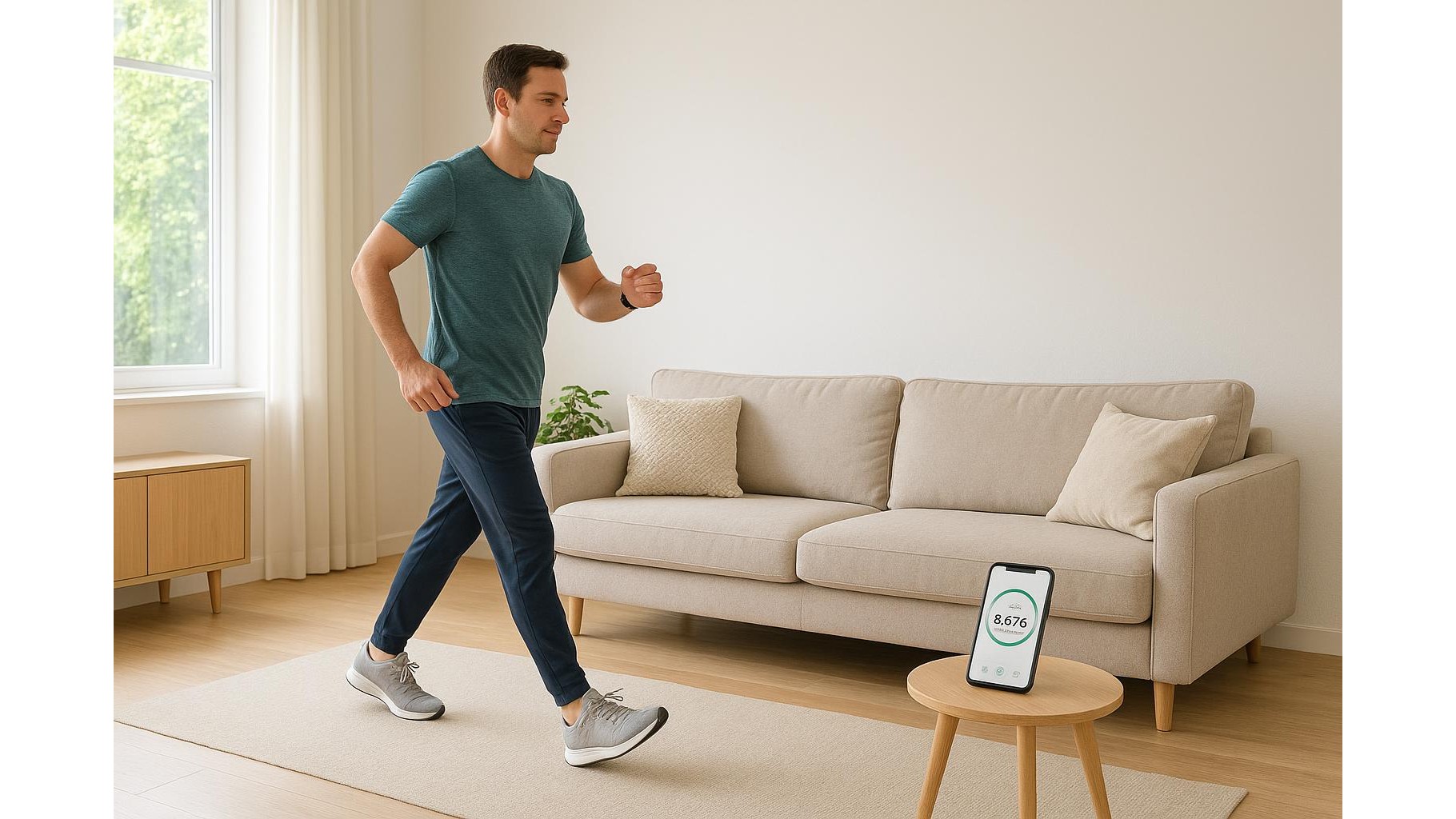
Turning your living room, hallway and kitchen into a personal walking loop is one of the simplest ways to move more during the day. With nothing more than a step counter, a basic fitness tracker or the pedometer app already on your phone, you can turn ordinary household routines into structured activity, set realistic daily step goals and track your progress without leaving the house.
Why counting steps at home actually works
Home-based step counting works because it breaks exercise into tiny, achievable chunks that fit naturally into your day. Instead of worrying about long workouts, you focus on accumulating movement: pacing while the kettle boils, walking laps during phone calls, or doing circuits around your flat in the evening. A step counter watch or simple pedometer keeps a running tally so you can see how much your everyday habits add up. This real-time feedback is motivating: even a few hundred extra steps feel like a win, and over time those wins build into consistent activity that supports heart health, weight management and better energy.
Using your smartphone as a pedometer
Your smartphone is often the easiest place to start with indoor step tracking. Most modern phones include a built-in pedometer app that uses motion sensors to count steps when the phone is on your body. To get the best data at home, keep your phone in a trouser pocket or fitted waistband whenever you move around, rather than on a table. Open your health app, enable step tracking and set a modest goal – for example, 4,000–6,000 steps a day if you are currently quite sedentary. Check your progress at lunch and in the evening; if you are short of your goal, add a 5–10 minute walk around the house, climbing stairs or walking loops between rooms until you hit your target.
Choosing a simple wearable for all‑day step tracking
If you prefer not to keep your phone in your pocket, a basic fitness tracker or step counter watch is ideal for home use. Look for a lightweight band with an easy-to-read display, automatic step counting and a long battery life, rather than advanced sports features you may never use indoors. An entry-level tracker worn on your wrist can capture every step from the moment you get out of bed, including trips to the bathroom, the kitchen and around the living room. Compared with phone-only tracking, this gives a more accurate picture of your true activity levels at home and makes it easier to build streaks of consistent daily movement.
Building realistic step goals and routines at home
To stay motivated, start with realistic step goals based on your current baseline. Wear your step counter for a few normal days and note your average. Then increase that number by 10–20% for the coming week. For example, if you average 3,000 steps, aim for 3,500–3,600. Layer simple routines onto your day: 200–300 steps each time you make tea, 500 steps during phone calls, 1,000 steps after dinner. Use your tracker’s alerts or your phone’s reminders to nudge you when you have been inactive for too long. Over several weeks, continue to nudge your goal upward until you reach a sustainable daily target, whether that is 7,000, 8,000 or 10,000 steps, depending on your fitness and schedule.
Designing indoor walking routes around your home
To turn your home into a walking track, create a few simple indoor routes and learn roughly how many steps they are worth. You might walk laps around your living room furniture, pace a corridor, or create a loop that goes from bedroom to kitchen to front door and back. Use your pedometer or fitness tracker to count how many steps one full circuit takes, then multiply to build quick sessions: for example, ten laps of a 100-step circuit gives you 1,000 steps. If you have stairs, add them for a more intense mini-workout. Keep routes clutter-free and safe, and vary your pace – slower for phone-call pacing, brisker for intentional five-minute power walks between tasks.
Tracking progress and staying consistent over time
Consistency beats intensity when it comes to step-counting at home. Use your step counter app or wearable dashboard to review daily and weekly totals. Look for trends rather than perfection: are you moving more this week than last? Celebrate streaks of days where you hit your target, and do not be discouraged by quieter days – they are part of the process. If motivation dips, adjust your goal slightly downward and rebuild momentum with easier wins, or create a new indoor walking route to refresh your routine. Over time, these home-based steps form a powerful foundation of daily movement that supports any other training you choose to do.
By combining simple pedometer apps, user-friendly wearable step counters and a few creative indoor walking routes, you can turn almost any home into an effective walking environment. Focus on realistic goals, frequent short bouts of movement and regular tracking. Your step count will climb, your confidence will grow and staying active will feel like a natural part of your home life rather than a chore.