Keeping a small home gym organised is not just about aesthetics – it is about safety, space optimisation and protecting your flooring. A well‑chosen compact dumbbell storage solution lets you lift in a clutter‑free area, reduces trip hazards and makes every workout smoother. From low‑profile racks to under‑bench trays, the right set‑up depends on your weights, available space and the type of floor you are training on.
Clarify your space, weights and training style
Before you pick any dumbbell rack, take a moment to assess your room and equipment. Measure the exact footprint you can give to storage along a wall, in a corner or under a bench. Count how many pairs of fixed dumbbells you own now and consider how many you are likely to add. Check the heaviest pair and total combined weight: this will determine the load limit your storage must safely handle. Finally, think about your training style – if you do fast circuits or drop sets, you will want a rack that keeps pairs clearly visible and easy to grab without bending awkwardly or shuffling weights around mid‑workout.
Low‑profile vertical racks to save floor space
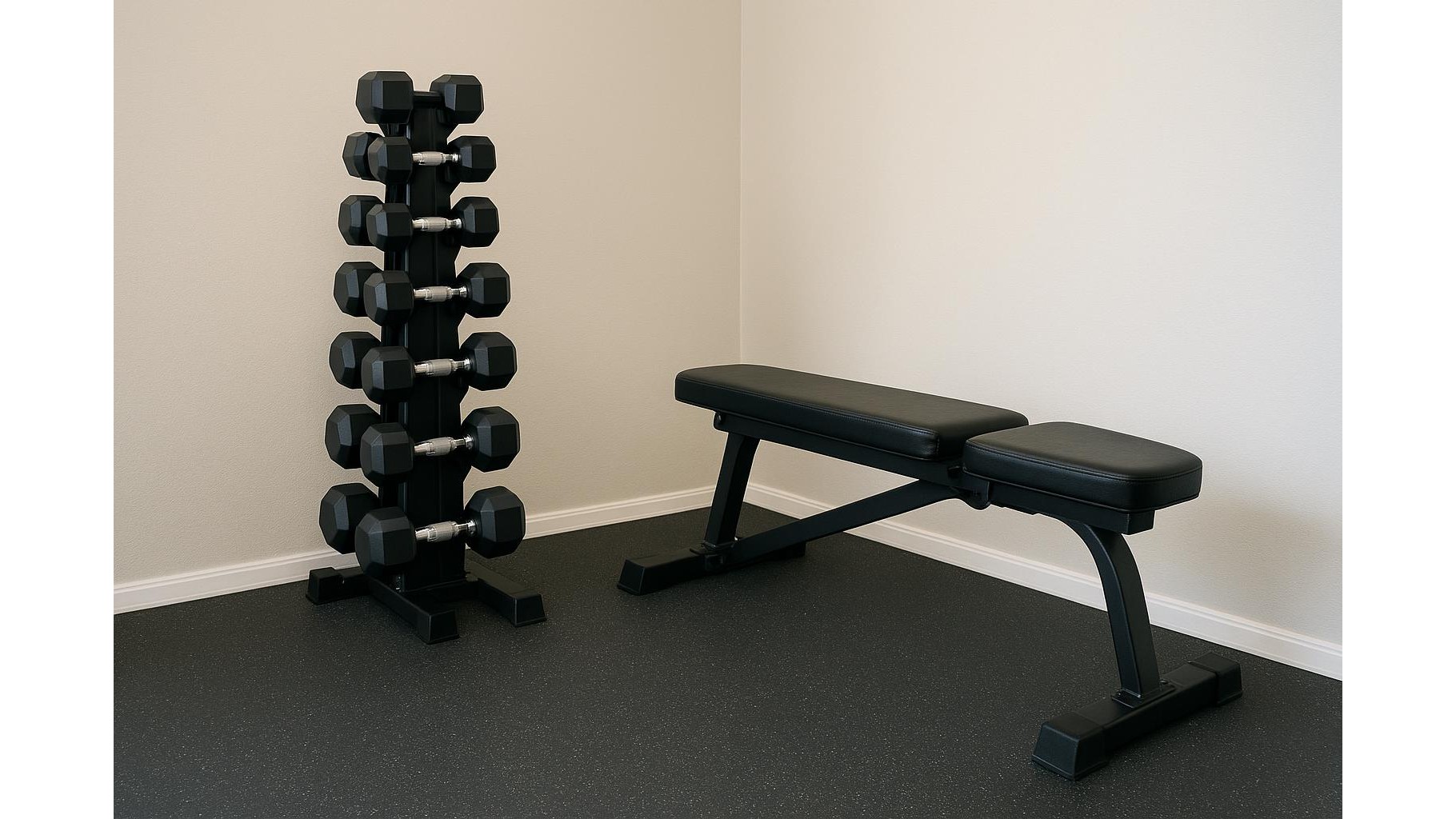
For very tight areas, a vertical or tree‑style rack is often the most efficient option. These units use height instead of width, offering multiple tiers for pairs of dumbbells while keeping a minimal floor footprint. Look for designs where each tier is slightly offset so knuckles do not clash against neighbouring handles. Check that the stated weight capacity exceeds your full set by a comfortable margin and that contact points are shaped or coated to prevent chipping your dumbbells. A good compact vertical rack will let you stand close, lift straight up and return each pair without twisting your spine, which is crucial in a small home gym where you may not have much room to step back.
Horizontal racks and tiered stands for heavier sets
If you own heavier dumbbells or plan to expand beyond light pairs, a robust horizontal rack or multi‑tier stand becomes more important. These typically occupy a bit more wall space but distribute weight more evenly and keep heavy bells closer to hip height, which is safer for your back. When comparing options, focus on steel gauge, weld quality and the maximum load rating of each tier. Slightly angled shelves make it easier to see weight markings and slide dumbbells back into place. Rubber or plastic guards along the edges help avoid metal‑on‑metal contact that can damage both rack and weights, while non‑slip feet spread pressure to protect wooden, vinyl or rubber gym floors.
Under‑bench and hideaway storage for multi‑use rooms
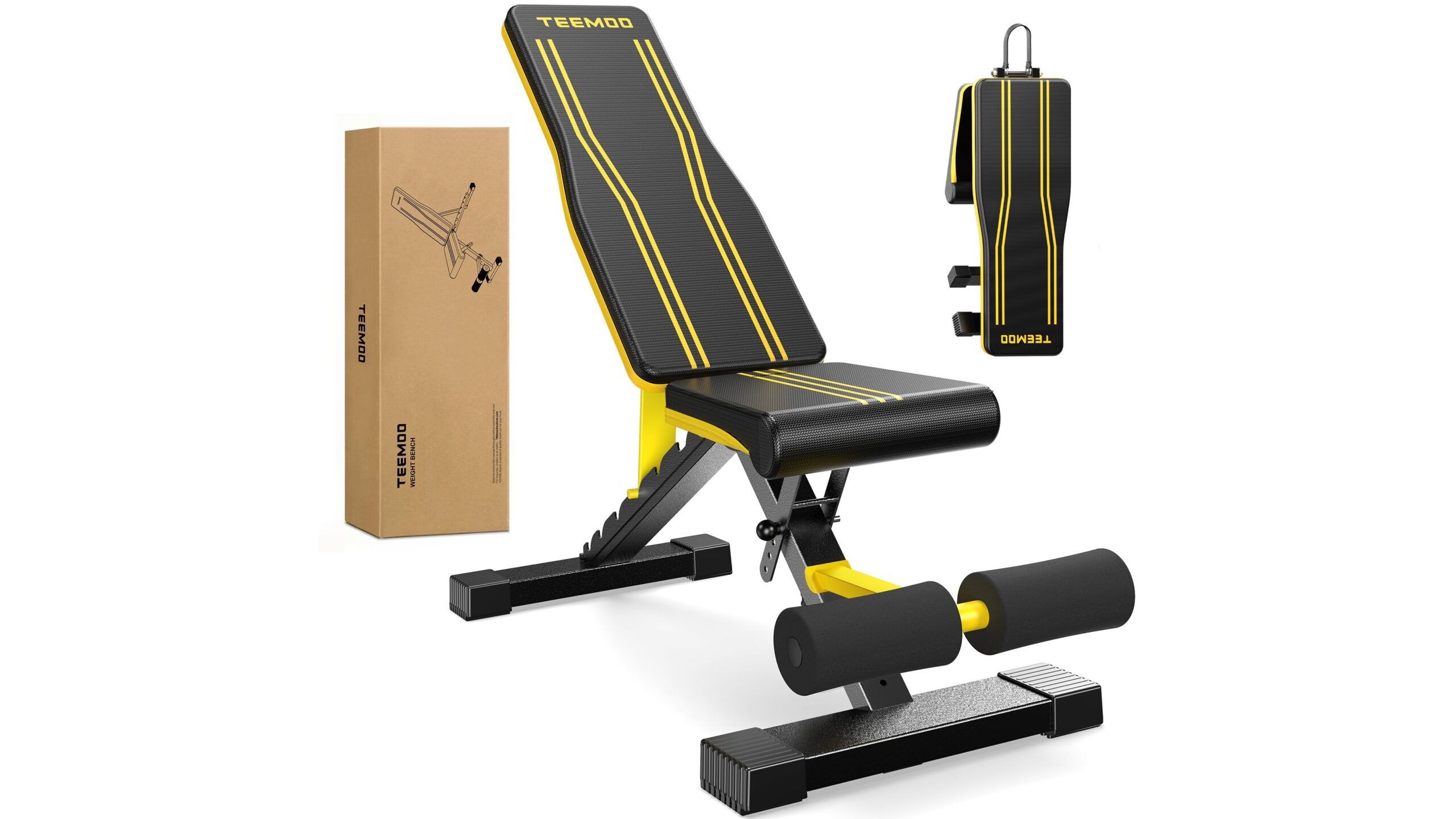
In multi‑purpose spaces like living rooms or spare bedrooms, an under‑bench dumbbell storage solution is ideal to keep the floor clear between workouts. Look for benches with integrated lower shelves or dedicated trays that fit your dumbbells without protruding beyond the bench length. Measure bench height and check that there is enough clearance to slide weights in and out easily. Low‑profile rolling carts or shallow racks that park under a lifting bench can achieve a similar effect, letting you pull the weights out only when needed. Prioritise smooth edges and protective coatings to avoid scuffing both your bench and the floor when you move the storage unit.
Protecting and preserving your flooring
Regardless of the rack style you select, protecting your home gym flooring should be part of the decision. Compact storage solutions concentrate a lot of weight into a small area, which can dent soft timber, vinyl or carpet. Choose racks with wide, rubberised feet or pair them with interlocking gym mats or a dense rubber platform under the base. This not only spreads the load but also dampens vibrations and noise when you rack and un‑rack your dumbbells. Avoid dragging fully loaded racks across the floor; if you need mobility, opt for units designed with locking castors and still place them on a protective mat. Taking these simple precautions extends the life of both your flooring and your new storage system.
By clarifying your space, load needs and training habits, you can confidently choose a compact dumbbell storage solution that keeps your home gym floor clear, safe and visually tidy. Whether you favour a slim vertical tree, a sturdy tiered stand or a discreet under‑bench option, paying attention to weight capacity, footprint and floor protection will ensure your set‑up stays stable, secure and comfortable to use for years of training to come.