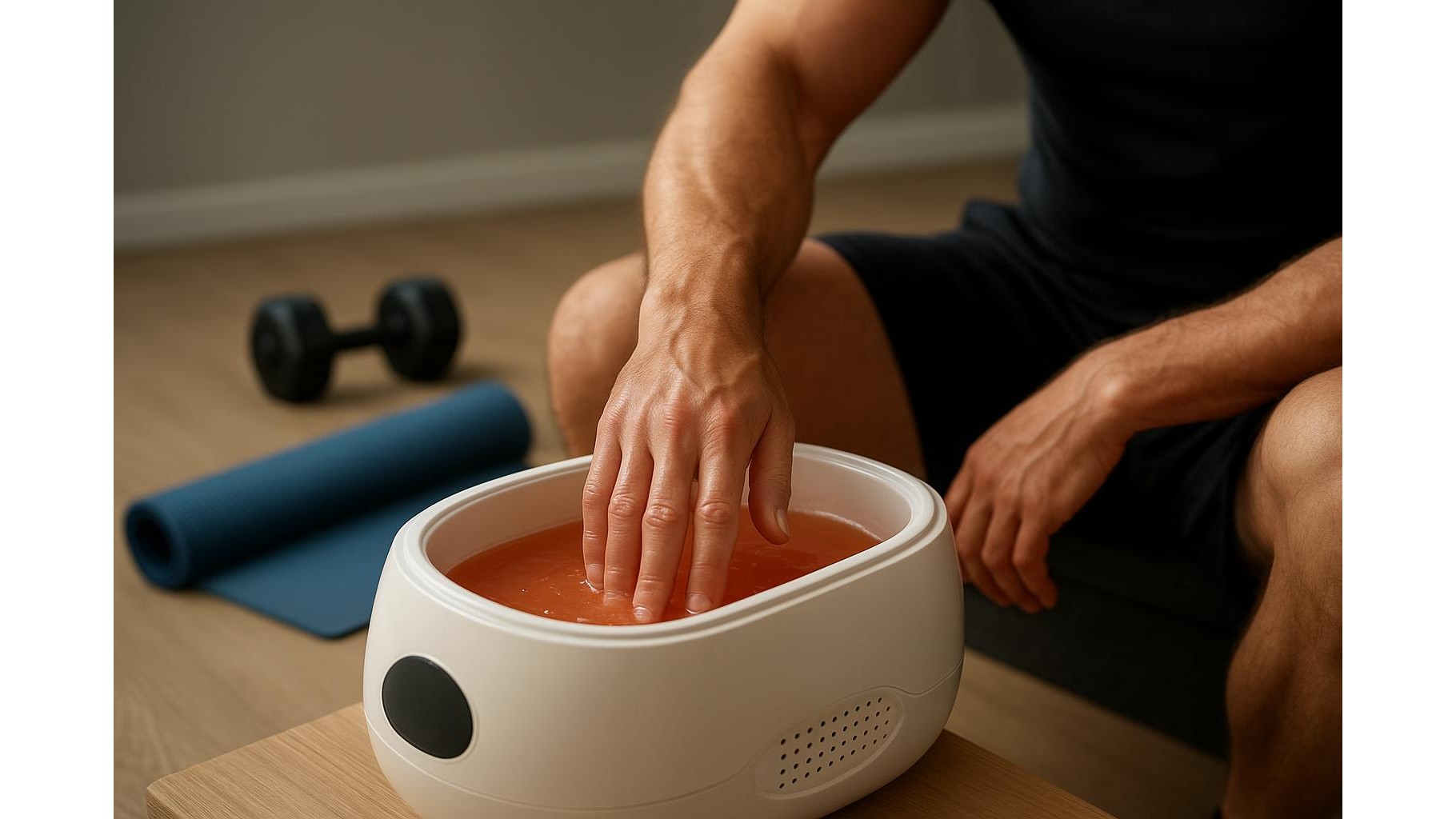
After an intense home workout, stiff fingers, aching wrists and tired feet can make even simple tasks uncomfortable. Alongside stretching and mobility work, many fitness enthusiasts are turning to paraffin wax baths as a soothing, spa-style recovery tool at home. These heated devices coat your hands or feet in warm, melted wax to deliver deep, moist heat that may ease stiffness and promote relaxation. In this guide we’ll look at how paraffin wax baths work, potential benefits, who should avoid them and how to use them safely in your home gym recovery routine.
What are paraffin wax baths and how do they work?
A paraffin wax bath is an electric tub that melts solid paraffin wax into a smooth, warm liquid, usually between 50–55°C. You dip clean, dry hands or feet into the bath several times to build up a thin shell of wax, then wrap them to trap in heat. As the wax solidifies, it creates a gentle, consistent warmth around the joints and soft tissue. This moist heat helps increase local blood flow and can temporarily reduce the feeling of stiffness after repetitive gripping exercises, kettlebell work or long treadmill sessions. Unlike simple hot water, paraffin clings to the skin so the heat penetrates more deeply and lasts longer, mimicking the sensation of a professional spa treatment in your own home gym space.
Recovery benefits for sore hands and feet after training
Used correctly, paraffin therapy can be a comforting add-on to your post-workout recovery. The deep heat may ease muscle tension in the hands after dumbbell or barbell sessions, and can feel particularly good if you use resistance bands, suspension trainers or do high-rep calisthenics that stress your grip. For the feet, paraffin baths can help them feel less tight after long runs on a home treadmill, jump rope intervals or plyometric sessions. The process also encourages you to sit still for 15–20 minutes, which supports overall relaxation and stress reduction. Many users report softer skin on the hands and heels as a bonus, thanks to the occlusive layer of wax that helps lock in moisture. While paraffin baths are not a cure for injuries, they can make everyday movement more comfortable when integrated with stretching, mobility drills and active recovery days.
Risks, contraindications and who should skip paraffin baths
Despite their cosy appeal, paraffin wax baths are not suitable for everyone. If you have poor circulation, diabetes, neuropathy, varicose veins, open wounds, skin infections, rashes or very fragile skin, you should avoid heat-based paraffin therapy unless cleared by a healthcare professional. The reduced ability to feel temperature in these conditions raises the risk of burns. Never use a paraffin bath on fresh sprains, acute inflammation, bruises or directly after an injury where the area feels hot and swollen; cold therapy is more appropriate in those cases. Always check the temperature with a thermometer or your forearm before dipping, and never use the device if the wax smells burnt or the unit overheats. Pregnant users or those with cardiovascular issues should talk to a doctor before adding any intense heat treatment to their home recovery routine.
How to use a paraffin wax bath safely and effectively
To get the most from a paraffin wax bath, build it into your post-workout routine strategically. Allow your heart rate and body temperature to come down for at least 20–30 minutes after exercise before using heat. Clean and dry your hands or feet thoroughly, removing any lotions that might contaminate the wax. Melt the wax fully and let it reach the recommended temperature stated in the manual, usually checked with a built-in display or separate thermometer. Dip your hand or foot briefly, remove it for a few seconds to allow a thin layer to harden, and repeat several times until you have a comfortable coating. Then wrap the area in a plastic liner or towel to trap heat for 10–20 minutes. After the session, simply peel off the wax and discard it; never reuse wax that has been in contact with skin. Limit sessions to a few times per week and always listen to your body—heat should feel pleasantly warm, never hot or painful.
Timing, set-up tips and integrating with your home gym
Think of your paraffin wax bath as a dedicated recovery station alongside your yoga mat, foam roller and massage balls. Place the unit on a stable, heat-resistant surface near a comfortable chair, with towels nearby to catch drips. Preheat the bath while you finish your cooldown stretches so it is ready once you are done. Evening sessions often work best, especially on days heavy on grip work or foot impact, because the relaxing warmth can support better sleep. Avoid using the bath before strength training, as excess heat can leave your hands and feet feeling slightly fatigued or too relaxed, which might reduce grip stability. Pair paraffin sessions with gentle mobility work for the wrists, fingers, ankles and toes for a more complete recovery protocol that supports joint comfort without replacing proper programming, deload weeks and rest days.
When to seek professional advice instead of DIY heat therapy
While at-home paraffin wax baths can feel luxurious, they are not a substitute for medical assessment if you experience persistent or worsening pain in your hands or feet. If you notice swelling, sharp pain, reduced range of motion or joint deformities that do not improve with rest, it is important to consult a physiotherapist, sports doctor or other qualified professional. They can help diagnose underlying issues such as tendonitis, stress fractures or arthritis and design a targeted treatment plan. Consider paraffin as a comfort-focused adjunct, not a standalone solution. Used thoughtfully within a balanced home gym recovery strategy—including good programming, progressive overload, mobility, sleep and nutrition—paraffin wax baths can be a pleasant way to unwind and ease everyday soreness after your workouts.
In summary, paraffin wax baths offer a simple, spa-like method to bring soothing heat to tired hands and feet after your home workouts. They may help ease stiffness, encourage relaxation and support softer skin, making them a nice complement to stretching and mobility work. However, they are not appropriate for everyone, especially those with circulation problems, acute injuries or certain medical conditions. If you decide to incorporate paraffin therapy into your routine, focus on safe temperatures, clean technique and sensible timing within your overall training plan. When in doubt, seek professional guidance so you can enjoy the benefits of heat-based recovery without unnecessary risks.