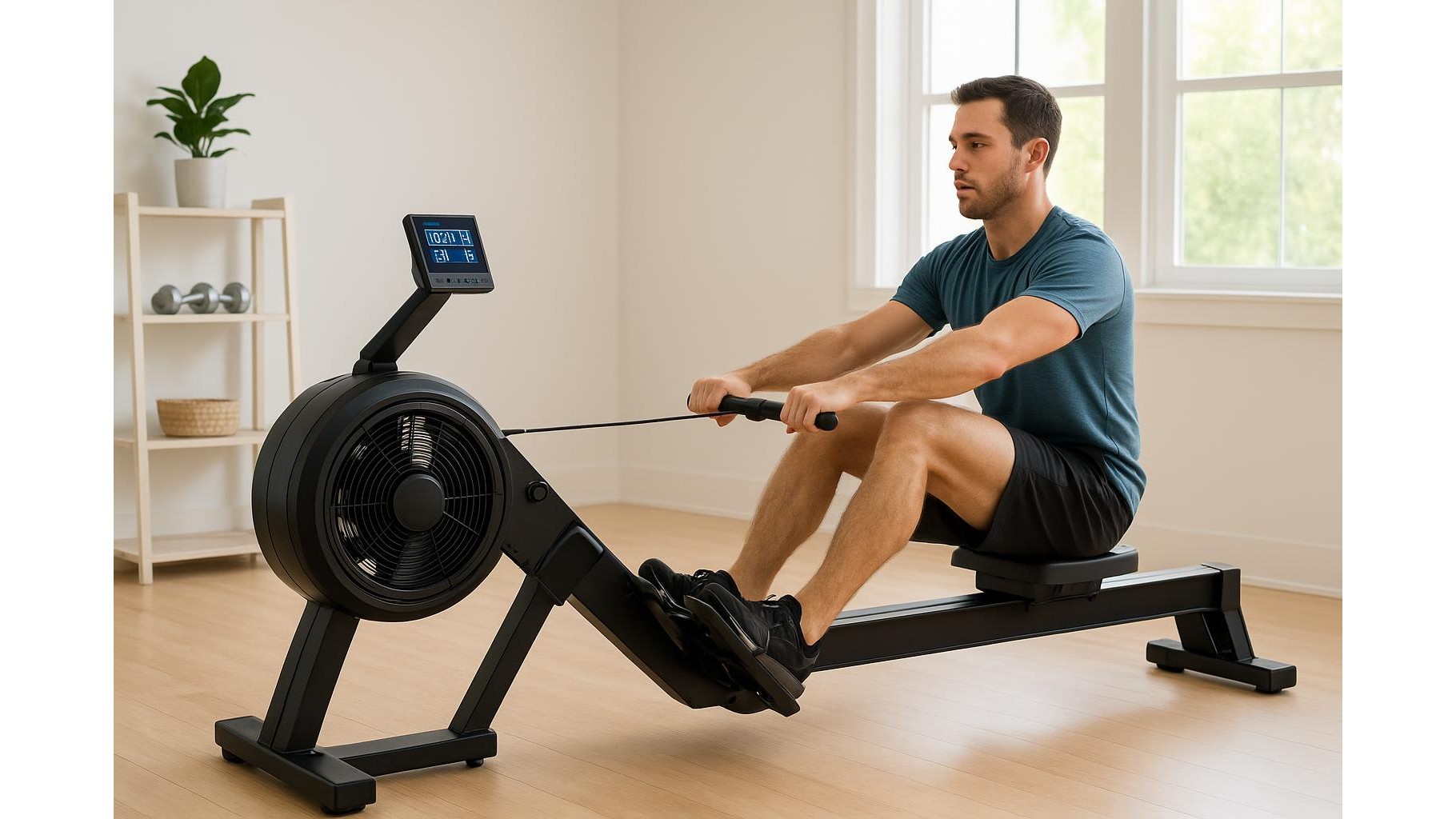
Hybrid water–air rowing machines aim to blend the smooth, fluid feel of water resistance with the punchy response of air. For home gym users they promise a more versatile cardio workout that can suit both steady-state rowing and intense intervals. In this guide we explain who these hybrid rowers are best for, how they compare with classic fan or water-only machines in terms of feel, noise, footprint, maintenance and consoles, and what to check before you add one to your home setup.
How hybrid water–air resistance actually feels
On a pure air rower, resistance increases the harder you pull because the fan moves more air. On a pure water rower, the flywheel paddles through water, giving a naturally smooth load that many people find closer to on‑water rowing. Hybrid water–air systems try to combine these behaviours: the water tank adds a stable, fluid baseline resistance, while the air fan adds extra drag as your stroke power rises. The result is typically a slightly heavier catch than a fan-only rower and more top‑end resistance than many compact water-only models, which can benefit stronger or more experienced users who want challenging sprints as well as long, low‑intensity sessions.
Noise levels and home‑friendly operation
Noise is a key concern for any home cardio machine, especially if you train in the evening or in a flat. Traditional fan rowers generate a distinct whooshing sound from the flywheel, which grows noticeably louder at higher stroke rates. Water rowers are generally quieter, producing more of a sloshing hum that many find less intrusive. With hybrid water–air rowers, expect something in between: the water tank softens the harshest fan noise, but the air system still adds sound as you work harder. For shared spaces, look for marketing claims or reviews mentioning low‑noise belts rather than chains, rubberised feet to dampen vibration, and realistic dB figures instead of vague “quiet” labels so you can judge how well the machine will fit into your home.
Footprint, storage and build quality
Compared with compact magnetic-only machines, hybrid water–air rowers tend to be longer and heavier because they carry both a fan housing and a water tank. Check the full footprint dimensions and recommended user height: taller users need a long rail for a complete stroke, but this also increases the space required behind the machine. Many home‑oriented models can be stood upright after use, reducing floor space, yet you still need enough ceiling height and a stable wall area. Pay attention to maximum user weight, frame material (steel vs aluminium), and the quality of the seat rollers and footrests, as these influence long‑term durability. Wheels at the front make it easier to move a heavier hybrid rower between rooms without scratching floors.
Console features, programs and connectivity
The performance monitor is often overlooked, but it largely shapes your day‑to‑day experience. A good hybrid water–air rower for home use should clearly display pace, distance, time, stroke rate and calories, with responsive tracking that updates stroke‑by‑stroke. Many newer consoles offer Bluetooth connectivity so you can pair heart‑rate straps or training apps on your phone or tablet. If you enjoy structured workouts, look for preset interval programs, custom workout storage and race modes. Some hybrid rowers also integrate app‑based coaching or virtual river sessions. Since resistance is partly determined by your own power, the console’s ability to translate that into consistent split times (for example, 500 m pace) is crucial if you plan to follow online training plans or compare sessions over time.
Maintenance and practical ownership tips
Compared with a simple fan rower, hybrid water–air machines introduce extra maintenance because of the water tank. You may need to add purification tablets periodically to keep the water clear and change it according to the manufacturer’s schedule. Check how easy it is to access the tank, whether tools are required and if replacement seals or tablets are readily available. The drive system—belt or chain—also matters: belts tend to be quieter and require less lubrication, while chains are tougher but need occasional oiling. Regularly wiping the rail, checking bolts and inspecting footstraps will extend the life of the machine. Choosing a model with a strong warranty on both frame and moving parts adds peace of mind, particularly if multiple family members will be rowing several times per week.
Hybrid water–air rowing machines can be an excellent choice if you want a more nuanced resistance feel than fan‑only or water‑only designs, and if you are willing to accept a slightly larger footprint and a bit of extra maintenance. They suit intermediate to advanced users who enjoy both long endurance rows and high‑intensity intervals, and home gym owners who value a richer training experience over absolute simplicity. By checking feel, noise, size, console functions and upkeep before you buy, you can select a rower that genuinely enhances your home cardio routine rather than becoming an oversized clothes hanger.