Adjustable parallettes are one of the most versatile tools you can add to a home strength training setup. From deep push-ups and L-sits to tuck planches and handstand work, a good pair of bars lets you train calisthenics, mobility and conditioning in a very small footprint. Choosing the right model, however, means paying attention to stability, safety features and how well the bars fit your body and your training goals.
Why adjustable parallettes belong in your home gym
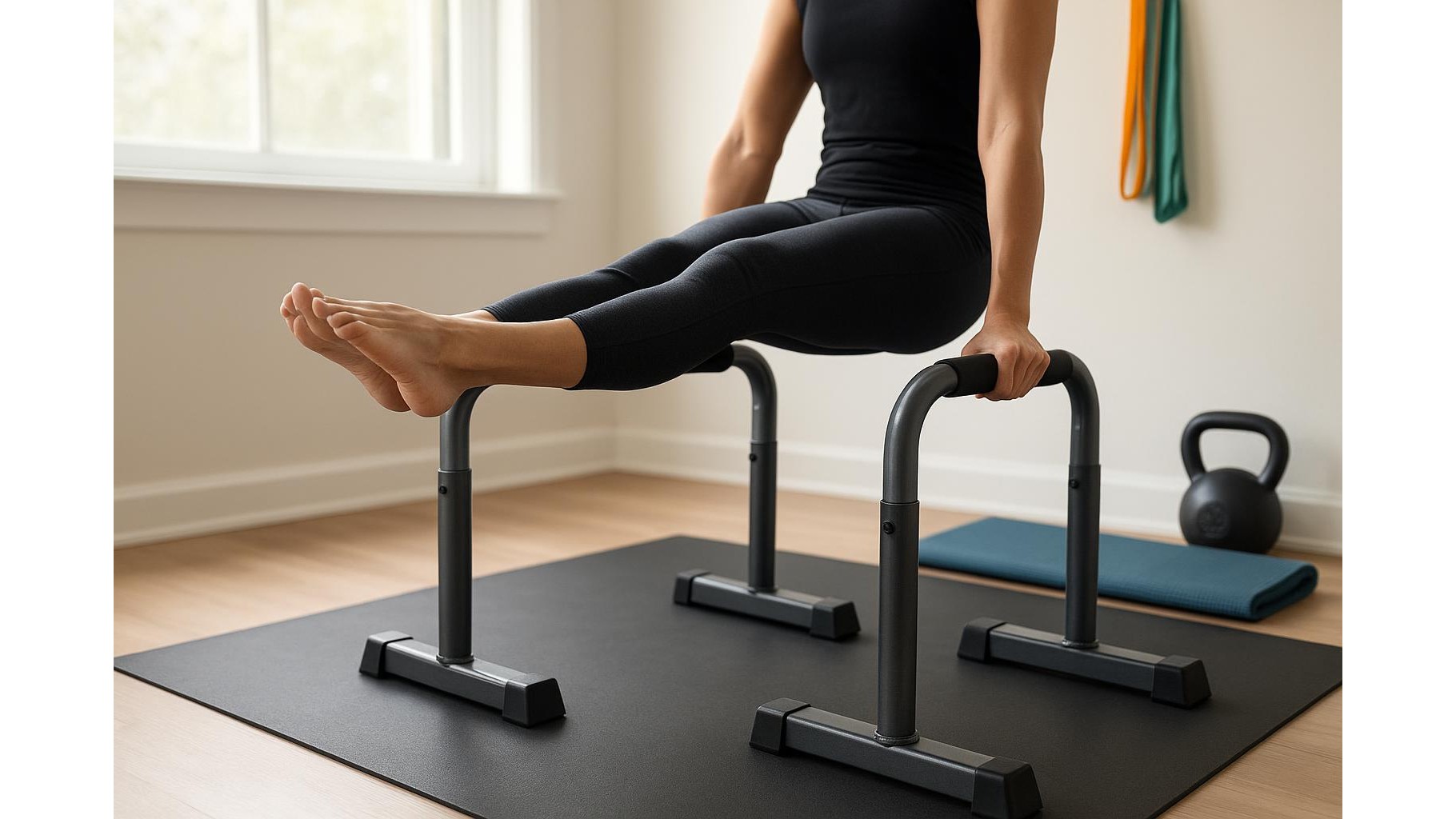
Unlike fixed push-up bars, height-adjustable parallettes let you tailor the setup to different exercises and skill levels. Lower settings are ideal for classic push-ups, mountain climbers and incline planks, while higher settings create room for deep dips, L-sits and tuck planches. For home gyms with limited space, parallettes offer a huge exercise library with a compact footprint, replacing bulkier dip stations or benches. They also reduce wrist strain by allowing a neutral grip, making them especially useful if you struggle with traditional floor work.
Height range and base width: finding the right proportions
When comparing models, look first at the height range. A useful span for a versatile home setup is roughly 20–45 cm from floor to handle: low enough for secure push-ups, high enough to perform strong L-sits and progressions towards handstands or planches. Almost more important is the base width and footprint. A wider base and slightly flared feet help prevent tipping, particularly when you shift your centre of mass forward in moves like shoot-throughs and planche leans. If you have broad shoulders or plan to practise handstand work between the bars, check that the internal width gives you enough space to move without clipping your feet or knees on the uprights.
Anti-slip features and stability on different floors
Good anti-slip features are essential if you train on tiles, laminate or smooth gym flooring. Look for rubber feet that are both grippy and thick enough to protect the floor and reduce noise. A heavier steel construction can feel more planted, but smartly designed aluminium bars with wide, capped feet can be just as stable. If you plan to train outdoors, consider how the feet behave on slightly uneven surfaces like patios or rubber mats, and whether you need an additional mat under the base to enhance friction. The goal is simple: the parallettes should not rock, creep forward or twist when you load them dynamically with explosive push-ups or transition drills.
Weight capacity and materials for safe training
For safe, stable bars, always check the advertised weight capacity and add a safety margin above your body weight, especially if you plan to use a weighted vest or bands. Solid steel builds typically support higher loads and feel reassuringly rigid, but can be heavier to move and store. High-quality aluminium or alloy options offer a lighter, more portable package, which is great if your gym space doubles as a living room. Pay attention to the handle diameter and finish: a slightly textured coating improves grip without shredding your hands, while too-slick paint can become slippery with sweat. For longevity, choose models with robust welds or well-engineered locking mechanisms rather than flimsy, rattling joints.
Integrating parallettes into strength, calisthenics and mobility
Once you have the right setup, integrating parallettes into your routine is straightforward. For strength training, pair deep parallette push-ups, L-sits and bodyweight rows with lower-body work like squats and lunges. For calisthenics, use the bars to build progressions: tucked L-sits to advanced L-sits, planche leans, handstand kick-ups between the bars and dip variations. In mobility sessions, the raised support lets you explore loaded stretches such as elevated pigeon variations, shoulder extension stretches and gentle scapular push-ups to wake up the upper back. Rotate through push, hold and mobility drills within the same workout to get more value from a single, compact piece of equipment.
Practical buying checklist for home users
Before you buy, run through a quick checklist so your adjustable parallettes truly match your home setup. Confirm that the height adjustment is quick and secure, without tools you are likely to misplace. Measure your training area and compare it to the base width and total footprint, especially if you plan to store the bars under a bed or in a cupboard. Look for clear specifications on weight capacity and materials, as well as visible rubber feet or end caps for floor protection. Finally, think about your main goals: if you are focused on L-sits and push-ups, compact, lower bars may be enough; if you want to work towards handstands and more advanced calisthenics, invest in a taller, heavier, more stable pair that will grow with you over time.
Choosing the right adjustable parallettes for home strength training comes down to balancing stability, safety and versatility. By prioritising a sensible height range, a wide and secure base, solid anti-slip features and materials with sufficient weight capacity, you can train push-ups, L-sits and beyond with confidence. A well-chosen pair of parallettes will support your progress across strength, calisthenics and mobility work, turning even a small corner of your home into a highly effective training space.