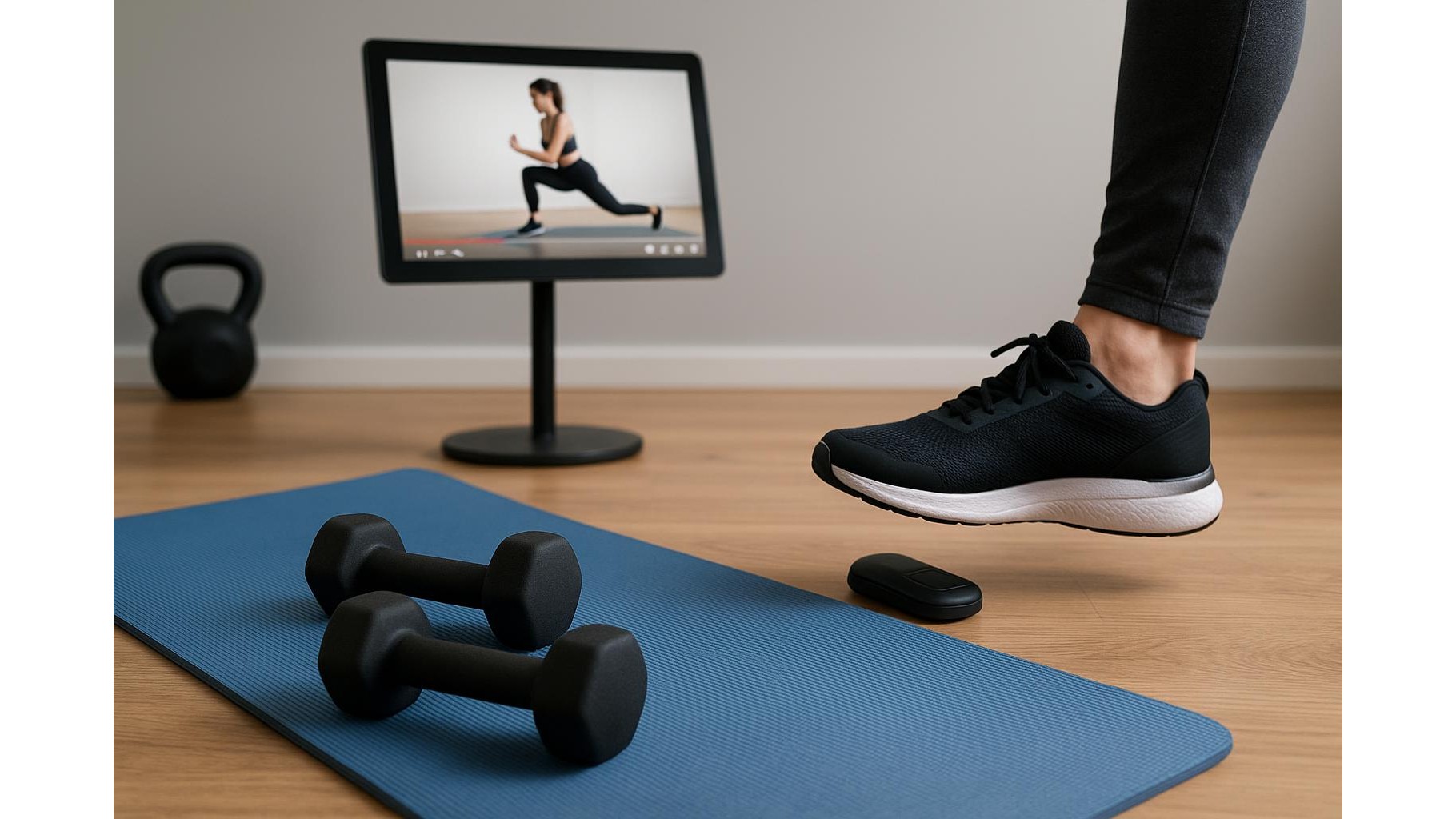
Setting up a dedicated home gym often means training with workout apps, YouTube classes and streaming platforms. But constantly reaching for your phone or laptop to pause, skip or rewind can break your flow. This is where Bluetooth foot pedals come in: compact, wireless controllers you operate with your feet to keep your hands on the weights and your focus on the session.
Why Bluetooth foot pedals are perfect for home workouts
A Bluetooth foot pedal works like a wireless remote that sits on the floor of your home gym. It connects to your phone, tablet or computer and sends simple commands such as play/pause, next, previous or volume up/down. For strength training, yoga, Pilates, HIIT or indoor cycling, this means you can pause a tutorial mid-rep, quickly rewind a complex movement, or skip a section without fumbling with sweaty hands on a screen. Foot pedals are especially useful when you train with a TV across the room or have your device docked on a wall mount or tripod.
Core features to look for in a fitness-focused foot pedal
When choosing a Bluetooth foot controller for fitness, prioritise reliability and ergonomics. Look for low-latency Bluetooth for responsive control, sturdy non-slip rubber feet so the unit doesn’t slide on hard floors, and quiet pedal action that won’t click loudly during early-morning workouts. Multiple programmable pedals let you assign different actions such as play/pause, skip forward 10 seconds, skip back, or even adjust volume in compatible apps. Long battery life and USB-C charging are ideal for heavy users who train several times a week in a home gym environment.
Setting up a Bluetooth foot pedal with workout apps
Most Bluetooth foot pedals pair just like headphones. Put the pedal in pairing mode, open Bluetooth settings on your phone, tablet or smart TV, and connect. In many cases, the pedal emulates basic keyboard keys (like spacebar for play/pause or arrow keys for skip), which makes it work instantly with popular video platforms. For YouTube or web-based workout platforms on a laptop, you often won’t need extra software: the spacebar typically pauses and plays, while arrow keys move the timeline. On mobile fitness apps, check the settings for remote or keyboard shortcuts; some support external controllers for easier media navigation.
Using foot pedals with popular streaming and fitness platforms
Once paired, a Bluetooth foot pedal can control a wide range of streaming services and fitness platforms. For YouTube and Vimeo classes, one pedal can be mapped to play/pause, another to skip back a few seconds whenever you miss a cue, and a third to skip forward. If you follow guided sessions on Netflix-style fitness services or on-demand studio platforms, the same controls help you jump through warm-ups or replay technical segments. With spinning or rowing workouts, you can keep your cadence while tapping the pedal to adjust intervals or move between tracks in music and podcast apps like Spotify or Apple Music, keeping your phone safely out of the sweat zone.
Practical tips for integrating pedals into your home gym setup
To get the most from a Bluetooth foot pedal in your home gym, position it where your lead foot naturally rests during workouts, whether that’s near your mat, bench or bike. If you train barefoot or in socks, choose a pedal with a broad, textured surface that is easy to feel without looking down. Consider dedicating specific commands for different training types—such as rewind for technique sessions and skip forward for cardio. Keep the pedal charged, and if your model supports multiple device profiles, pair it with both your phone and TV so you can switch between screen setups. Over a few sessions, using your foot pedal will become second nature, helping you stay in the zone and making every workout smoother and more efficient.
Adding a Bluetooth foot pedal to your home gym is a small upgrade that delivers a big boost in usability. By giving you true hands-free control over play, pause, skip and rewind across your favourite workout videos and fitness apps, it reduces distractions and keeps your focus on form, breathing and effort. With simple setup, wide compatibility and thoughtful placement, a foot pedal becomes an invisible but essential part of a modern, streamlined home training space.