
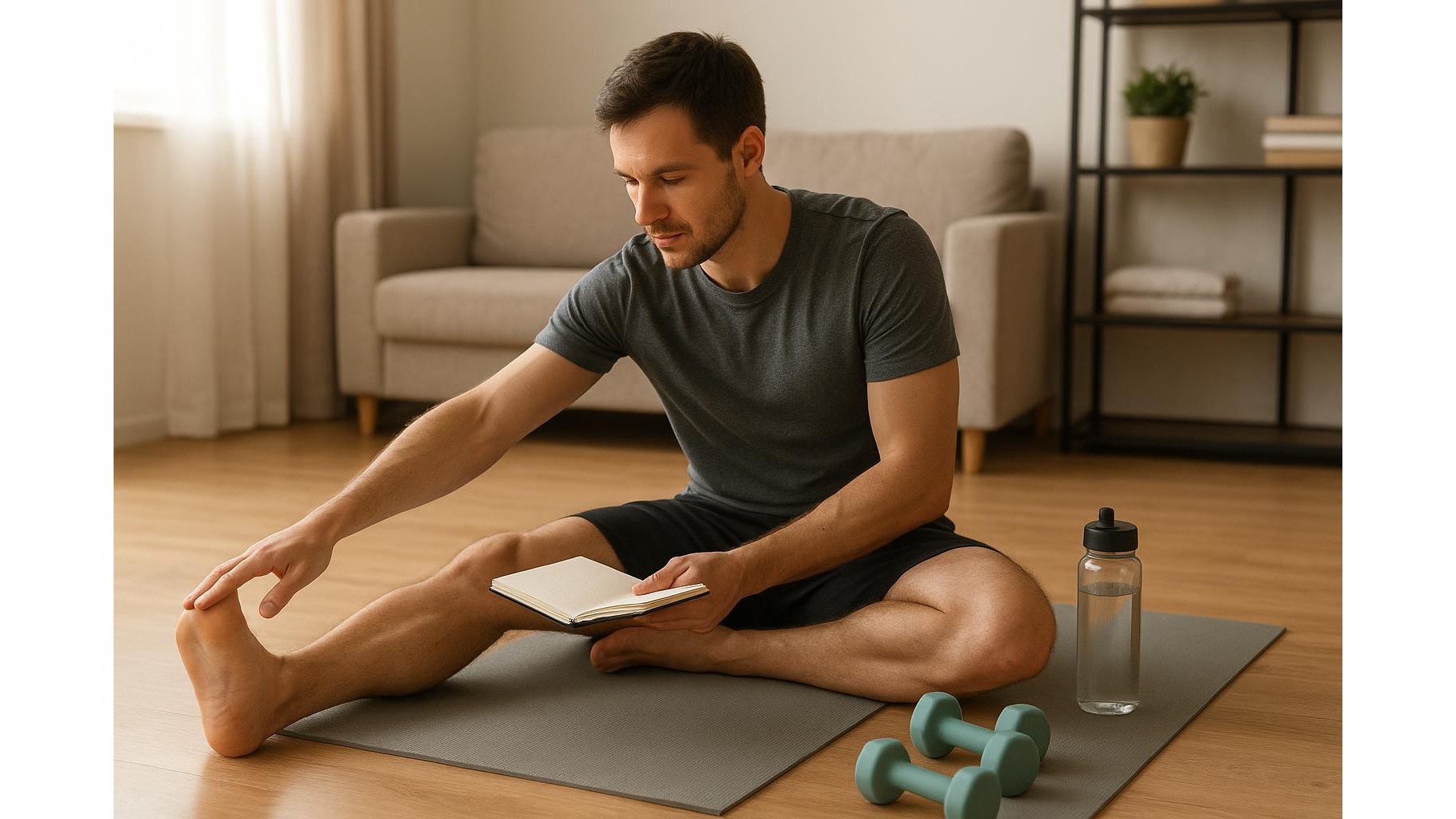
Training at home makes it easy to squeeze in extra reps, late-night sessions and double workout days. But without a coach watching over you, it’s also easy to slip into overtraining and mental burnout. A short, honest weekly self-check every Sunday can help you catch rising fatigue early, so you stay consistent, avoid injury and keep your motivation high all year long.
Set up a simple Sunday check-in ritual
Your weekly self-check works best when it’s a fixed ritual. Choose a quiet 10–15 minute slot on Sunday, grab a notebook or notes app, and review your last seven days of home workouts. Write down each session, its duration, and how hard it felt on a 1–10 scale. Then add a quick rating for your overall energy, sleep quality and mood. Keeping this data in one place will reveal patterns: maybe leg day always crushes your motivation the next day, or late-night training ruins your sleep. The goal is not perfection but awareness, so you can make small, smart adjustments before tiredness becomes full-blown exhaustion.
Scan your body: soreness, niggles and pain
Next, run a head-to-toe physical scan. Note where you feel muscle soreness, tightness or joint discomfort. Mild, symmetrical soreness that fades within 48 hours is a normal sign of training. But sharp, one-sided pain, or soreness that lingers all week, are red flags for overuse injuries. On Sundays, use 5–10 minutes of gentle mobility work and light stretching, and pay attention: do certain movements feel worse than last week? If yes, dial back the volume for that body part in the coming week, swap high-impact moves for lower-impact options, and prioritise recovery sessions such as walking or easy cycling.
Check your sleep, mood and stress signals
Overtraining often shows up in your lifestyle before it shows up in your lifts. During your self-check, review how you have been sleeping: are you waking up refreshed or dragging yourself out of bed? Has your bedtime crept later? Also rate your mood and stress levels. Signs like irritability, lack of enthusiasm for training, or feeling wired but tired can all indicate that your nervous system is overloaded. Home athletes often ignore these clues because there is no commute or team depending on them. Treat these signals as seriously as pain: they are early warnings that you need more rest, better wind-down habits, or a lighter training week.
Evaluate performance honestly, not emotionally
Performance is more than chasing personal bests. Look at your key lifts, runs or circuits from the last week and compare them to the previous few weeks. Are you getting slightly stronger, holding steady, or trending down? Occasional off days are normal, but a steady drop in reps, speed or motivation often means your body is not fully recovering. During your Sunday review, separate emotion from data: you might feel guilty for missing a session, but if your performance has dipped for two weeks and you feel drained, the smartest move is to schedule a deliberate deload week with lower intensity and volume so you can rebound stronger.
Adjust next week’s home workouts before problems grow
The power of a weekly self-check comes from taking action. Based on what you see in your sleep, soreness, mood and performance, adjust only one or two variables at a time: reduce total training volume by 20–30%, swap a high-intensity interval day for steady cardio, or add an extra full rest day. If stress is high, emphasise restorative sessions like light mobility flows and easy bodyweight circuits. If you feel great and your data supports it, you can carefully increase intensity or add a small challenge. Treat this process like steering a ship: frequent, small course corrections keep you on track and protect you from burnout.
By turning your Sunday into a short, structured weekly self-check, you give yourself the same advantage as having a coach: regular feedback and smart planning. Reviewing your sleep, mood, soreness and performance helps you spot overtraining early, adapt your home workouts to your real recovery capacity, and stay motivated for the long term. This simple habit transforms your home gym routine from guesswork into a sustainable, data-informed training journey.









