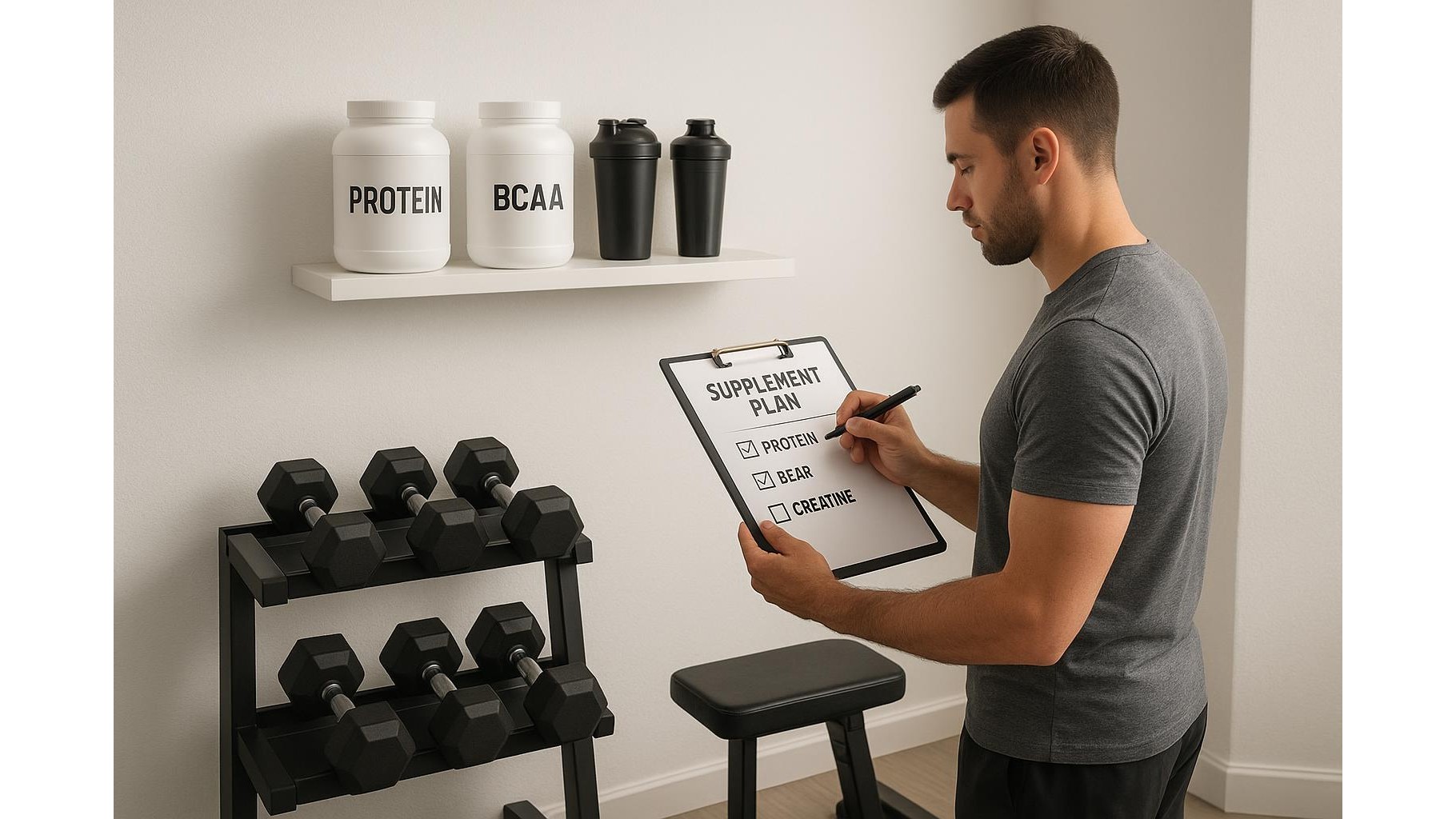
For many home athletes, kitchen cupboards and gym shelves slowly fill up with half-used tubs, forgotten capsules and mystery drink mixes. Once a year, it pays to run a structured, no‑nonsense supplement audit. In a single weekend you can clear out expired products, align what you take with your current goals, and make a simple, sustainable plan that truly supports your home gym training.
Set your goals and gather every supplement
Start by clarifying your current training goals: building strength, losing fat, improving endurance, or just supporting overall health while you train at home. Your stack should exist to serve those goals, not the other way around. Write down your top two or three priorities, then gather every powder, pill and drink from the kitchen, gym corner, car and office. Lay everything out on a table and group by type: proteins, performance (like pre-workouts), health support (like vitamins and minerals), and “extras” such as greens or joint formulas. This visual overview immediately shows you where you’re overloaded – often on overlapping pre‑workouts and novelty products – and where you might have genuine gaps.
Check expiry dates, storage and basic safety
Next, perform a strict expiry date check. Any product past its “use by” or clearly degraded in smell, colour or texture goes straight in the bin. Powders that have clumped hard, capsules that are sticky, or oils that smell rancid should not be saved. Look at storage instructions: many supplements need a cool, dry place away from sunlight – not on top of a warm home gym radiator. Use this moment to reorganise: keep daily-use staples front and centre, and store occasional-use items in clearly labelled boxes. If you find unlabelled bags or tubs with missing scoops, throw them away; with supplements, if you don’t know exactly what it is and how strong it is, you shouldn’t be taking it.
Match each product to your current goals
Now go through the table item by item and ask: “Does this directly support my current training objective?” Protein powders and basic creatine monohydrate often earn their place for strength and muscle gain, while a simple vitamin D or omega‑3 may support general health. On the other hand, multiple flavoured pre‑workouts with similar formulas, or overlapping “muscle boosters” that mostly repeat ingredients, usually add cost and complexity more than results. If an item doesn’t have a clear role, put it in a “phase out” box: commit to either using it up systematically in the next month (if in date and appropriate) or giving it away to someone who will use it safely. Your goal is to end with a short, clear list of essentials you’ll take consistently.
Evaluate evidence, dosage and interactions
A proper audit goes beyond labels and looks at evidence and dosage. For each supplement you keep, check whether the main ingredient has solid support in sports nutrition research and whether your product provides an effective dose per serving, not just marketing buzzwords. Be especially cautious with products combining high doses of caffeine and other stimulants, or stacking many different herbal extracts. If you take prescription medications, you must consider possible interactions; when in doubt, speak to a healthcare professional before continuing use. Avoid “mega‑dosing” vitamins, fat burners that promise extreme results, and anything that suggests you can out‑supplement poor sleep and bad training. The safest, most productive stack is usually the simplest one.
Design a streamlined weekly supplement plan
With your essentials chosen, design a minimal, realistic weekly plan. Decide exactly when each supplement fits around your home workouts and meals: for example, protein after training or with low‑protein meals, creatine once per day at any convenient time, and health-support supplements with food. Write this down and tape it inside a cupboard or save it in your phone. To support adherence, keep scoops and shakers clean and ready, and pre‑portion anything you take to work or on the go. Finally, schedule your next annual supplement audit in your calendar. Knowing you’ll review everything again in twelve months keeps your stack honest and focused on performance rather than impulse purchases.
By dedicating a single focused weekend to auditing your supplement stack, you transform chaos into a clear, purpose-driven system. You’ll remove expired and unnecessary products, ensure what remains truly supports your home training goals, and cut down on wasted money and decision fatigue. Most importantly, you’ll step into your next training block with confidence that the few supplements you do take are safe, simple and aligned with the hard work you’re already doing in your home gym.