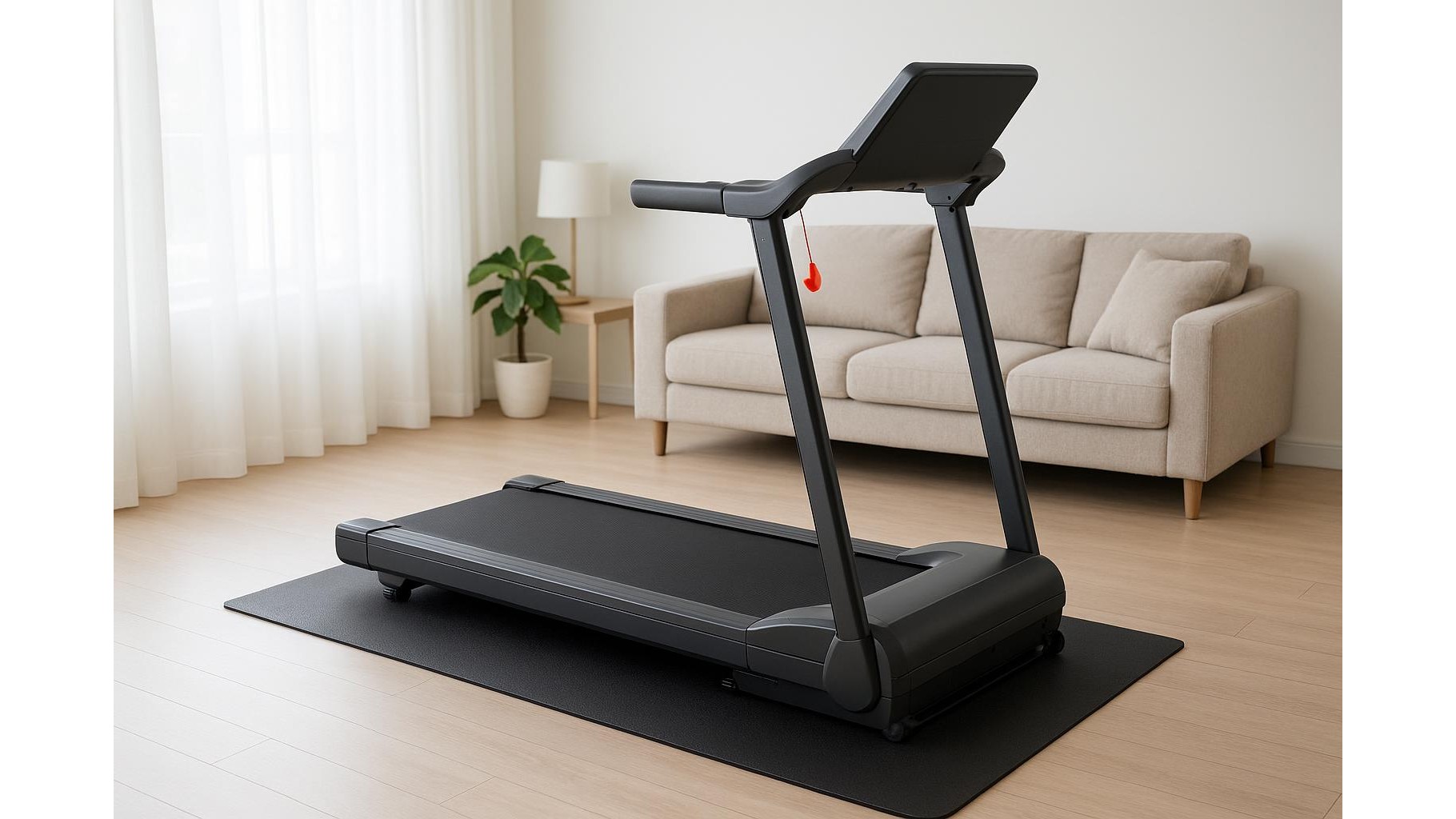
Having a folding treadmill at home is a game changer for consistent cardio, but training safely starts long before you hit the Start button. A quick, structured safety checklist before, during and after every run protects you, your floor, your cables and everyone in the house. Here is a practical guide to make each session on a folding treadmill safer and more enjoyable.
Pre-run stability and floor protection
Before every session, unfold your treadmill fully and make sure all locking mechanisms are engaged. Gently rock the frame from side to side; if you feel wobble, adjust the leveling feet until the running deck is stable. Position the treadmill on a dedicated treadmill mat to protect your floor from vibration, sweat and rubber marks, and to reduce noise transfer to neighbours or downstairs rooms. Clear at least 1–2 metres of free space behind the deck so you have a safe exit zone if you lose balance, and remove any small furniture, plants or loose items from this area.
Lock systems, folding mechanisms and weight limits
A folding treadmill relies on hinges, gas struts and a deck lock to stay secure. Before you step on, visually check that the deck lock is fully released and the running surface is horizontal; if your model has a soft-drop system, guide it with one hand rather than letting it fall on its own. Review the user manual to confirm the maximum user weight and do not exceed it, as this can stress the frame and folding joints. Never try to move or fold the treadmill while the power is on or the belt is still moving. When you finish training and re-fold the deck, listen for the lock to click and gently pull on the deck to verify that it is properly secured in the upright position.
Cable management, power and emergency stop
Loose cables are one of the most overlooked hazards around home gym equipment. Use simple cable clips or ties to route the power cord along the wall, avoiding walkways and areas where children play. Plug the treadmill directly into a wall socket or an appropriate surge protector, avoiding multi-way adaptors that can overload. Before pressing Start, attach the safety key clip securely to your waistband so that the belt stops if you move too far back. Make a habit of testing the emergency stop at the beginning of each week: start at a slow pace, gently pull the key or press the stop button and confirm that the belt halts quickly and smoothly.
Body position, clothing and on-the-belt safety
As you run, your own habits can be as important as the machine’s settings. Stand on the side rails when starting the treadmill, then step onto the belt only once it is moving slowly. Keep your gaze forward and your posture upright, avoiding the temptation to look down at your feet or constantly at your watch. Wear proper running shoes with clean soles so you don’t carry grit onto the belt, and avoid loose clothing that could catch on the handrails. Keep the volume on headphones at a level where you can still hear the motor and anyone entering the room. If you feel dizzy, disoriented or experience unusual pain, hit the stop button immediately and use the handrails only for brief balance, not to support your full weight.
Child safety, pets and access control
Folding treadmills are especially attractive to children and pets, which makes access control critical. When not in use, remove the safety key and store it out of reach; without it, the treadmill cannot start. If possible, position the treadmill in a room that can be closed off with a door or safety gate. During your workout, ensure children understand that the treadmill is not a toy and must not be approached while the belt is moving. Pets should be kept out of the training area to prevent them from darting behind or under the deck. After folding the treadmill, double-check that small fingers cannot access pinch points around the hinges or gas strut.
Post-run inspection and basic maintenance
After each session, perform a brief post-run checklist. Walk until the belt stops instead of stepping off at speed. Turn the power switch off and, if recommended by the manufacturer, unplug the machine. Wipe sweat from the console, handrails and deck to prevent corrosion and slippery surfaces. Every week, check that belt alignment is centred and that there are no frayed edges or unusual noises; consult the manual for how to adjust tension or apply treadmill lubricant if required. Finally, fold the treadmill slowly, lock it in place and confirm that the area around it remains clutter-free. By repeating this simple routine, you extend the life of your equipment and keep your home training environment as safe as a commercial gym.
Using a folding treadmill at home combines convenience and performance, but only if you respect a consistent safety routine. From lock systems and floor protection to cable management, child safety and post-run checks, these steps take just a few minutes and dramatically reduce the risk of accidents. Turn this checklist into a habit, and every run will feel smoother, safer and more controlled.