Building a safe home gym isn’t only about weights and machines. Your training shoes and supportive insoles are the first line of defence for joints, tendons and lower back. Rotating different footwear for strength training, cardio and all‑day wear at home helps manage impact, control stability and reduce overuse injuries. Knowing when to replace shoes and insoles is just as important as choosing them, especially if you train several times a week on hard floors.
Why rotation matters for home workouts
Wearing a single pair of trainers for every task – from lifting in your living room to pacing around the kitchen – quickly compresses the midsole and alters support. Rotating strength shoes, cardio shoes and daily house shoes gives foam time to rebound, keeps traction consistent and allows you to match the right profile to each session. For example, flat, firm shoes improve lifting stability, while more cushioned models protect your joints during HIIT and treadmill runs. By changing pairs you also vary pressure points under the foot, which can help prevent plantar fasciitis, shin splints and knee pain over the long term.
Choosing shoes for lifting vs cardio at home
For heavy squats, deadlifts and presses, prioritise stability over softness. Look for flat soles, minimal heel compression and good lateral support so your feet don’t roll during loaded movements. For cardio – skipping, dance workouts, step routines or treadmill sessions – you need responsive cushioning, a slightly higher heel stack and flexible forefoot to absorb impact and protect ankles and knees. If space is limited, one hybrid pair with moderate cushioning and a relatively firm heel can work, but try to keep it separate from the pair you wear all day around the house. This simple separation dramatically extends each shoe’s effective lifespan and keeps your joints happier.
Supportive insoles: when and how to use them
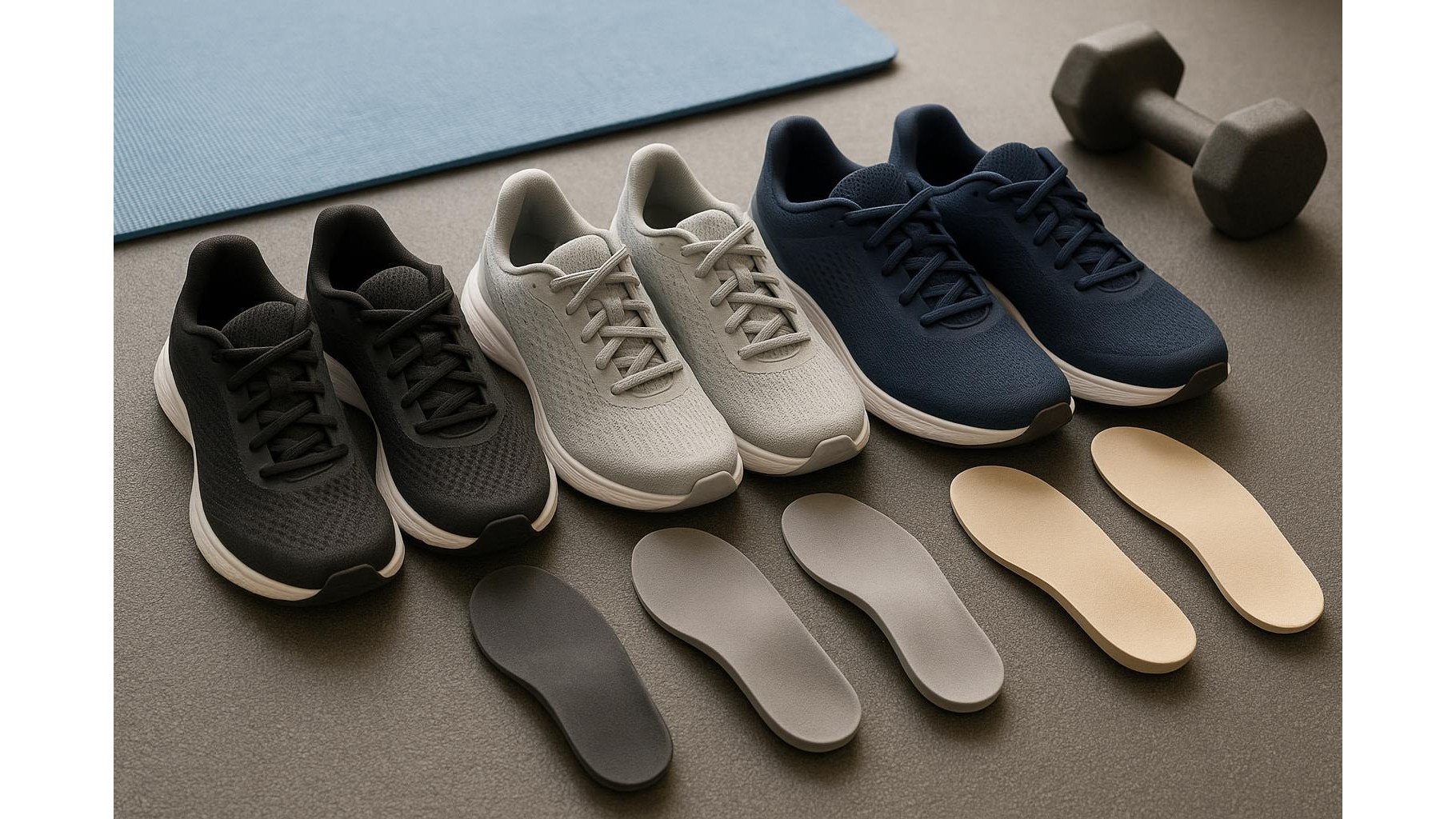
Supportive insoles help fine‑tune the fit and function of almost any trainer. If you have flat feet, high arches or a history of heel pain, adding structured insoles to your lifting or cardio shoes can improve alignment and reduce stress through the ankle, knee and hip. Use firmer, more contoured insoles for lifting stability, and slightly softer, shock‑absorbing designs for running and HIIT. Avoid stacking multiple insoles; instead, replace the factory insole with your supportive model so the shoe doesn’t become too tight or unstable. For all‑day wear at home, choose a more cushioned insole to ease pressure while you stand, cook or work at a standing desk.
When to replace shoes and insoles
Most training shoes last about 300–500 miles of use or roughly 6–12 months for regular home athletes, but hard floors can accelerate wear. Key signs they are done: flattened midsole foam, visible creases that don’t rebound, worn‑down tread, or new aches in your feet, knees or hips after sessions. Insoles usually need changing every 6 months or sooner if the top layer peels, the arch support collapses, or there is a lasting sweat odour even after proper drying. Remember that pain is often the first clue: if old reliable shoes suddenly feel uncomfortable, it is usually time to retire and replace them, even if the upper still looks fine.
Practical rotation strategies in a small home gym
You do not need a huge collection to stay safe. A smart, minimalist setup might include: one pair of flat, firm trainers for strength, one pair of cushioned shoes for cardio, and one comfortable pair reserved for all‑day indoor use. Store them in a dry, ventilated spot and allow at least 24 hours between intense sessions in the same pair so the foam can recover fully. Rotate supportive insoles as well: keep one set in your lifting shoes and another in your cardio pair to avoid constant swapping and wear on the insole foam. Track your use in a simple note on your phone – logging workouts makes it easier to see when you are approaching the end of each shoe’s expected lifespan.
By rotating shoes and insoles deliberately, you preserve cushioning, maintain stability and dramatically lower your risk of overuse injuries in a home gym setting. Choosing specific pairs for lifting, cardio and everyday wear, watching for clear signs of wear, and replacing them on time keeps your joints, tendons and lower back better protected. Treat your footwear as essential training equipment, and your home workouts will feel safer, more comfortable and more consistent over the long term.