If you want effective home cardio without a bulky, noisy machine dominating your space, a manual treadmill can be a smart alternative. These motor‑free runners rely on your own effort to move the belt, offering a more affordable, compact and sometimes more intense workout than traditional motorized models. Understanding how they work, the different belt and resistance designs, and who gets the most benefit will help you decide if this minimalist cardio tool belongs in your home gym.
How manual treadmills work and key belt types
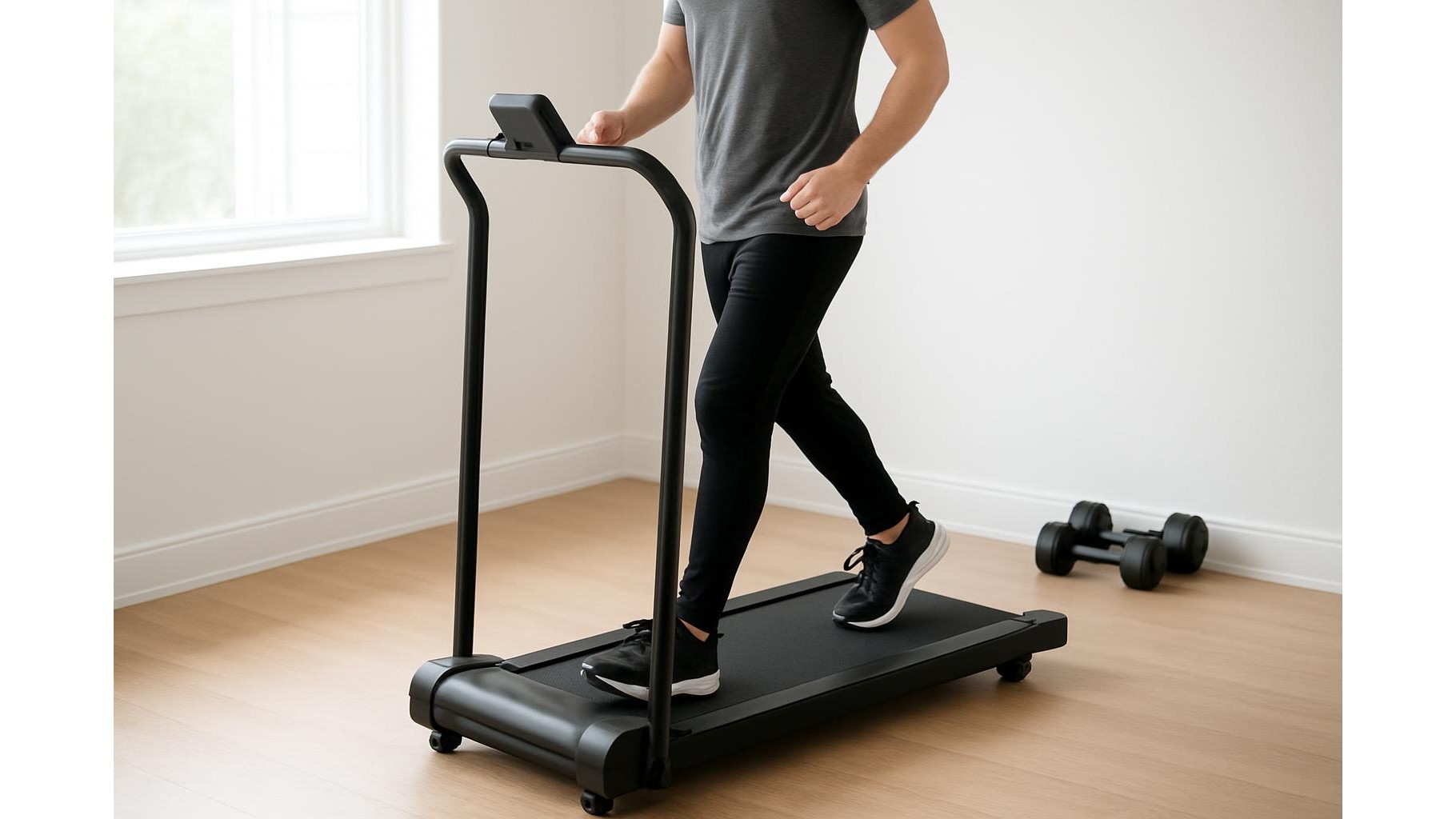
A manual treadmill has no motor; instead, the belt turns only when you walk or run. On basic flat models, the belt sits on rollers and your foot strike pulls it backward. On higher‑end curved treadmills, the deck arches upward at the front and back. When you land slightly forward on the curve, gravity and your body weight drive the belt, encouraging a natural midfoot strike and smooth acceleration. Curved belts are usually wider and use slats or thick, grippy material for better traction, making them ideal for high‑intensity interval training and sprint work, while flat belts suit steady walking and light jogging for general fitness and rehab.
Resistance settings, incline and training feel
Because there is no motor to set the pace, resistance and incline control how challenging a manual treadmill feels. Many entry‑level options use a fixed incline (often 10–15%) to help gravity start the belt moving and to boost calorie burn for walking. Some models add magnetic resistance with dial‑based levels, so you can simulate hill climbs or sled pushes by cranking up the drag on the belt. On curved runners, resistance is often lower and smoother, allowing quick accelerations and decelerations that are perfect for intervals. The overall sensation is that the treadmill responds instantly to your effort, which can feel more engaging but also more demanding than the constant pace of a motorized machine.
Pros of manual treadmills for home gyms
For many households, the main advantages are cost, footprint and simplicity. Manual treadmills typically come in significantly cheaper than mid‑range motorized units, and basic walking models can be very budget‑friendly. Without a motor, they are usually lighter, easier to move, and some can fold almost flat for storage behind a door or under a bed. Noise levels are also lower, limited mainly to the sound of the belt and your footsteps—ideal for apartments or late‑night workouts. Fewer electronics and moving parts mean less maintenance and no need for an electrical outlet, so you can position the treadmill flexibly in your home gym layout or even in a garage or spare room with limited sockets.
Cons compared with motorized treadmills
Despite their strengths, manual treadmills are not perfect for everyone. Many budget models have shorter, narrower decks that can feel cramped for taller runners or those with a longer stride. The fixed or steep incline can be challenging for beginners, especially if you have knee, hip or lower‑back issues. Because the belt only moves when you push it, maintaining fast, steady paces for long distances is harder than on a motorized treadmill—distance runners may find this limiting. You also miss out on advanced features such as pre‑set programs, automatic incline changes, integrated entertainment screens or app‑driven coaching. If you rely heavily on structured virtual workouts, a very simple manual machine may feel too basic.
Who benefits most from a motor‑free runner
A manual treadmill makes the most sense if you prioritize budget, space saving and intensity over high‑tech extras. They are excellent for walkers aiming to increase daily steps, people rebuilding fitness with short, frequent sessions, and strength‑focused home gym users who want a quick, powerful conditioning tool for finishers or HIIT. Curved manual treadmills particularly suit athletes and experienced exercisers who like sprint intervals and want a machine that instantly tracks their effort without button pressing. On the other hand, if you are a long‑distance runner, need very precise pace control, or love streaming guided runs and automatic incline profiles, a quality motorized treadmill will still be the better fit for your training style.
How to choose the right manual treadmill
When selecting a manual treadmill for home, start by clarifying your primary use: gentle walking, mixed jogging or intense sprints. Check the deck length and width against your height and stride, and consider a curved design if you plan to run regularly. Look for solid build quality, a stable frame and a weight rating that comfortably exceeds your body weight. Adjustable resistance and multiple incline options expand your training possibilities, while simple features such as a basic console for time, distance and speed help track progress. Finally, think about storage: folding frames, transport wheels and compact footprints make daily use more practical, especially in small apartments or multipurpose rooms.
In summary, a manual treadmill can be a powerful, low‑tech solution for home cardio, offering minimal maintenance, flexible placement and a workout that responds directly to your effort. While it may lack the bells and whistles of a motorized model, for walkers, HIIT fans and budget‑conscious home gym owners, a motor‑free runner often delivers all the intensity and convenience needed to stay consistent with cardio training.