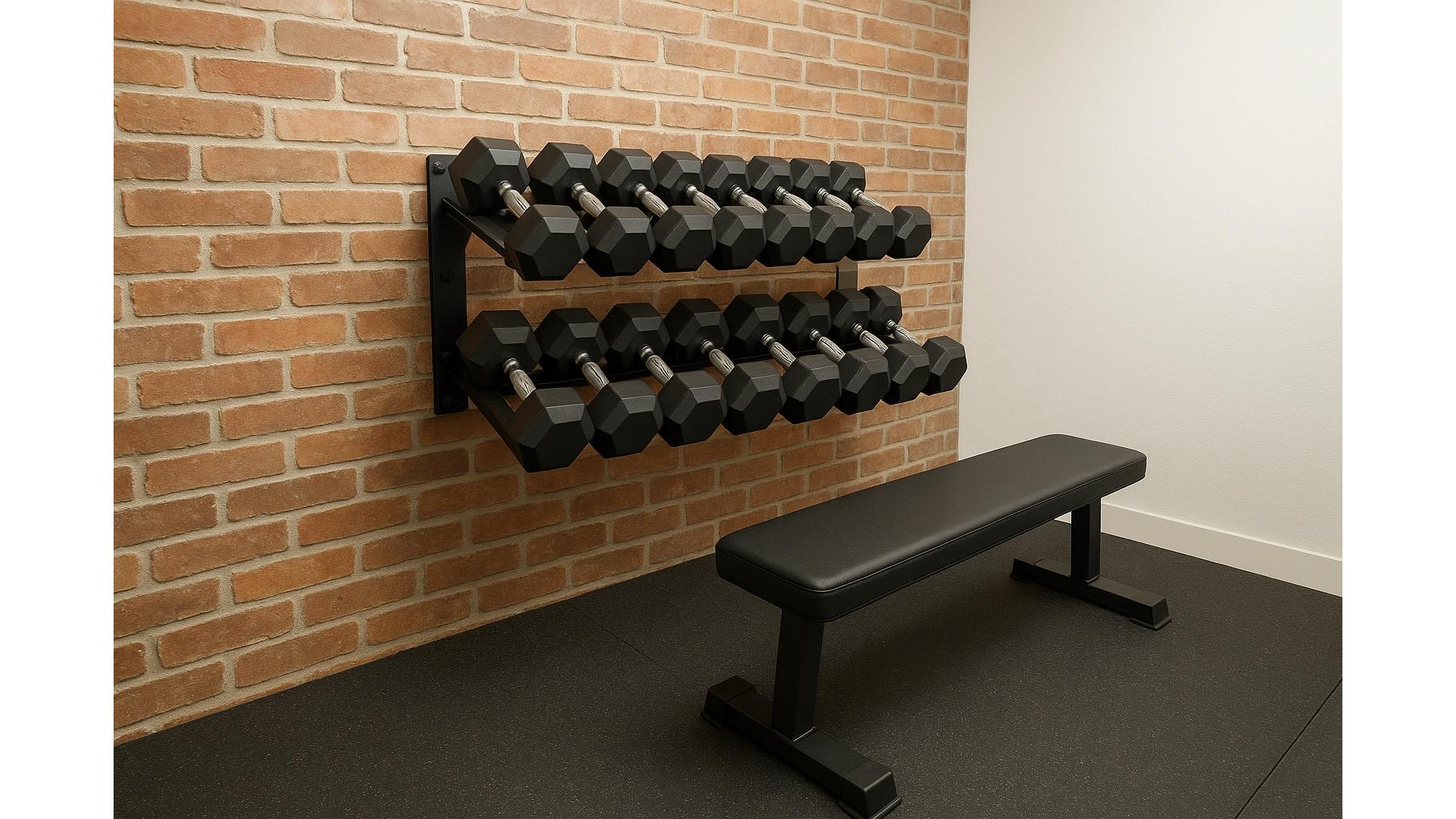
Creating a tidy home gym is easier when every weight has a dedicated place. An adjustable wall-mounted dumbbell rack keeps your floor clear, protects your equipment, and makes workouts smoother because you can see and grab the right weight immediately. Choosing the right rack, however, means thinking about wall type, load capacity, stud spacing and how your layout fits the way you train.
Why a wall-mounted rack beats floor stands
A wall-mounted dumbbell rack frees up valuable floor space, which is crucial in compact home gyms and garage set-ups. By lifting weights off the ground, you reduce trip hazards and make it easier to clean. Wall racks also let you position dumbbells at a comfortable height, so you are not constantly bending down with a rounded back. That matters for long-term joint health, especially if you lift heavy. Because the rack is fixed, it also helps you establish a clear training zone and keeps your gym looking organised and motivating, rather than cluttered with gear in every corner.
Load capacity and safety basics
Before buying any adjustable wall-mounted rack, work out the total weight you plan to store. Add up all your dumbbells and allow at least 20–30% extra headroom for future upgrades. Look for heavy-gauge steel construction, strong welds and a clearly stated maximum load capacity. Equally important is the wall you are fixing to: brick and concrete can usually handle more than plasterboard alone. Always anchor into solid studs or masonry and avoid relying on plastic wall plugs in weak material. If your dumbbells are heavy, spreading them across a wider rack or multiple modules helps to reduce stress on any single fixing point and keeps the installation safer over time.
Stud spacing, fixing hardware and wall types
Getting stud spacing right is the difference between a solid rack and one that slowly starts to sag. In many UK homes, timber studs are typically spaced at 400 mm or 600 mm centres, but you should always confirm with a stud finder. Choose a rack with multiple mounting holes or an adjustable bracket pattern so you can align with existing studs rather than forcing new holes into weak areas of plasterboard. Use heavy-duty wood screws or coach screws into studs, or suitable masonry anchors for brick and block walls. If you have only plasterboard available, consider adding a backing board screwed into several studs, then mounting the rack onto that. Taking the time to plan fixings properly makes a huge difference to long-term safety.
Adjustability, layout and accessibility
A good adjustable rack allows you to change the height or angle of each rail so you can store different dumbbell sizes without wasted space. Think about your training style: if you use a full set from 2 kg to 30 kg, you might want heavier pairs on the lower rails and lighter ones higher up. Leave enough vertical clearance so your fingers can comfortably wrap around each handle without scraping your knuckles on the rail above. In a narrow room, a single long rack along one wall works well; in a multi-use space, two shorter racks stacked vertically can free room for cardio or a bench. Always keep walkways clear and avoid placing racks directly behind doors or where children might climb on them.
Protecting walls, dumbbells and keeping things tidy
Besides strength, look for features that keep your gear and walls in good condition. Racks with rubber or plastic-coated saddles reduce noise and prevent chipped paint or dented dumbbell heads. If your rack is bare steel, adding adhesive rubber strips or protective tape to contact points helps. Consider installing a small mat or strip of rubber flooring beneath the rack to catch sweat and protect the floor from accidental knocks. Labelling shelves or arranging dumbbells in ascending order from left to right makes it easier to keep the setup tidy, even when more than one person uses the gym. A carefully planned rack turns your wall into a clean, functional storage zone that supports consistent, focused training.
Choosing the right wall-mounted dumbbell rack is about more than just looks. By checking load capacity, fixing into solid studs or masonry, and planning a layout that matches your equipment and space, you build a safer, more efficient home gym. Add simple touches like protective padding and logical ordering of weights, and your rack becomes the backbone of a clutter-free training area that feels professional every time you walk in.