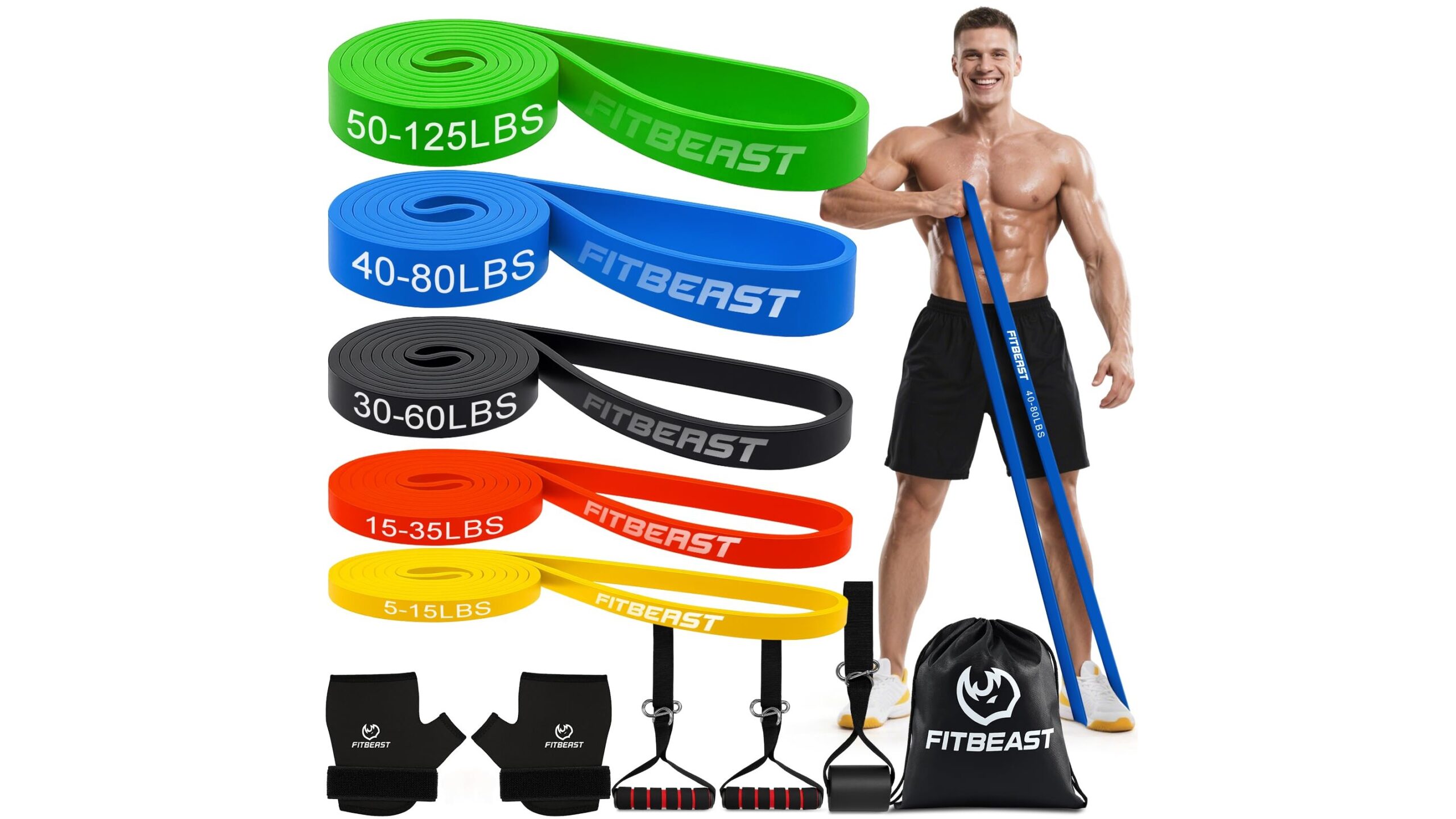
Building a strong upper body at home does not require a full rack of dumbbells. With one long resistance band and a secure doorway anchor, you can train your chest, back, shoulders, and arms with a focused push–pull workout in about 40 minutes. This routine is ideal for small spaces and offers clear progressions for both beginners and intermediate lifters who want efficient, joint‑friendly training.
Table of contents
Gear setup and safety in the doorway
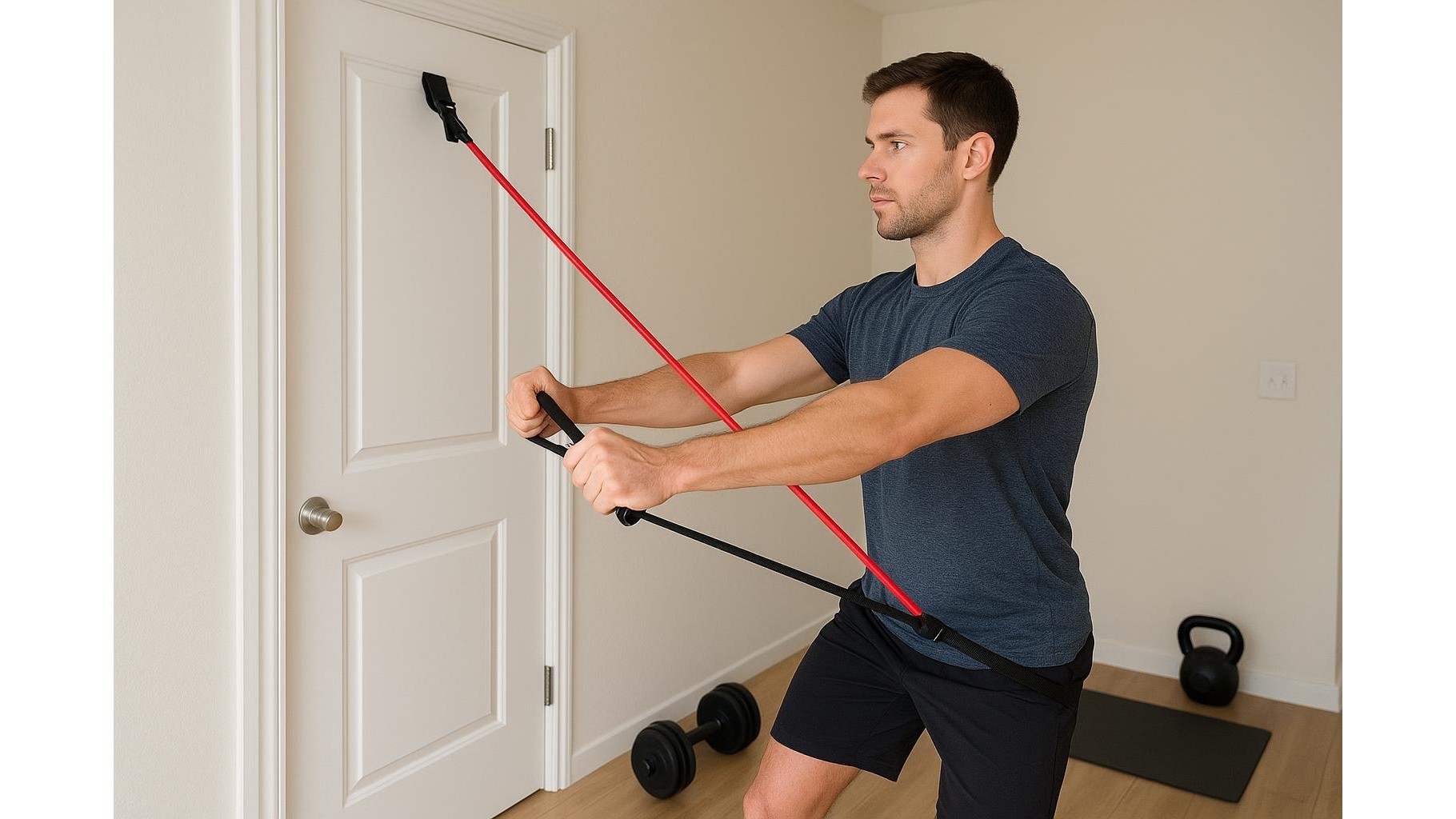
All you need is a medium‑to‑long loop band or tube band and a sturdy door anchor. Place the anchor on the hinge side of the door so it cannot be pulled open toward you, and always close and lock the door before starting. Test the band with a few light pulls to check stability and height. For most upper body moves, you will use three positions: high anchor (top of the door) for pulldowns and triceps work, mid‑anchor (chest height) for rows and presses, and low anchor (bottom of the door) for curls and some shoulder variations. Stand far enough from the anchor that the band is under tension at the start of each rep, but not so far that you lose control at the end of the movement.
Warm‑up and structure of the 40‑minute session
Begin with a 5‑minute warm‑up: arm circles, band pull‑aparts, scapular wall slides, and a few easy band presses and rows. The main workout uses a push–pull pairing: you alternate one push exercise and one pull exercise for 3 sets before moving to the next pair. Aim for 40 seconds of work and 20 seconds of rest, or 10–15 controlled reps per set with 45–60 seconds rest. Beginners can complete three push–pull pairs plus an arm finisher; intermediates can add a fourth pair or one extra set per exercise. Keep each rep smooth, with a slight pause at peak contraction and full control on the way back.
Main push moves: chest and shoulders
For chest, anchor the band at chest height and perform band chest presses facing away from the door, stepping forward until the band is taut. Think of drawing your elbows slightly down and in, squeezing your chest at the lockout. Follow with incline presses (anchor low) to shift emphasis to upper chest and front delts. For shoulders, use overhead presses with the band anchored low or looped under your feet, pressing in a straight line overhead without arching your lower back. Beginners can step closer to the anchor or use a lighter band; intermediates can step further away, slow the tempo, or add a brief pause at the top to increase time under tension.
Main pull moves: back and rear shoulders
Anchor the band high and perform lat pulldowns or straight‑arm pulldowns to train the lats. Focus on driving your elbows down and back, not just pulling with your hands. Pair these with seated or standing band rows from a mid‑anchor position, squeezing your shoulder blades together at the end of each rep. Add face pulls from a high anchor for rear delts and upper back: pull the band toward your nose or forehead, elbows high and wide. To make pulling harder, step back to increase tension or switch to a thicker band; to regress, step in, shorten the range slightly, or use a two‑second negative while keeping the reps lower.
Arm finisher and progression over time
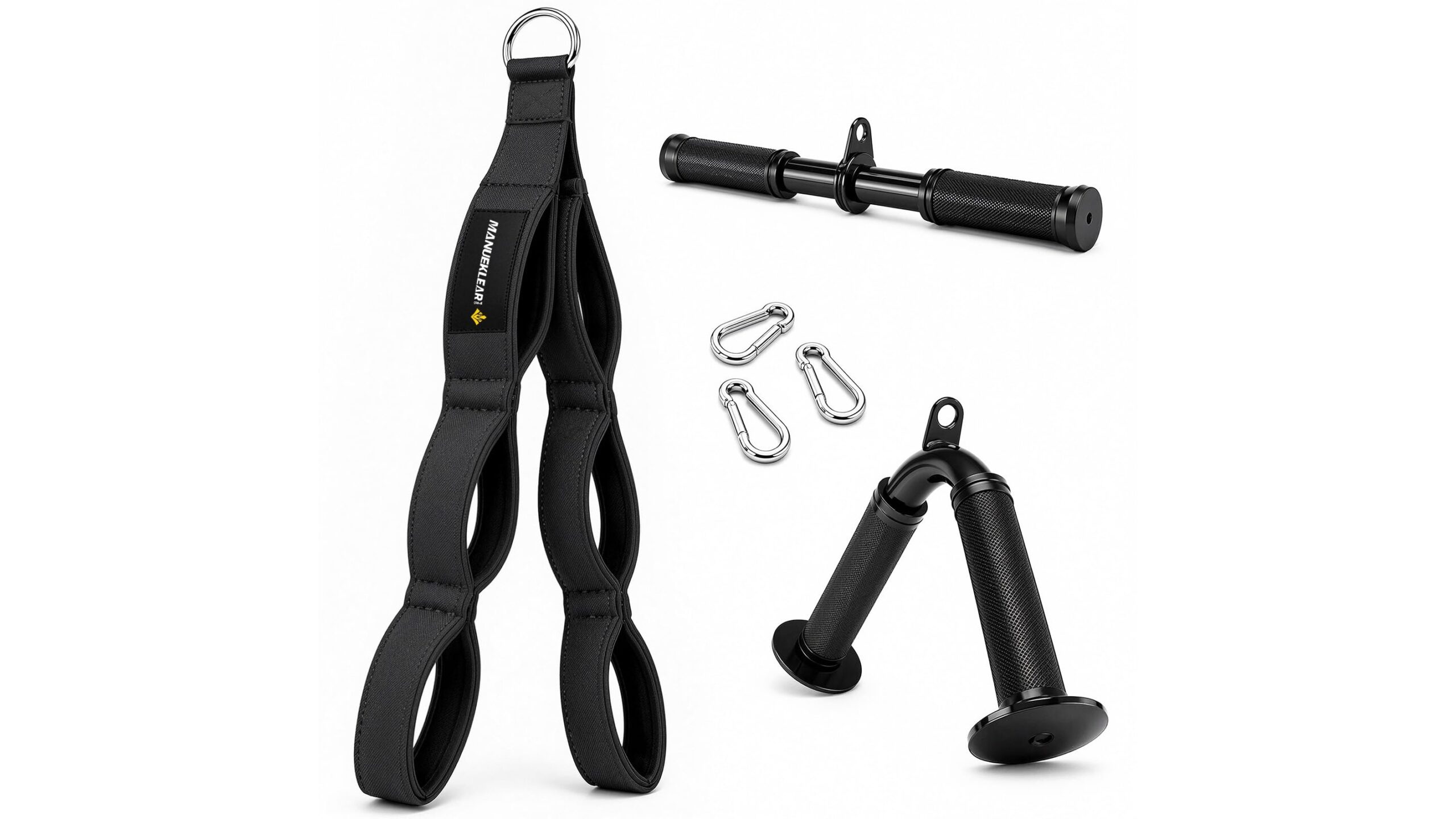
Close the session with a 5–8 minute arm finisher. From a low anchor, do band curls for biceps, then switch to a high anchor for triceps press‑downs. Alternate 30 seconds of work with 15–20 seconds of rest for 3–4 rounds. Over weeks, track your progress by increasing reps, sets, or band tension rather than chasing fatigue alone. Beginners should start with two sessions per week; intermediates can train this push–pull routine three times weekly, ensuring at least one rest day between sessions to recover and adapt.
This simple doorway resistance band workout covers all major upper body push and pull patterns with minimal gear. By anchoring the band securely, pairing pushes with pulls, and adjusting distance or band thickness, you can build strength and muscle in your chest, back, shoulders, and arms without leaving home. Stay consistent, note small improvements in control and tension each week, and your single band will feel heavier—and more effective—over time.