Building serious muscle growth at home does not require a full rack of weights or fancy machines. With a structured approach, a pair of dumbbells and your own bodyweight are enough to trigger powerful hypertrophy. This 4-week, two-dumbbell plan is designed for lifters training in a small space who want clear progression, focused effort and repeatable sessions. You will cycle through three full-body workouts, steadily increase volume and intensity, and learn how to squeeze maximum benefit from minimal equipment.
Table of contents
Essential kit: two dumbbells, big results
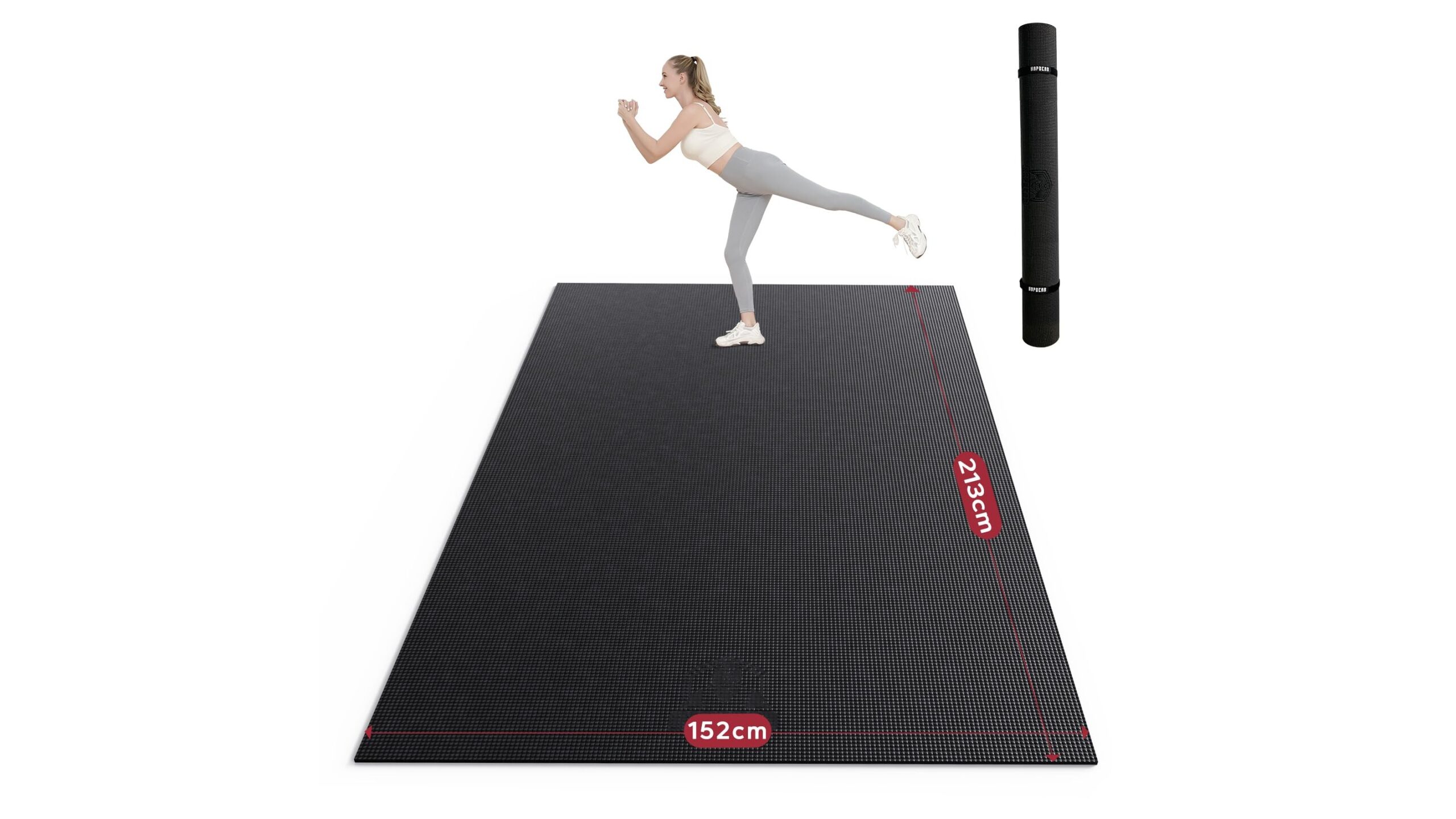
To follow this program you only need two dumbbells heavy enough to challenge you in the 8–15 rep range. Fixed dumbbells work fine, but adjustable dumbbells are ideal because you can micro‑progress loads as you get stronger. Look for solid metal construction, secure collars and a textured grip so you can push safely on movements like goblet squats and rows. If you do not have a bench, you can still perform presses and rows on the floor or with your upper back supported on a firm surface. Combine your dumbbells with simple extras like a mat and a stable chair, and you have a compact home gym setup ready for hypertrophy-focused training.
Program structure: how the 4 weeks work
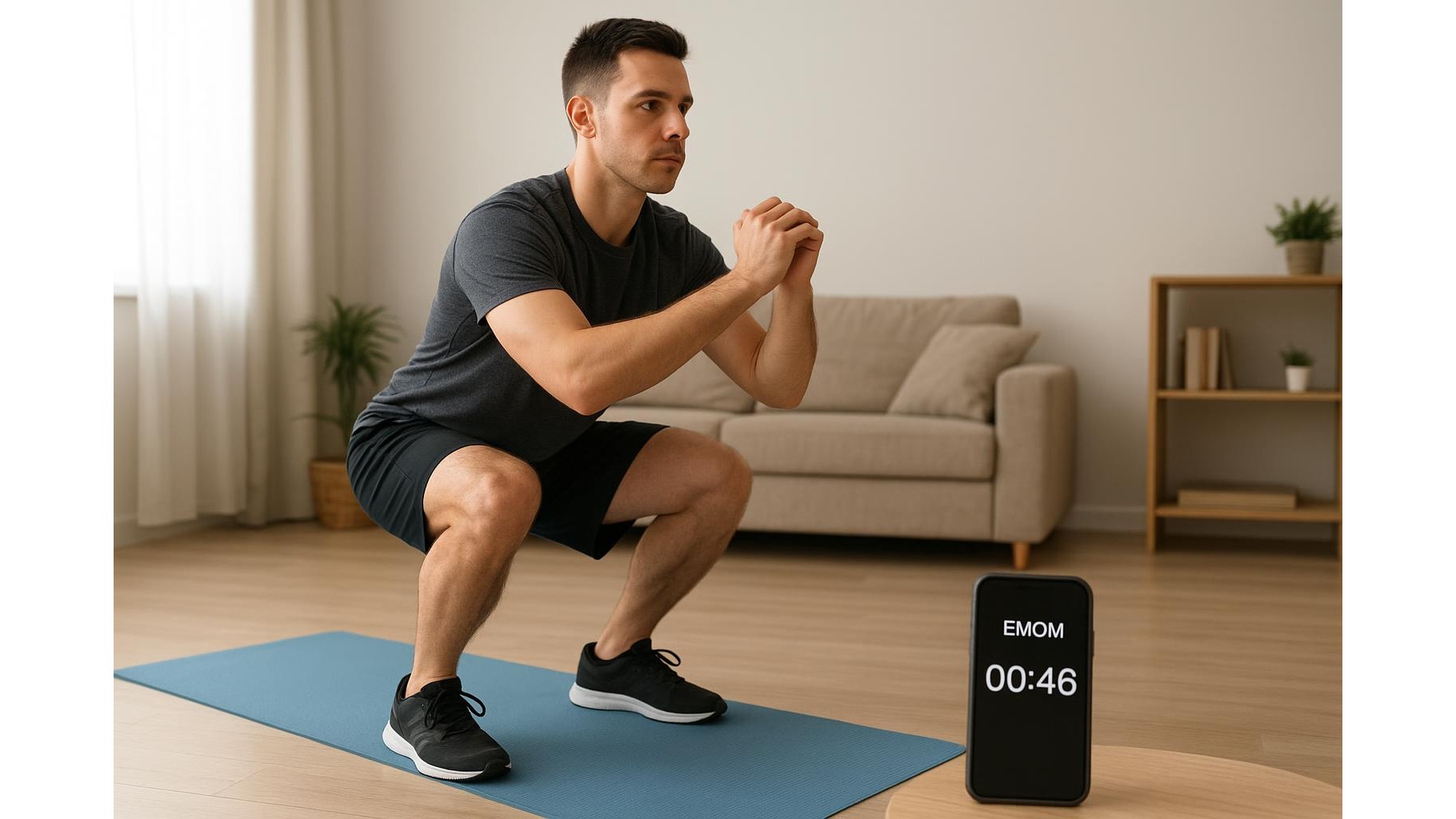
This 4-week hypertrophy plan is built around three sessions: Workout A (squat & push focus), Workout B (hinge & pull focus) and Workout C (full-body pump). Train three days per week, for example Monday, Wednesday and Friday, rotating A–B–C and then repeating. Each workout starts with big compound lifts, then moves to accessories for targeted muscle hypertrophy. In Weeks 1–2 you perform 3 sets per exercise, aiming for 8–12 controlled reps near technical failure. In Weeks 3–4 you increase to 4 sets and extend rep ranges to 10–15 where safe. Rest 60–90 seconds between sets, keep tempo slow on the lowering phase, and track every session so you can add reps or load week to week.
Workout A: squat and push emphasis
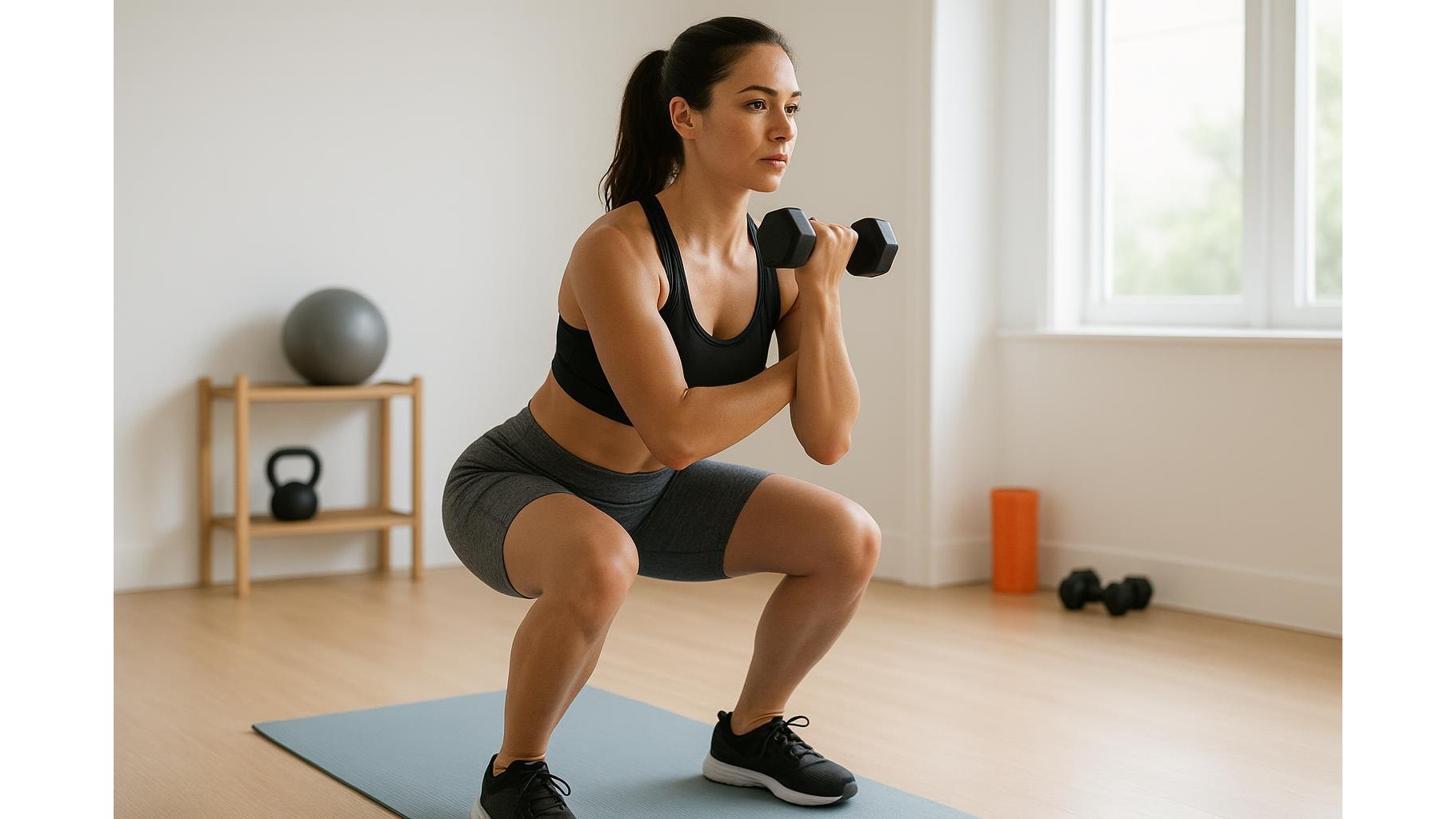
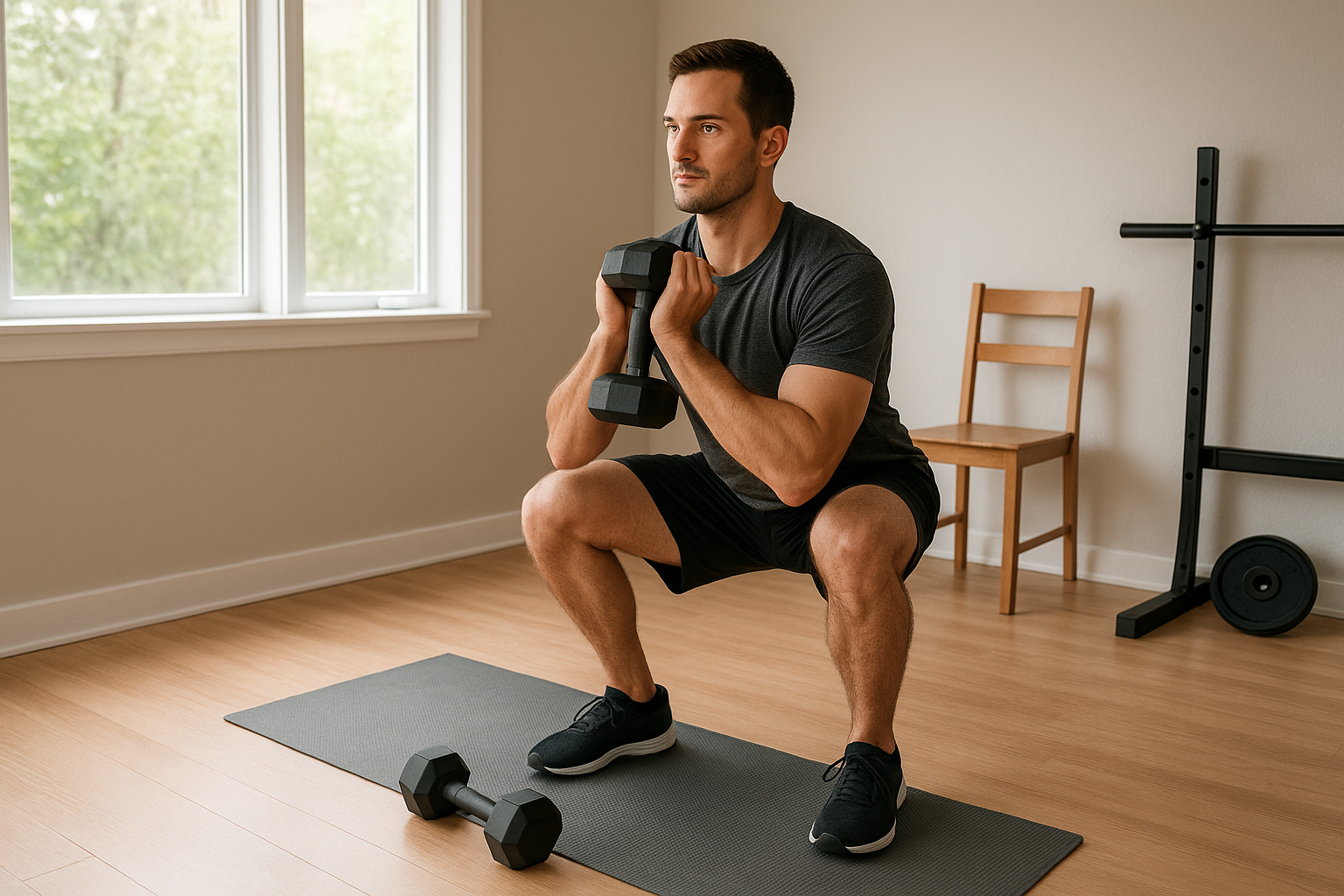
Workout A hits quads, chest and shoulders while still engaging your back and core. Start with goblet squats: 3–4 sets of 8–12 reps, holding one dumbbell vertically at your chest, sinking deep with a proud chest. Follow with floor dumbbell presses for 3–4 sets of 8–12, focusing on a strong squeeze at the top to maximise chest activation. Then move into dumbbell split squats to torch your quads and glutes, 8–10 reps per leg. Finish with standing dumbbell shoulder presses and lateral raises for 10–15 reps to round out the delts. Keep tension constant, avoid locking out hard at the top, and use strict form rather than bouncing or rushing reps.
Workout B: hinge, pull and posterior chain
Workout B is dedicated to the backside of your body: glutes, hamstrings, lats and biceps. Begin with Romanian deadlifts with dumbbells, 3–4 sets of 8–12 reps, pushing your hips back and keeping a neutral spine to feel a strong stretch in the hamstrings. Next, perform one-arm dumbbell rows braced on a knee or bench, 10–12 reps per side, driving the elbow towards the hip to fully engage the lats. Add dumbbell hip thrusts or glute bridges for 10–15 reps to build powerful glutes. Finish with dumbbell hammer curls and reverse flyes for 10–15 reps to hit the biceps and rear delts. Maintain a controlled tempo and stop sets when form breaks to avoid lower-back fatigue.
Workout C: full-body pump and progression tactics
Workout C blends upper and lower body in a higher-rep, pump-focused session to drive additional training volume. Start with dumbbell front-foot elevated split squats for 10–15 reps per leg, followed by neutral-grip floor presses for 10–15 reps. Then alternate bent-over dumbbell rows with dumbbell push presses in a loose superset to challenge your heart rate and shoulders. Finish with a short arm and core tri-set: dumbbell skull crushers, concentration curls and dumbbell dead bugs. To progress across the 4 weeks, aim to add 1–2 reps per set before you increase weight; once you can hit the top of the rep range on all sets with clean form, bump the load slightly and rebuild from the lower end.
Recovery, nutrition and staying consistent
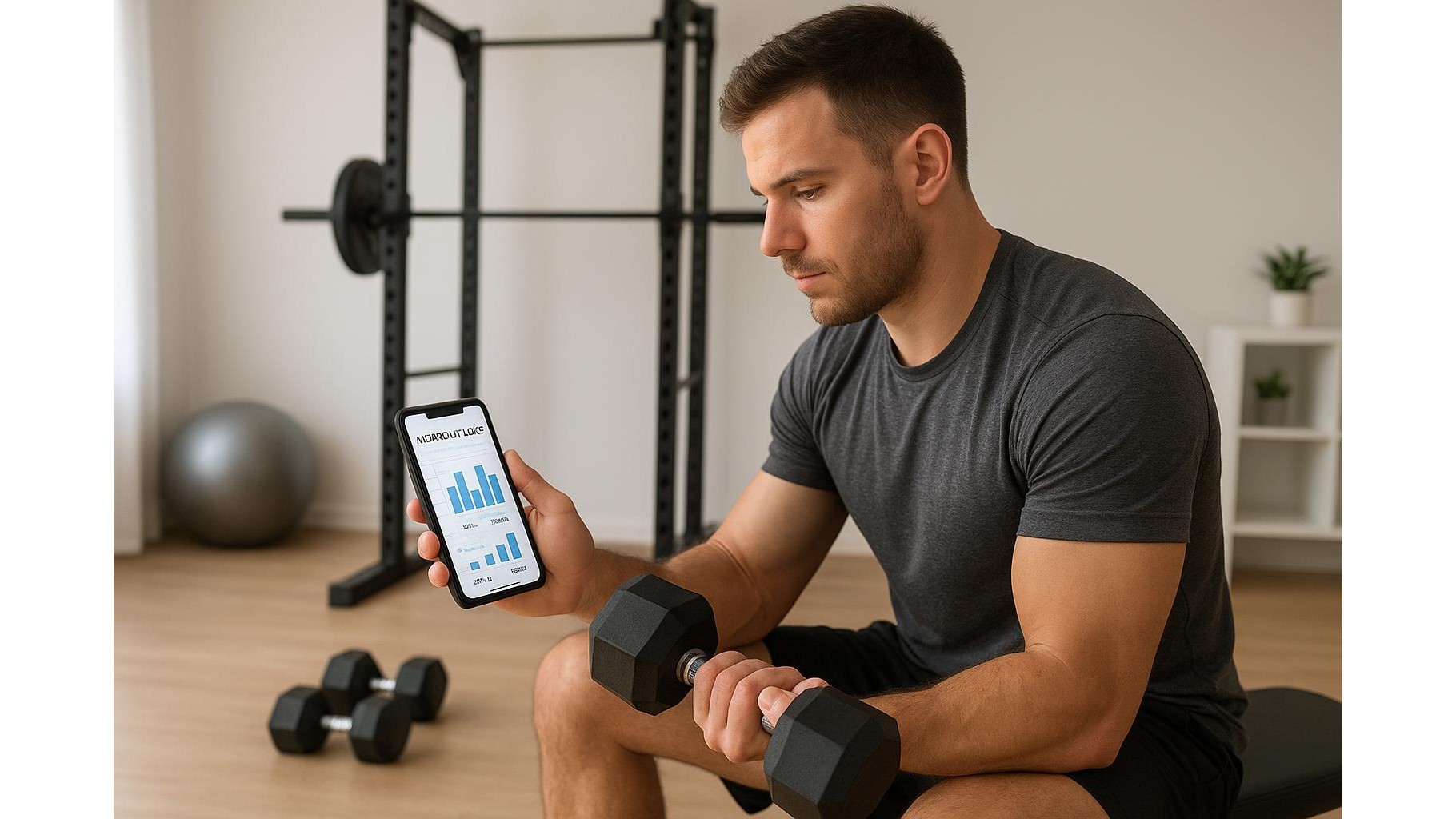
Hypertrophy is built outside the gym as much as during your sessions. Prioritise protein intake across the day, aiming for roughly 1.6–2.2 g per kilogram of bodyweight, and pair it with a modest calorie surplus if muscle gain is your priority. Sleep 7–9 hours per night to support recovery, and keep at least one full rest day between heavy sessions. If joints feel beat up, swap one set of an exercise for a lighter, higher-rep variation rather than skipping the whole workout. Above all, be consistent: repeat the same movements, track your numbers, and commit to finishing this 4-week home hypertrophy plan. With only two dumbbells and focused effort, you can build impressive muscle at home.
Over these 4 weeks you will learn to push close to failure safely, manage your training volume, and extract maximum value from minimal equipment. Stick to the plan, log your progress and refine your technique each session. By the end of the block you should see noticeable improvements in strength, muscle size and confidence training at home—laying the foundation for the next progression in your home gym journey.