
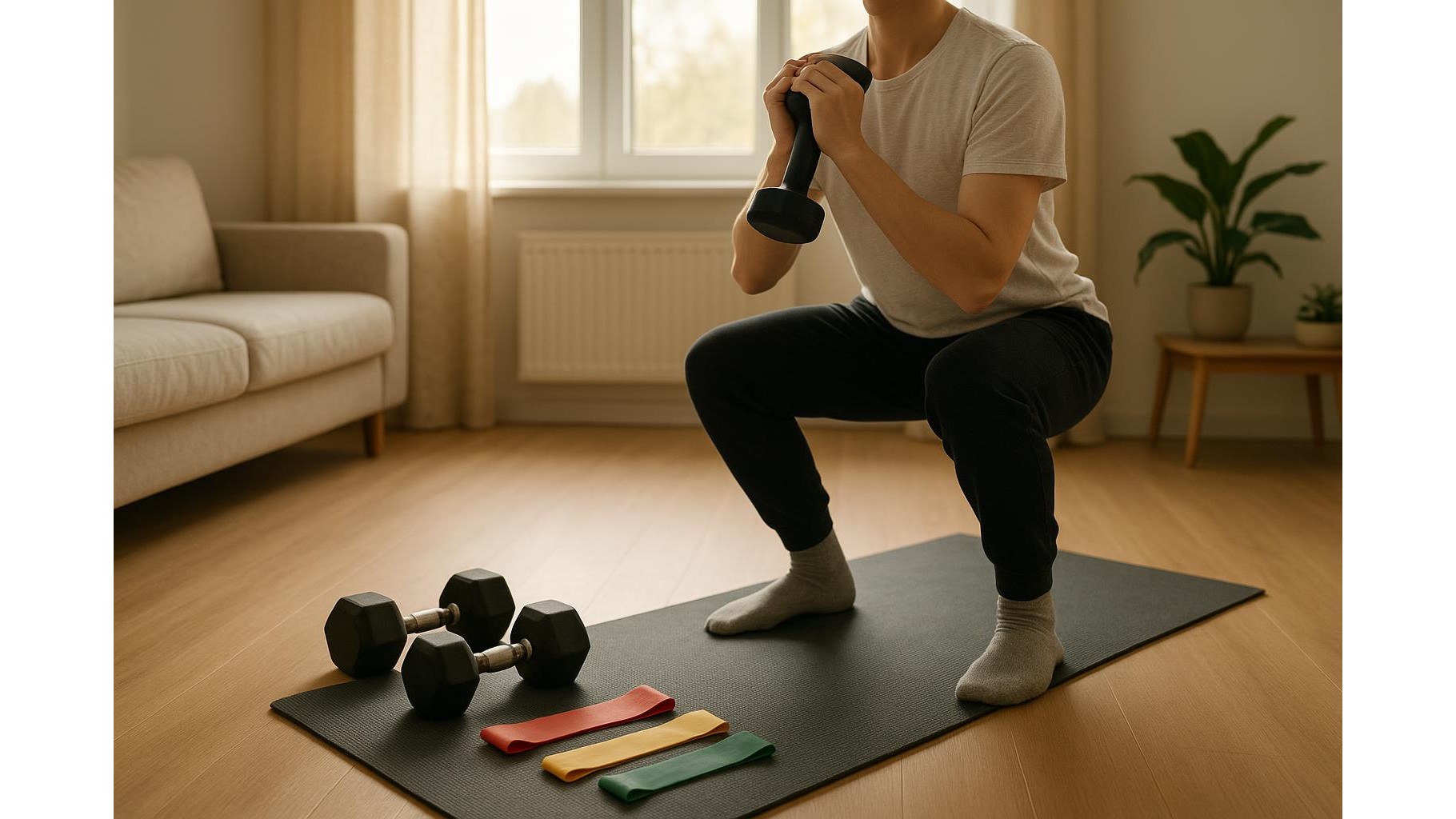
Early mornings are often the only quiet window to train, but stomping burpees or clanging weights can wake the whole house. This 35-minute, low-noise strength and cardio circuit is designed for home workouts in apartments or shared spaces. You will combine low-impact cardio and controlled strength training using compact home gym equipment, staying joint-friendly and neighbour-friendly while still getting an effective full-body session.
Setting up a neighbour-friendly home workout space
Before you start the circuit, prepare a quiet workout zone. Use a thick exercise mat or layered yoga mats to cushion impact and dampen sound, especially if you live above someone else. Choose rubber-coated dumbbells, mini bands, and a soft yoga block over metal plates that can clank. Keep your phone on silent and avoid dropping any equipment. Train in socks or minimalist shoes with soft soles rather than squeaky trainers. Finally, position yourself away from thin walls and directly over structural areas (like near a supporting wall) to reduce vibration travelling through the floor.
Warm-up: 5 minutes of quiet activation
Start with a 5-minute low-impact warm-up to wake up your joints and muscles without jumping. Perform 30–40 seconds each of cat-cow on all fours, hip circles, and shoulder rolls, moving slowly and smoothly. Follow with bodyweight good mornings (hinging at the hips), wall push-ups, and ankle circles. Focus on nasal breathing and keeping tension controlled so nothing jerks or thuds. This gentle prep increases blood flow, opens tight hips and shoulders from sleep, and primes your body for strength work while keeping noise at an absolute minimum.
The 20-minute low-noise strength and cardio circuit
This 35-minute home workout centres on a repeating 20-minute circuit: five exercises, 40 seconds work and 20 seconds rest. Move through the exercises 3–4 times, staying smooth and deliberate. Try this sequence:
- Goblet squats with a dumbbell held close to your chest for quiet, controlled lower-body strength
- Incline push-ups on a sturdy counter or bench to reduce wrist strain and floor noise
- Dead bug core exercise on your mat, focusing on slow, braced movements
- Banded pull-aparts or rows using a resistance band anchored at chest height
- Low-impact cardio march in place with high knees and arm swings, but no jumping
Keep each rep smooth—imagine moving in slow motion—to limit vibrations and maintain tension on the muscles.
Low-impact cardio swaps for noisy moves
If you usually rely on high-impact cardio like jumping jacks or burpees, swap them for silent cardio alternatives. Replace jumping jacks with step jacks (step one foot out at a time while sweeping the arms overhead). Trade burpees for a walk-out plank, slowly walking your hands forward into a plank and back. Instead of running in place, perform a fast but quiet march, lifting knees and pumping your arms. These options keep your heart rate elevated and calories burning while eliminating stomping and floor-shaking impacts, perfect for early-morning apartment workouts.
Cool-down, breathing, and next-day readiness
Finish with a 5–7 minute cool-down to shift your nervous system from effort to calm. On your mat, hold gentle stretches for hips, hamstrings, chest, and upper back, about 20–30 seconds each. Pair each stretch with slow, nasal deep breathing, inhaling for four counts and exhaling for six. This reduces tension and helps you step into your day more focused and relaxed. Lay out tomorrow’s outfit and equipment before bed so you can start quietly and efficiently, turning this early-morning home workout routine into a sustainable habit.
This low-noise strength and cardio circuit proves you do not need loud equipment or high-impact moves to train effectively at home. With smart exercise choices, soft equipment, and deliberate pacing, you can build strength, boost cardiovascular fitness, and protect your joints—without waking your family or neighbours. Repeat this routine three to four times per week, and gradually increase resistance or rounds for continuous progress.









