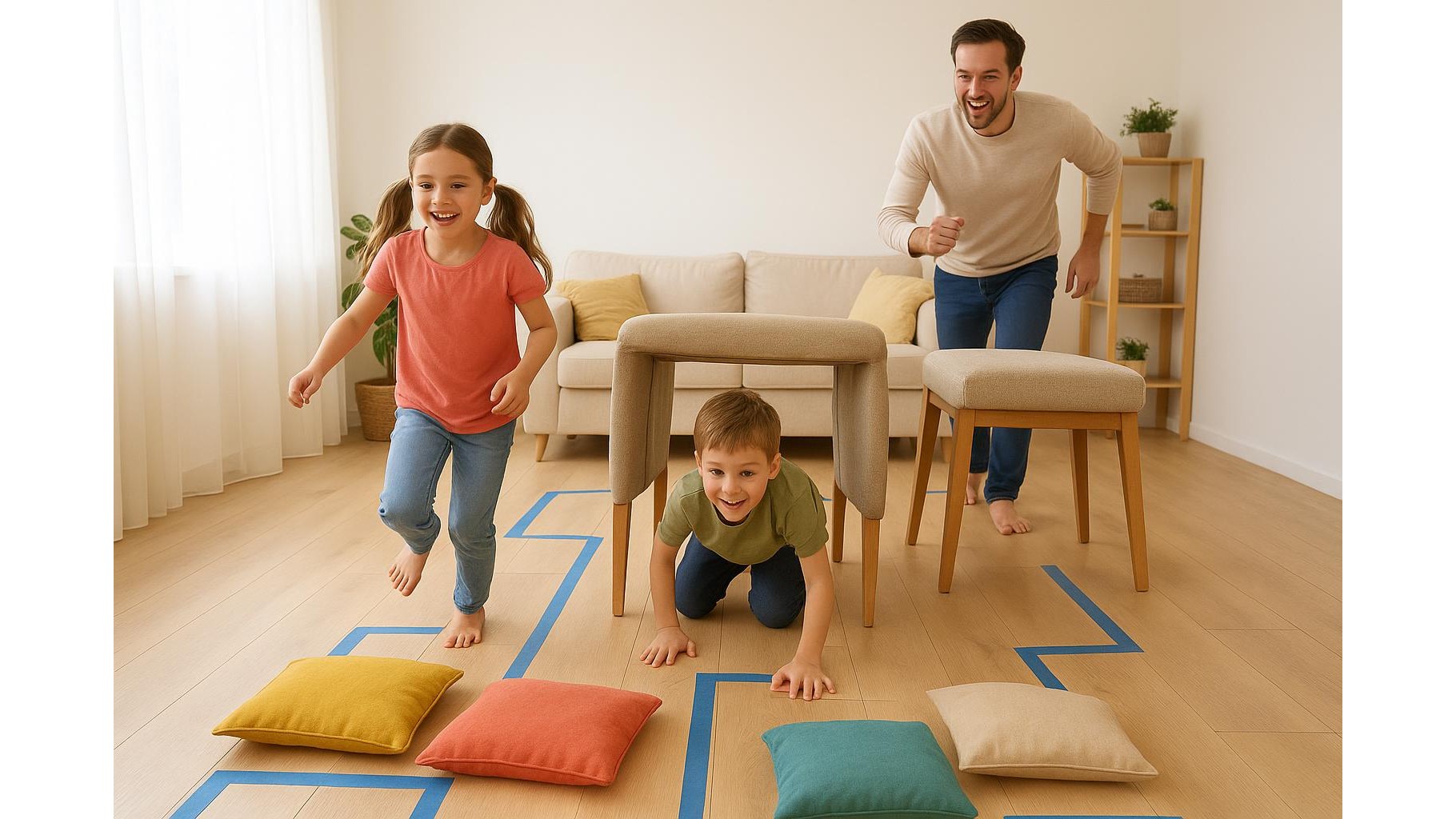
Transform your living room into a playful home workout arena with a 30‑minute obstacle course that keeps both kids and adults moving. Using only cushions, chairs and tape lines, you can build a fun, low‑impact circuit that challenges balance, coordination and strength. This simple setup is ideal for rainy days, busy parents and anyone who wants to sneak in full‑body conditioning without leaving the house.
What you need and how to set it up
Gather a few basic items: 4–6 cushions or pillows, 2–4 sturdy chairs, and some painter’s or masking tape for the floor. Clear a safe area by moving fragile objects and creating a lane through the room. Use cushions as “stepping stones,” tape lines as balance beams or sprint lanes, and chairs as tunnels, hurdles or stations for bodyweight exercises. Make sure chairs don’t slide by placing them against a wall, and leave enough space between obstacles so everyone can move comfortably and safely.
30‑minute structure: warm‑up, circuit, cool‑down
To keep the family workout focused, break the 30 minutes into three parts. Start with 5 minutes of warm‑up: marching in place, arm circles and gentle twists. Spend 20 minutes on the obstacle course, moving through each station for 40 seconds with 20 seconds of rest, or by completing a set number of laps. Finish with 5 minutes of cool‑down: slow walking around the room, easy stretching for legs, hips, shoulders and back. Use a timer on your phone so everyone knows when to switch and the energy stays high.
Designing the obstacles: cushions, chairs and tape lines
Think of each item as a different challenge for functional fitness. Line up cushions to create a “river crossing” where participants must step, hop or crawl without touching the floor. Set two chairs facing each other with a gap to crawl under like a tunnel, or place a cushion between them for triceps dips. Use tape lines as zig‑zag agility paths, sideways shuffle lanes, or narrow “balance beams” for heel‑to‑toe walking. Rotate directions regularly so the body moves forward, backward and sideways, improving coordination and core stability.
Scaling difficulty for kids and adults
The beauty of a living‑room obstacle course is how easy it is to scale. For younger kids or beginners, shorten the course and encourage walking instead of jumping, with plenty of support from adults. For older kids and adults, add bodyweight exercises at each station: 5–10 squats at the tape line, push‑ups with hands on a chair, or mountain climbers beside the cushions. Increase intensity by moving faster, adding an extra lap, or turning one round into a timed “family challenge,” while still keeping technique and safety as the top priority.
Making it fun and keeping everyone engaged
To turn this home gym workout into a family tradition, lean into the game element. Give the course a theme—lava floor, jungle trail, space mission—and name each station. Create simple rules, like earning a point for every completed lap or bonus points for holding a balance pose on the tape line for 10 seconds. Rotate the “course designer” role so each family member gets to rearrange cushions and chairs for the next session. This sense of ownership makes kids eager to participate and helps adults stay consistent with their indoor fitness routine.
With a bit of creativity, your living room becomes more than just a place to sit—it turns into a compact home gym that encourages movement, play and connection. This 30‑minute obstacle course delivers full‑body training, boosts cardio, and improves balance using only everyday items. Make it a weekly ritual, adjust the difficulty as your fitness improves, and enjoy a simple, screen‑free way to get the whole family moving together.