When your joints feel cranky but you still want to build strength at home, isometric training is a powerful, underrated option. By holding positions instead of moving through big ranges of motion, you can challenge your muscles while putting far less stress on knees, shoulders and spine. This 35-minute, joint-friendly full body workout uses nothing more than your bodyweight, a wall, a floor and a simple doorway bar or band to create serious tension in a very small space.
Why isometric strength is so joint-friendly
Unlike traditional reps where you move up and down under load, isometric holds ask you to stay completely still while your muscles generate force. That stability makes them ideal for home workouts on days when you feel a bit beat up: there’s less impact, fewer abrupt changes of direction and a lower risk of technique breaking down as you fatigue. Isometrics help you improve joint stability, tendon resilience and mind–muscle connection, all of which transfer to better performance when you go back to dynamic lifts. They’re also highly time-efficient: with 20–40 second holds and short rests you can hit the whole body in around 35 minutes.
Warm-up and safety for isometric sessions
Before you jump into long holds, spend 5 minutes on gentle mobility and activation. March in place, perform arm circles, easy hip hinges and a few light wall push-ups to get blood moving. When you set up for each hold, think about bracing your core, keeping a neutral spine and avoiding joint positions that feel pinchy or forced. For example, in wall sits keep your knees stacked over your ankles rather than caved in; in plank variations, press the floor away and avoid letting your lower back sag. Breathe steadily instead of holding your breath, and stay just under your pain threshold: isometrics should feel intense in the muscles, not sharp in the joints.
The 35-minute joint-friendly full body plan
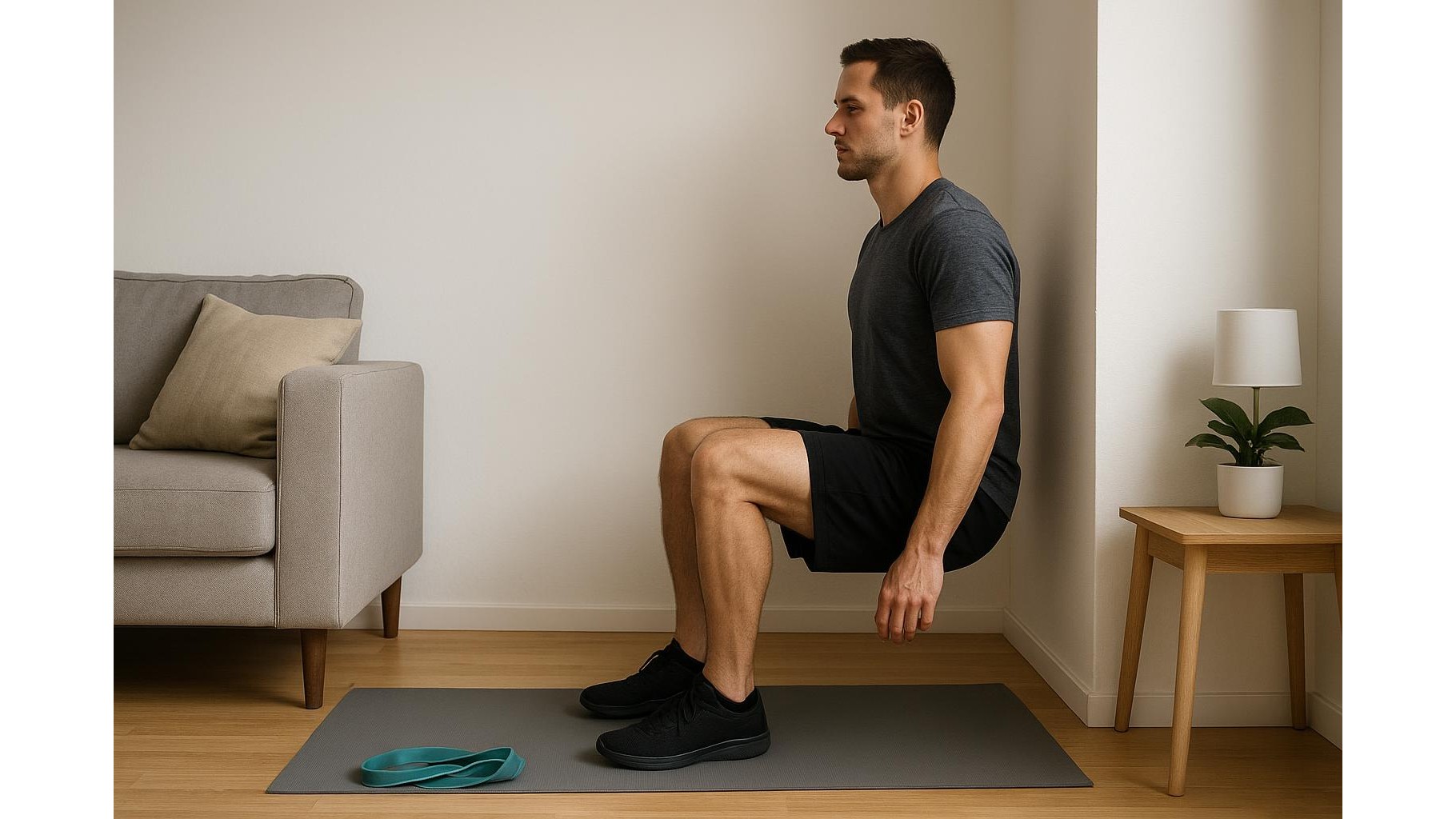
This simple structure targets lower body, upper body and core with minimal equipment and space. Perform 3 rounds of the following circuit, spending 30–40 seconds holding each exercise with 20 seconds rest between moves and 1–2 minutes between rounds. 1) Wall sit: back against the wall, knees around 90°, drive heels into the floor and squeeze quads and glutes. 2) Wall push-up hold: hands on the wall, body in a straight line, lower partway and hold. 3) Front plank: elbows under shoulders, ribs down, glutes tight. 4) Side plank (left then right): focus on stacking shoulders and hips. 5) Glute bridge hold: lying on your back, push hips up and hold while squeezing glutes. Adjust the hold time to match your level, aiming to accumulate quality tension rather than chasing exhaustion.
Using walls, floors and holds to maximise tension
The magic of this routine is learning to create huge muscle tension from simple positions. In the wall sit, imagine trying to crush the floor with your feet while driving your back into the wall. In the plank, think about pulling your elbows toward your toes without actually moving them to light up your abs. You can also use the wall for isometric rows by standing close, bending your elbows and pulling your fists into the wall as if trying to drag it toward you. These zero-equipment tricks teach you how to “switch on” more muscle fibers and keep your joints stacked and supported while you work.
Optional tools to progress your home isometrics
Once you’re comfortable with basic holds, a simple resistance band, yoga mat or doorway bar can deepen your isometric work while still being joint-friendly. Use a mat to cushion your knees and elbows during planks and bridges, so you can focus on tension instead of discomfort. A light band can add challenge to glute bridge holds or standing isometric rows: step on one end, pull the other end toward your chest and hold. A secure doorway bar lets you perform isometric pull-up holds by jumping or stepping up to the top position and squeezing your back hard while you fight gravity. Keep holds shorter at first (10–20 seconds) when you add load, gradually building toward longer durations as your tendons and stabilisers adapt.
Putting it all together on “beat up” days
On days when you feel tired, stiff or mentally drained, this 35-minute isometric full body workout lets you maintain strength without grinding through high-impact reps. By using walls, floors and static holds, you create a controlled environment where you decide exactly how hard to push while staying kind to your joints. Over time you’ll notice better posture, stronger core stability and more confidence in your positions when you return to dynamic training. Save this routine for small-space sessions, recovery-focused days or busy weeks, and you’ll have a reliable, joint-friendly way to keep progressing at home.