
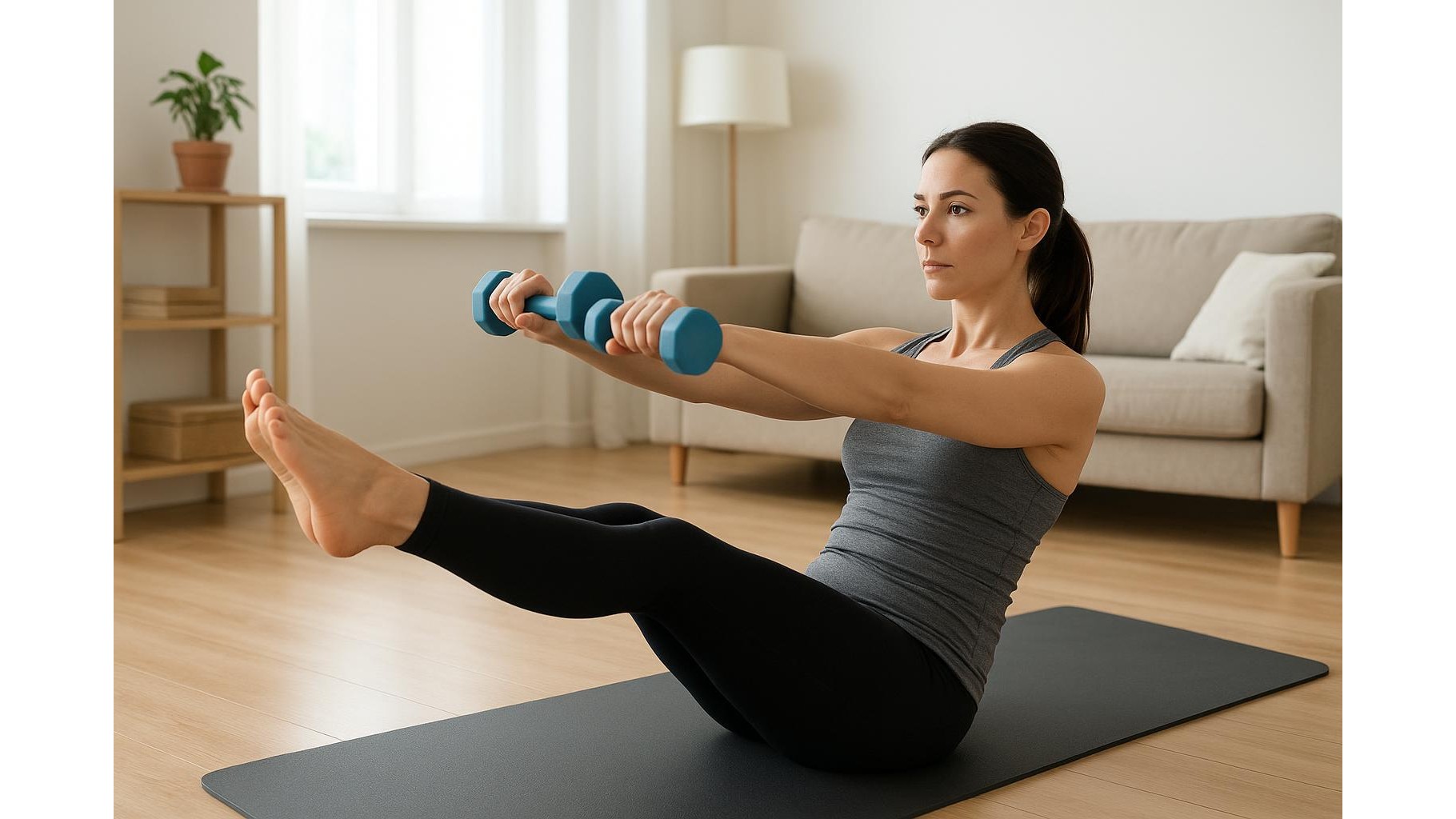
A hybrid pilates-strength home workout is a smart way to build a stronger core, better posture and more stable joints without needing a full gym. In just 30 minutes, using only light dumbbells and a mat, you can combine controlled pilates-inspired moves with simple strength exercises to feel taller, more mobile and more energised, even if you are training in a very small space.
Why combine pilates and light dumbbell strength?
Traditional pilates focuses on core control, breathing and alignment, which are crucial for posture and back health. Adding light dumbbells (for example, a basic coated pair in the 1–3 kg range) introduces gentle resistance that challenges your muscles without compromising form. The goal is not heavy lifting, but time under tension with precise technique. This approach is ideal if you spend many hours at a desk, feel stiff around the shoulders or lower back, or want to ease back into strength training. The low load keeps joint stress minimal while still stimulating the muscles in your shoulders, mid-back, glutes and deep core.
[p
Essential equipment and setup for small spaces
For this 30-minute routine you only need a comfortable exercise mat, a pair of light dumbbells and enough floor space to lie down without hitting furniture. Choose weights that allow you to complete all reps with good posture: most people will do well starting with 1–2 kg. If you do not have dumbbells yet, you can begin bodyweight-only and add resistances later. Train either barefoot or in grippy socks to improve your connection to the floor. Keep your phone on silent and place a water bottle nearby so you can maintain focus and move smoothly from one exercise to the next, which helps keep the workout time-efficient and keeps your heart rate gently elevated.
Warm-up: breathing, mobility and core activation
Begin with 4–5 minutes of dynamic warm-up to wake up your joints and deep core muscles. Start on your back with bent knees, practising diaphragmatic breathing: inhale through the nose to expand your ribs, then exhale slowly while gently drawing the navel towards the spine to engage the deep abdominals. Move into pelvic tilts and bridges to mobilise the spine and activate the glutes. Add a set of cat–cow stretches on all fours to loosen the thoracic spine, followed by slow thread-the-needle rotations to open the upper back and shoulders. This phase prepares your body for more challenging moves and teaches the bracing and alignment you will use throughout the workout, protecting your lower back.
Strength block: controlled full-body dumbbell work
The main strength block lasts around 15 minutes and combines compound dumbbell exercises with pilates-style control. Perform 2–3 sets of 8–12 reps per move, moving slowly and focusing on posture. A simple sequence could include: goblet squats holding one light dumbbell at your chest to strengthen legs and glutes; Romanian deadlifts with soft knees and neutral spine to target the hamstrings and posterior chain; bent-over rows to build your mid-back and counter desk posture; and overhead presses with strict form to train the shoulders. Keep your ribs stacked over your pelvis and avoid overarching your lower back as you press. Between each exercise, take 20–30 seconds to reset your breathing rather than rushing, so that core engagement and alignment remain the priority.
Pilates-inspired core and posture sequence
After the main strength work, shift into a 10-minute pilates-inspired core and posture sequence. Start with dead bug variations on your back, extending opposite arm and leg while maintaining a neutral spine. Progress to forearm or high planks, holding for 20–30 seconds with strong glutes and no sagging at the hips. Add side planks to strengthen the obliques, which support rotation and side-bending. For posture, include prone Y and T raises lying face down, lifting your arms slightly off the floor to activate the lower traps and mid-back; these muscles help pull your shoulders away from the ears and open your chest. Finish with bird-dog on all fours to integrate spinal stability, balance and coordination.
Cool-down, breathing and progression tips
End with 3–5 minutes of cool-down and stretching. Focus on hip flexor stretches, chest openers and gentle spinal rotations to release tension built up from sitting. Return to slow nasal breathing, allowing your heart rate to come down. To progress this 30-minute hybrid pilates-strength home workout safely, increase difficulty gradually by adding a bit more time under tension, choosing slightly heavier dumbbells, or adding an extra set rather than jumping straight to heavy loads. Aim to repeat the routine 2–3 times per week, paired with walks or light cardio on other days. Over time, you should notice improvements in core strength, posture, balance and mobility, making everyday tasks feel easier and reducing common aches.
This simple, structured routine proves that you can build a stronger, more upright and resilient body at home with minimal equipment. By combining pilates principles with light dumbbell strength training, you create a sustainable practice that supports your posture, protects your spine and fits into a busy schedule, all without needing a large space or a full gym.









