Starting strength training when you live with obesity can feel intimidating, especially if you have joint pain and little space or equipment at home. This beginner‑friendly, 30‑minute low‑impact circuit is designed to be gentle on knees, hips and back while still giving you a full‑body workout. You will use only your bodyweight and sturdy household furniture for support, focusing on slow, controlled movements, safe technique and realistic progressions you can build on week after week.
How to set up a safe, supportive home workout space
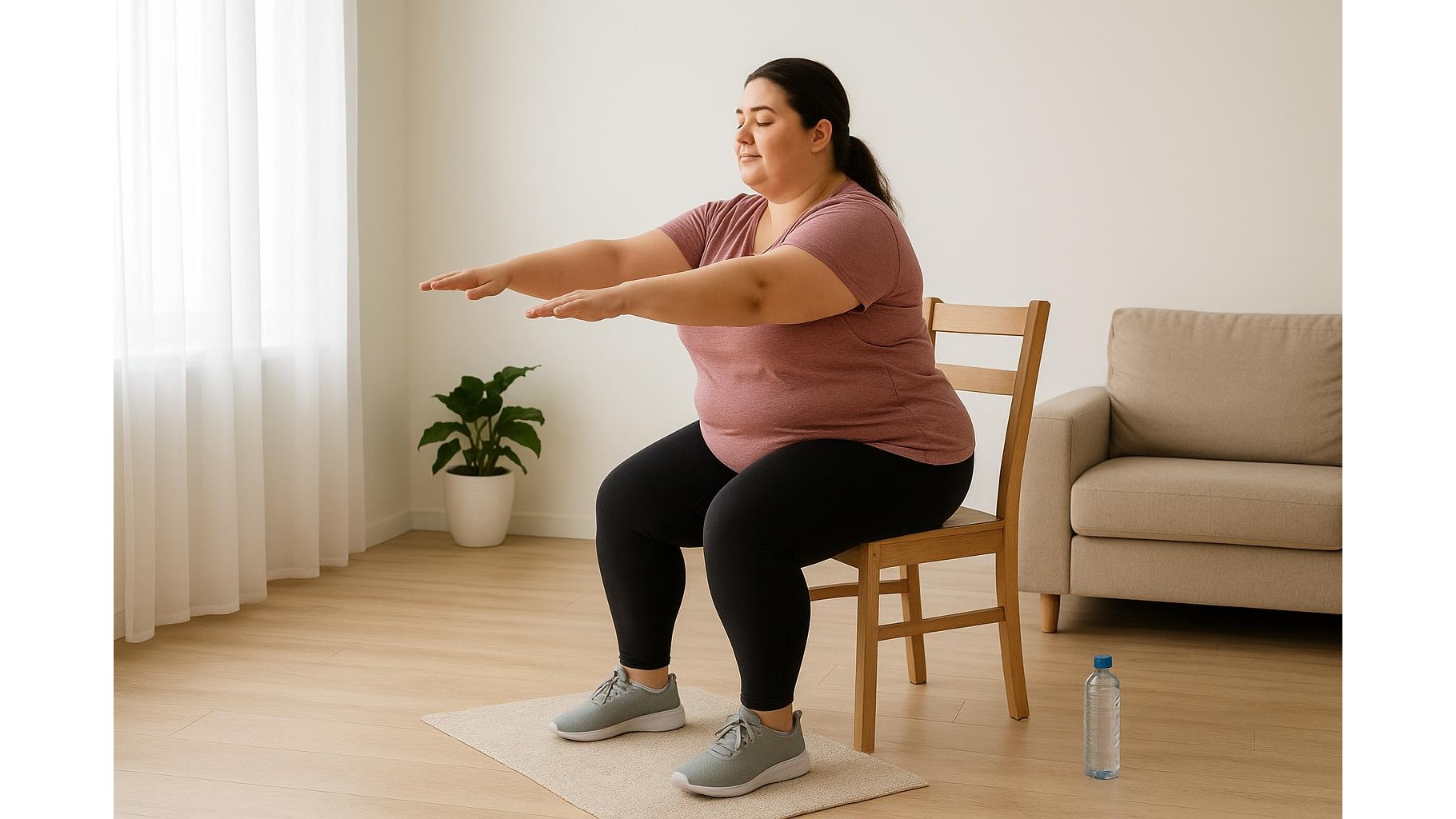
Before you start, choose a clear area where you can move your arms freely and take a step in any direction without bumping into furniture. Use a sturdy chair that does not roll or fold, and place it against a wall so it cannot slide. A kitchen counter, solid table edge or windowsill can also work as support for balance. If you have hard floors, consider a folded towel or mat under your feet to reduce impact, but keep the area under the chair legs bare so it stays stable. Wear supportive trainers and comfortable clothes that allow you to bend and reach overhead. Keep a glass or bottle of water nearby, and if you use any medication that affects your heart rate or balance, talk with your healthcare provider before starting this or any new routine.
The 30‑minute low‑impact strength circuit structure
This home strength circuit for beginners with obesity is organised into six exercises performed back‑to‑back, followed by a short rest. One full round takes about 8–10 minutes. Aim for 2–3 rounds depending on your current fitness and how you feel that day. Work for 30 seconds per exercise with 30–45 seconds of rest between exercises if needed. Between rounds, rest for 2–3 minutes, sipping water and doing gentle marching in place. The exercises are: supported sit‑to‑stand, wall or counter push‑ups, seated knee extensions, supported hip hinge, wall slides for posture, and low‑impact marching with support. Start with just one round if that feels challenging and gradually increase time and number of rounds as your strength and confidence improve.
Exercise 1–2: Chair‑supported lower body and wall upper body work
Supported sit‑to‑stand: Sit on your sturdy chair with feet hip‑width apart, toes slightly turned out. Lean your chest forward a little, press your feet into the floor and push through your heels to stand, using your hands on the chair or counter for extra support. Sit back down with control, gently touching the chair before fully resting. This strengthens glutes and thighs without deep bending. If standing fully is too hard, practise shifting weight forward and lifting your bottom a few centimetres from the seat, then returning. Next, move to wall or counter push‑ups: Place hands on a wall or countertop at shoulder height, step back so your body forms a straight line, then bend elbows to bring your chest toward your hands. Push away, keeping your core gently braced. This reduces shoulder and wrist stress while building chest, arm and core strength safely.
Exercise 3–4: Joint‑friendly leg and hip strength with furniture support
For seated knee extensions, remain on the chair with your back supported. Straighten one leg slowly until your knee is almost fully extended, flexing your foot, then lower with control. Alternate legs. This targets the front of your thighs without putting pressure through your joints. Move on to the supported hip hinge: Stand behind the chair, hands resting lightly on the back for balance. With a soft bend in your knees, push your hips back as if closing a drawer with your glutes, keeping your spine long and chest lifted. You should feel a stretch in the hamstrings and work in your glutes. Return to standing by squeezing your buttocks. This pattern teaches you to bend from the hips rather than rounding your back, which is crucial for spine‑friendly everyday movement.
Exercise 5–6: Posture, core and low‑impact cardio
Stand with your back against a wall for wall slides. Place your arms in a wide “goalpost” position, elbows at shoulder level, and gently slide your arms up the wall, then back down, staying in a pain‑free range. This helps improve shoulder mobility and postural strength, especially if you sit a lot. Finish each round with low‑impact marching with support: Stand next to your chair or counter, one hand resting lightly for balance. Slowly lift one knee, then the other, as if marching on the spot. Keep it small and controlled, landing softly through the whole foot. This gently raises heart rate while staying joint‑friendly. If you fatigue, reduce the height of your knees or perform the marching while seated, alternating lifting each foot a few centimetres off the floor.
Progressions, safety tips and listening to your body
As your strength and stamina grow, you can progress by extending work intervals to 40–45 seconds, adding a third round, or reducing reliance on your hands for support. For example, hover your fingertips over the chair during sit‑to‑stands, or take a small step farther from the wall during push‑ups. Always prioritise joint comfort and breathing over intensity: mild muscle burn is acceptable, but sharp pain, dizziness, chest discomfort or breathlessness that prevents you from speaking a full sentence are signs to stop and rest. Move slowly, exhale during effort (standing up, pushing away from the wall), and inhale on the easier phase. Remember that consistency beats perfection—aim for this routine 2–3 times per week, celebrating every small improvement in balance, control and energy.
This furniture‑supported home strength circuit gives beginners with obesity a realistic, compassionate starting point for building muscle, protecting joints and increasing daily energy. By using simple household supports and focusing on low‑impact, full‑body movements, you can train safely even in a small space and with limited equipment. Stay patient, track small wins like smoother sit‑to‑stands or less reliance on your hands, and gradually expand your activity with short walks or gentle stretching on non‑strength days. Over time, these 30‑minute sessions can lay a solid foundation for better mobility, metabolic health and confidence in your own body.