Building a strong, defined back and powerful biceps at home is absolutely possible, even if you don’t own a pull-up bar or dumbbells. With just a towel, a sturdy table and a safe doorway, you can create a complete pull day workout that trains your lats, upper back, rear delts, biceps and grip while keeping your joints happy. This routine is ideal for small spaces, beginners who can’t yet do pull-ups, or anyone traveling without access to a gym.
How to warm up for a no-equipment pull day
Before any pulling session, you need to prepare your shoulders, elbows and spine. Spend 5–8 minutes on a simple warm-up: start with arm circles, shoulder rolls and gentle neck rotations. Add some cat–cow movements on the floor to mobilize the entire spine and activate your core. Finish with light band-free rows by pretending to pull an invisible cable, focusing on squeezing your shoulder blades together. This boosts blood flow to the upper back and grooves the correct movement pattern so your muscles, not your joints, do the work once the real sets begin.
Towel rows and curls for back and biceps
A simple bath towel can become a versatile piece of home gym equipment. For towel rows, loop the towel around a door handle that is firmly secured and pull both ends toward your waist while leaning back, keeping your body straight like a plank. Drive your elbows down and back, squeezing your shoulder blades at the end of each rep. To hit your biceps, switch to towel curls: stand on the middle of the towel, grab both ends, and curl your hands toward your shoulders while pulling up against the resistance of your own legs. Adjust difficulty by how hard you push down with your feet.
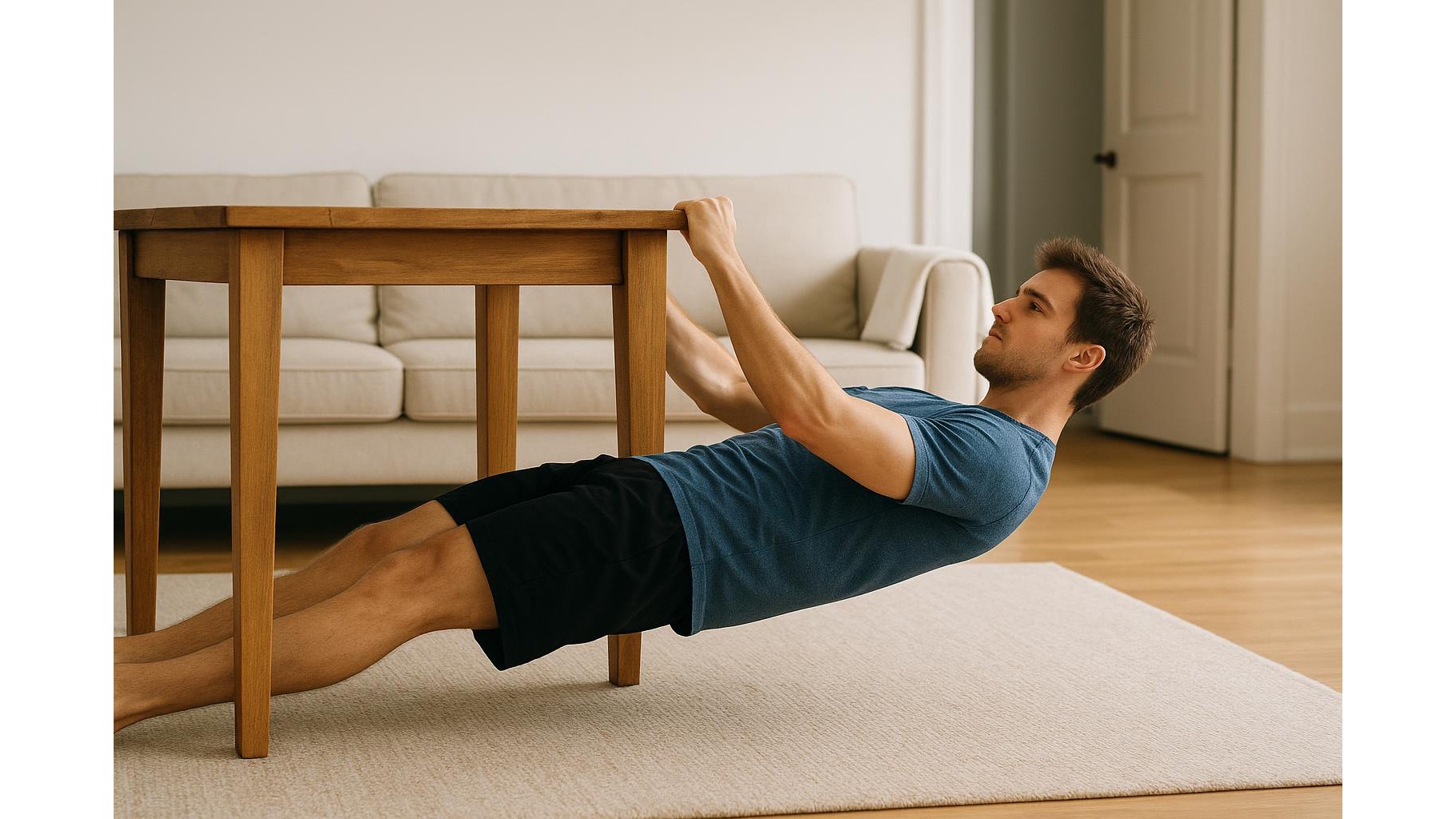
Table inverted rows for bigger lats
The cornerstone of this no-equipment pull workout is the table inverted row. Choose a solid, heavy table that will not tip over. Lie under it, grab the edge with an overhand or neutral grip, keep your body straight and your heels on the floor, then pull your chest up to the underside of the table. Focus on driving the elbows toward your hips to engage your lats rather than just your arms. To make it easier, bend your knees and bring your feet closer. To make it harder, extend your legs fully or elevate your heels on a chair. Aim for controlled reps and avoid shrugging your shoulders toward your ears.
Doorway isometrics and holds for grip strength
A strong grip is essential for pulling power, and a doorway is perfect for building it safely. Stand in a doorway, grab the sides at about chest height and lean back slightly, then hold that position for 20–30 seconds for a doorway isometric row. Keep your core tight and chest lifted. You can also do single-arm doorway holds, gripping one side of the frame and leaning away to challenge each arm independently. Always ensure the doorway is solid and avoid any loose frames or fragile trim. These static holds complement your rowing work and translate well to pull-ups later on.
Sample full pull-day routine and progression
Combine these movements into a structured pull day you can repeat 2–3 times per week. For example: 3 sets of 8–12 table inverted rows, 3 sets of 10–15 towel rows, 3 sets of 10–15 towel curls and 2–3 sets of 20–30 second doorway isometric holds. Rest 60–90 seconds between sets. Progress by slowing the tempo, pausing for 2 seconds at peak contraction, or moving your feet farther forward on rows to increase leverage. Over time you can build enough strength to transition to full pull-ups once you have access to a bar, but even on their own these exercises develop impressive back and arm strength.
This home pull workout without equipment proves you don’t need a full gym to train your back effectively. With a towel, a sturdy table and a doorway, you can hit the major pulling muscles, improve your posture and grow stronger week after week. Stay consistent, log your reps, and focus on quality movement. Your back, biceps and grip will thank you every time you pick up groceries, carry luggage or eventually step up to your first real pull-up.