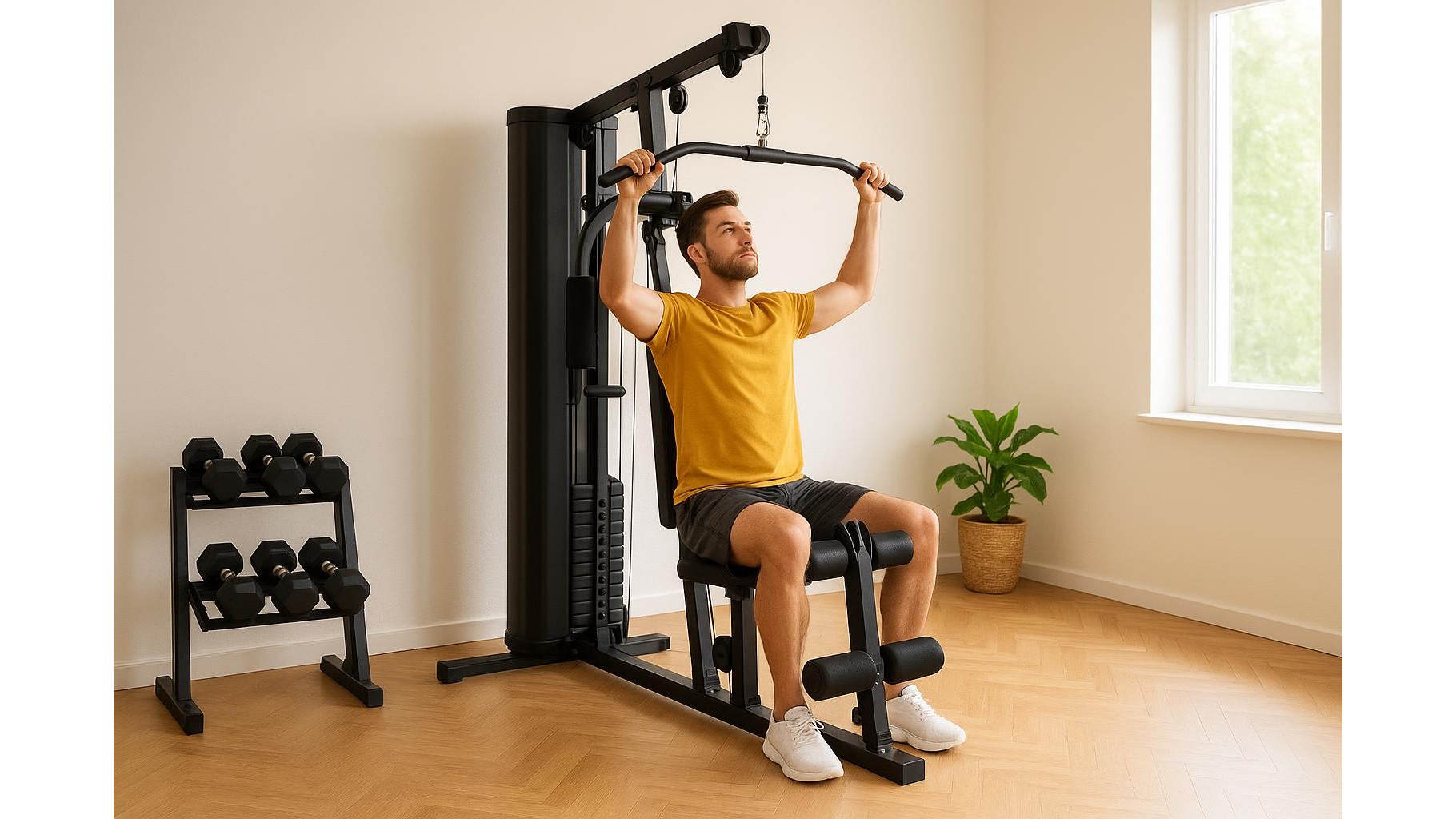
A home multi-gym station lets you train your entire body in one compact space, without juggling multiple machines or free weights. This 45-minute strength plan is built around a typical multi-gym tower with a weight stack, lat pulldown, chest press, low pulley and leg extension/curl. You’ll get a balanced full body workout that targets all major muscle groups with clear set and rep schemes, plus easy ways to progress for beginners and intermediates.
How to structure a 45‑minute multi-gym session
Think of your multi-gym workout as a circuit that moves from big compound lifts to smaller isolation work. Start with 5 minutes of light cardio (marching on the spot, brisk walking, or step-ups) followed by dynamic mobility for shoulders and hips. Then perform 6–8 key exercises using the station: push, pull, hinge, squat, core and accessory moves. Aim for 3 sets of 8–12 controlled reps for strength and hypertrophy, resting 45–75 seconds between sets. Train 2–3 times per week on non-consecutive days. This structure fits into roughly 45 minutes and allows enough volume to build muscle while keeping intensity high.
Upper body push: chest, shoulders and triceps
Begin with the multi-gym’s chest press or pec deck to hit the chest and front shoulders. Perform 3 sets of 8–12 reps, keeping your back flat against the pad and controlling the negative. Follow with a shoulder press attachment if available, or adjust the seat and handles to press from a slightly higher angle. Finish the push segment with triceps pushdowns on the high pulley: elbows close to your sides, full extension at the bottom. Beginners can use lighter loads and aim for the higher end of the rep range; more advanced users can increase weight and use a 2–3 second lowering phase to maximise time under tension.
Upper body pull: back and biceps on the tower
The high pulley on a multi-gym is ideal for lat pulldowns, your primary back builder. Set the thigh pad snug, grip just wider than shoulder-width, and pull the bar towards your upper chest without leaning back excessively. Do 3 sets of 8–12 reps. Next, use the low pulley for a seated row, keeping your torso upright and squeezing the shoulder blades together at the end of each rep. Finish with biceps curls on the low pulley using a straight or EZ-style bar, focusing on controlled form rather than swinging. To progress, slow the eccentric phase and add partial reps at the end of the set when you reach near failure.
Lower body training: legs and glutes on a multi-gym
Many home towers include a leg extension and leg curl attachment. Use leg extensions first to target the quadriceps: 3 sets of 10–15 reps, avoiding locking out the knees forcefully. Then switch to lying or seated leg curls to hit the hamstrings with the same sets and reps. To involve the glutes more, anchor your feet on the low pulley and perform cable pull-throughs or single-leg kickbacks if the setup allows. Since legs often tolerate more volume, intermediates can add an extra set or use a slow 3–1–1 tempo (three seconds up, one hold, one down) on extensions and curls to increase difficulty without changing the load.
Core, accessories and progression strategies
Finish the session with 5–10 minutes of core training using the tower. Cable woodchops, kneeling cable crunches and anti-rotation holds (Pallof presses) all work well on a multi-gym. Perform 2–3 sets of 10–15 reps per side. As a simple progression model, start with a weight that allows 2–3 reps “in reserve” at the end of each set. When you can hit the top of the rep range for all sets with solid form, increase the weight by a small increment on the next workout. Beginners might run this full body plan twice per week; more experienced users can go up to three weekly sessions and add a fourth set to the main push and pull movements.
By using a single home multi-gym station intelligently, you can cover chest, back, shoulders, arms, legs and core in under an hour, without cluttering your space with extra equipment. This 45‑minute full body strength plan focuses on big compound moves, efficient set and rep schemes, and simple progression so you keep getting stronger week after week. Adjust loads, rest times and tempo to your level, stay consistent, and your home multi-gym becomes a complete, long-term strength training solution.