A single loaded suitcase or duffel bag is all you need to build a simple, efficient full body workout at home. This 30-minute routine is inspired by travel: one piece of luggage that works your legs, core and upper body without any fancy equipment. It’s ideal for small spaces, hotel rooms, or minimal home gyms, and you can adjust the difficulty just by changing what you pack inside the bag.
How to set up your suitcase for training
Choose a sturdy suitcase or duffel with solid handles and a secure zipper. Load it with books, water bottles, or clothing until it feels challenging but controllable. Aim for a weight that lets you complete all reps while maintaining good form. Make sure the contents don’t shift too much; you can wrap items in towels to keep them tight. Warm up for 3–5 minutes with light mobility: arm circles, hip circles, bodyweight squats, and marching in place to get joints and muscles ready.
The 30-minute full body suitcase circuit
This suitcase workout uses a simple circuit structure: 40 seconds of work, 20 seconds of rest per exercise. Complete 3–4 rounds, resting 1–2 minutes between rounds. The circuit:
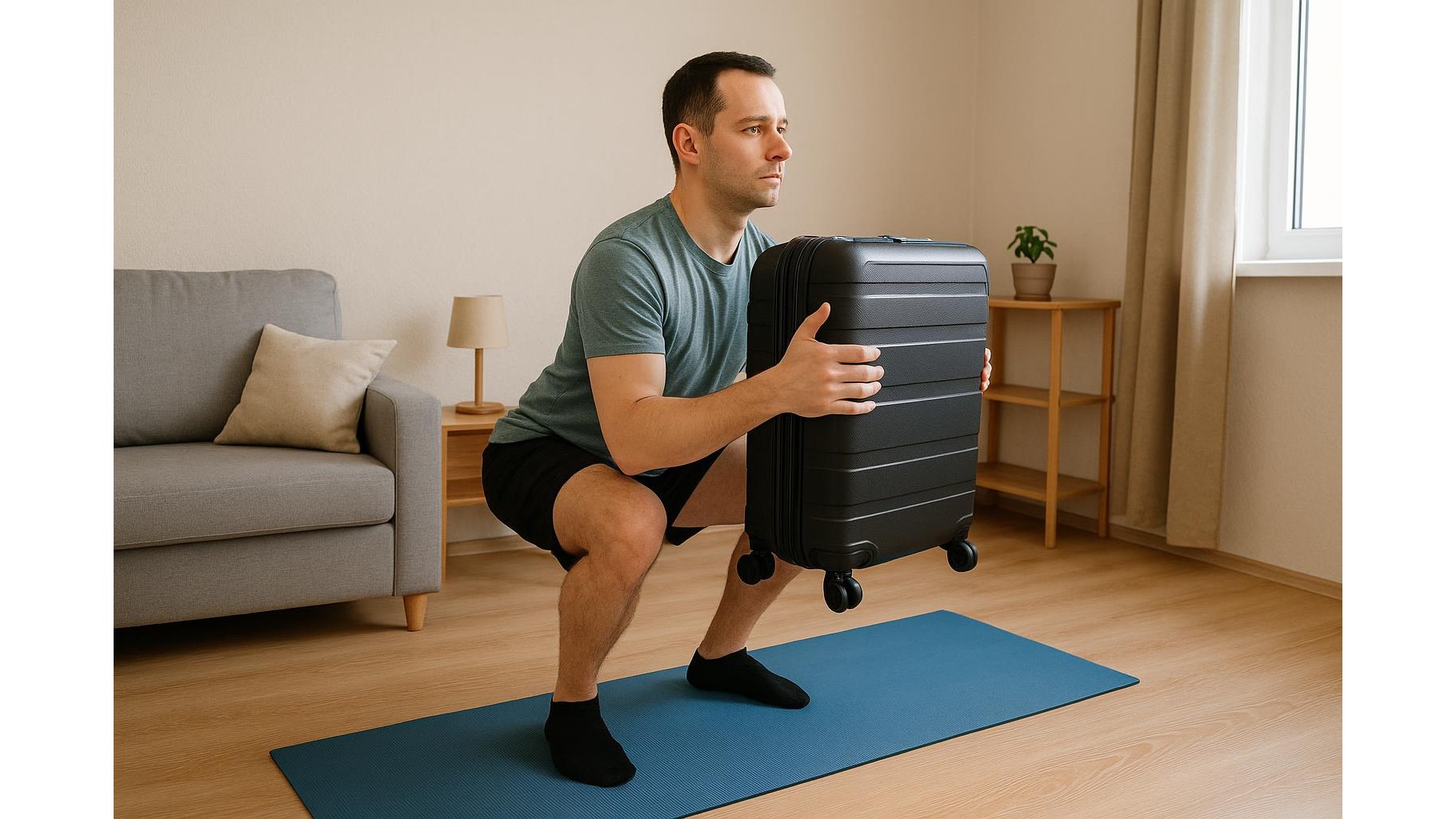
- Suitcase goblet squats
- Suitcase bent-over rows
- Suitcase floor press
- Suitcase Romanian deadlifts
- Suitcase overhead march or carry in place
Move smoothly from one exercise to the next. If 40 seconds is too much, start with 30 seconds of work and 30 seconds of rest. Focus on controlled tempo to keep tension on the muscles rather than rushing the reps.
Lower body focus: squats and deadlifts
For suitcase goblet squats, hold the bag vertically at your chest, feet shoulder-width apart. Brace your core, sit your hips back and down, keep your knees tracking over your toes, and drive through your heels to stand. This targets quads and glutes. For suitcase Romanian deadlifts, hold the bag with both hands in front of your thighs, soften your knees, then hinge at the hips, pushing them back while keeping your spine neutral. Lower until you feel a stretch in your hamstrings, then squeeze your glutes to return. These two moves give you a strong lower-body stimulus with minimal equipment.
Upper body and core: rows, presses and carries
The suitcase bent-over row hits your upper back and biceps. Hinge forward with a flat back, hold the bag by the handles, and pull it toward your lower ribs, squeezing your shoulder blades together. For the suitcase floor press, lie on your back with knees bent, grip the bag on both sides of your chest, and press it straight up, locking out your elbows, then lower under control. Finish with an overhead march or carry: press the bag overhead, keep ribs down and core tight, then march in place, lifting knees high. This challenges shoulder stability and deep core muscles at the same time.
Progressions, safety tips and weekly plan
To progress this home suitcase workout, gradually add weight to the bag, increase work intervals to 45–50 seconds, or add an extra round. Keep movements pain-free and controlled, especially when hinging or lifting overhead. Avoid twisting under load and always brace your core before moving the bag. For a simple weekly plan, perform this routine 2–3 times per week on non-consecutive days, pairing it with walks, light cardio, or mobility work. Over time you’ll build strength, stability and confidence training with almost no equipment.
This 30-minute full body suitcase workout at home proves you don’t need a full rack of weights to train effectively. With one loaded bag, smart exercise selection and structured intervals, you can hit every major muscle group, elevate your heart rate and maintain strength whether you’re at home, traveling, or working out in a tiny space.