Training your entire body at home does not require bulky machines or noisy weights. With a simple Pilates bar kit with resistance bands and your own bodyweight, you can build strength, improve posture and boost core stability in a compact, quiet and beginner‑friendly way. This 40‑minute routine is designed for small spaces and focuses on efficient movements for legs, core and upper body, using just one versatile tool plus classic floor exercises.
Why a Pilates bar kit is perfect for home strength
A Pilates bar kit is essentially a lightweight bar that connects to resistance bands with ankle or hand straps, turning your living room into a mini cable machine. Unlike free weights, bands provide constant tension throughout the range of motion, which is excellent for joint‑friendly strength work and time‑under‑tension training. Most kits are portable, easy to store under a bed, and quiet in use, so you can train early in the morning or late at night without disturbing neighbours. Look for a model with multiple band resistances so you can progress over time and customise exercises for upper and lower body.
Warm‑up and setup (5 minutes)
Before you start the main sets, spend five minutes preparing your body and setting up your space. Clear an area about the size of a yoga mat and check that the bands are securely attached to the bar and straps. Begin with gentle marching in place, shoulder rolls and hip circles for 60–90 seconds each. Then move into light band pull‑aparts with the bar to wake up your shoulders and upper back, followed by bodyweight squats and glute bridges to activate legs and hips. The goal is to increase blood flow and rehearsal of the movement patterns you will use, not to fatigue yourself.
Leg and glute block (10 minutes)
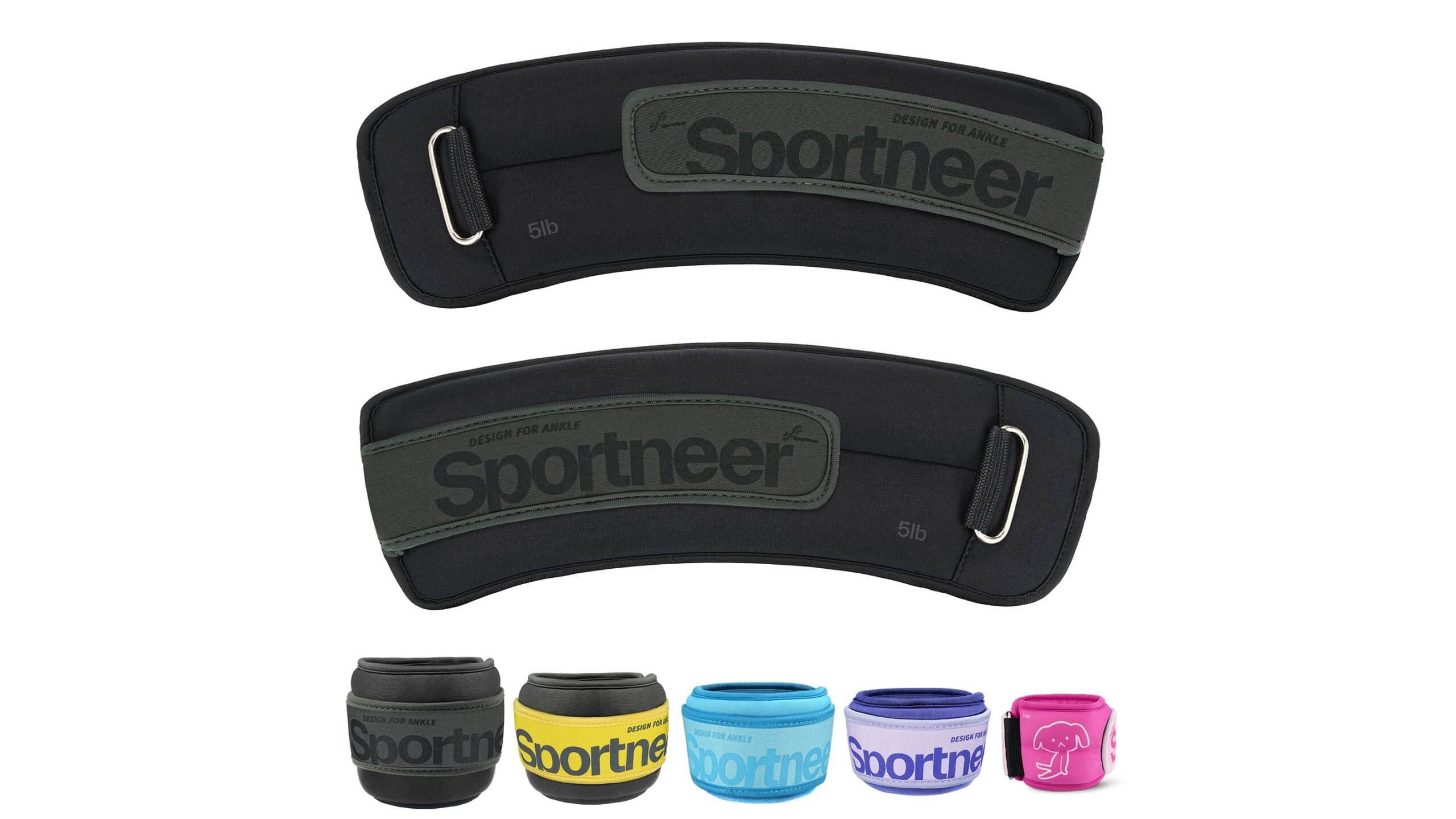
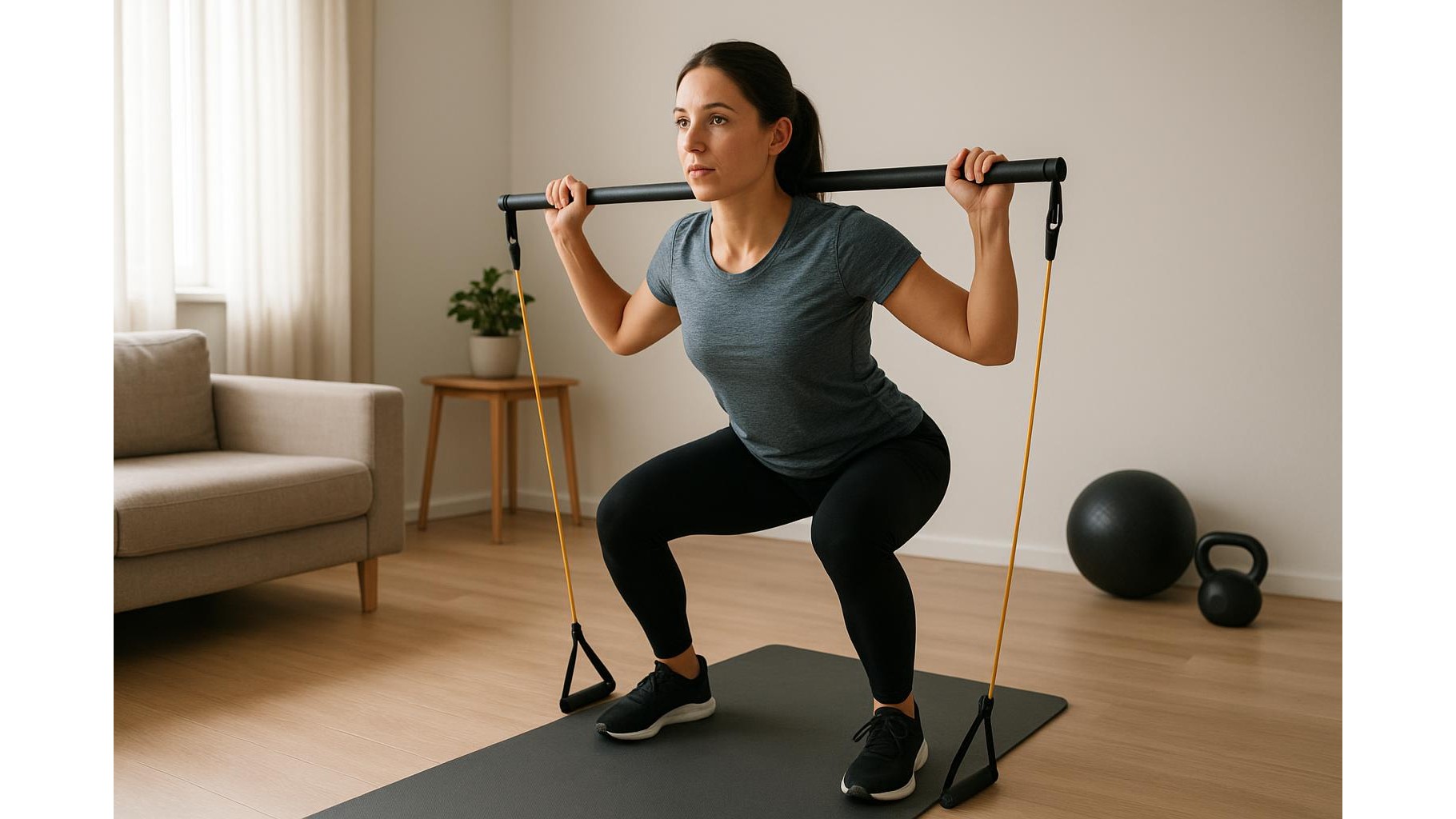
The first working block targets legs and glutes using the Pilates bar plus bodyweight for stability. Stand on the bands with feet hip‑width apart, holding the bar at shoulder height. Perform bar‑resisted squats, focusing on keeping your chest tall and knees tracking over toes; aim for 3 sets of 10–12 slow reps. Next, loop the ankle straps and perform standing kickbacks for your glutes, holding the bar lightly for balance. Alternate legs for 12–15 reps each side. Finish with Romanian deadlifts using the bar: hinge at the hips with a flat back, feel a stretch in your hamstrings and drive back up by squeezing your glutes. Short rests of 30–40 seconds keep the block efficient while remaining accessible for beginners.
Core and posture block (10 minutes)
The second block focuses on core stability and better posture, ideal if you sit at a desk all day. Start with Pilates bar roll‑downs: stand tall holding the bar at hip level, then slowly curl your spine forward, letting the bands add gentle resistance as you articulate down and up. Follow with half‑kneeling anti‑rotation presses, where one end of the band is anchored under your front knee and you press the bar straight out in front of your chest, resisting the urge to twist; this challenges your obliques and deep core. Transition to the floor for dead bugs or Pilates hundreds using light band tension to increase the load. Maintain slow, controlled breathing and prioritise form over speed or range.
Upper body and finisher block (10 minutes)
The final working block trains your upper body and adds a simple conditioning finisher. In a standing position, perform overhead presses with the bar while standing on the bands, keeping ribs down and avoiding arching your lower back. Move to bent‑over rows with a hip hinge to target your upper back and lats, squeezing the shoulder blades together at the top of each rep. For chest, you can simulate a press by anchoring the bands behind you (for example under a heavy piece of furniture) and pressing the bar forward at chest height. To finish, alternate 30 seconds of banded thrusters (squat to press) with 30 seconds of bodyweight mountain climbers, repeating 3–4 rounds for a low‑impact but challenging full‑body burn.
Across just 40 minutes, this structured routine turns a simple Pilates bar kit and your own bodyweight into a powerful home gym solution. By dividing the session into dedicated blocks for legs, core and upper body, you build balanced strength, improve posture and increase training consistency without leaving your living room. Adjust the band resistance, rep ranges and rest periods as your fitness improves, and you will have a scalable, quiet and space‑saving workout that fits into even the busiest schedule.