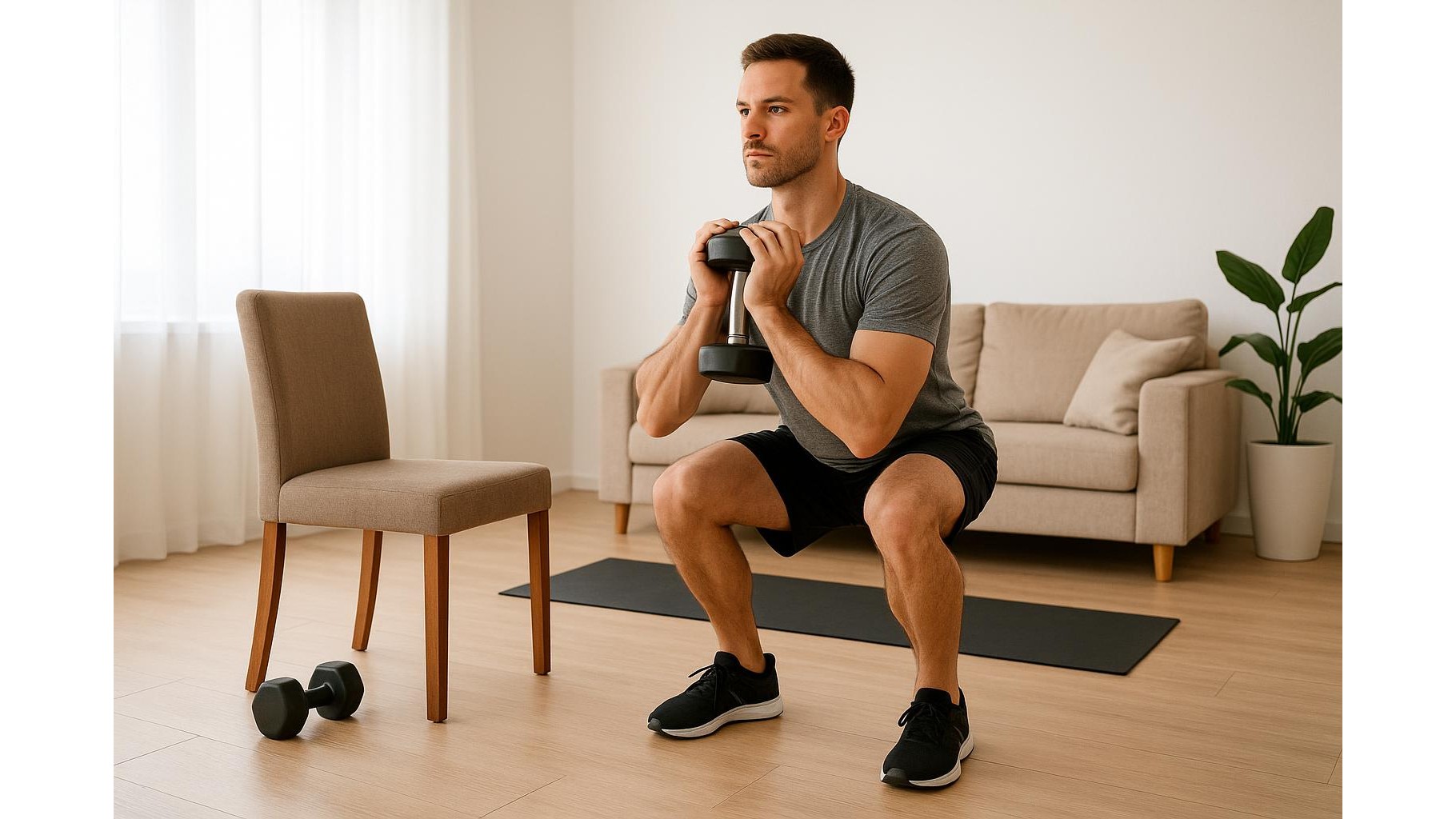
Building full body strength at home does not require a full rack of machines or a commercial gym membership. With just a pair of dumbbells and a sturdy chair, you can run a scalable strength ladder workout that challenges beginners and advanced lifters alike. By adjusting the load and moving up or down the ladder, you control intensity while keeping the session time-efficient and joint-friendly, all within about 40 minutes.
Table of contents
Why a strength ladder works for every level
A strength ladder is a structure where you perform increasing (and sometimes decreasing) reps across rounds, rather than fixed sets and reps. For example, you might perform 4–6–8–10 reps for each exercise, with short rests. This format is ideal for home training because you can keep equipment minimal while still accumulating a high-quality training volume. Beginners can stop at the lower rungs of the ladder and use lighter dumbbells, while stronger lifters climb higher or add load. The built-in progression makes it easy for different levels to share the same routine while each person works at an appropriate intensity.
Essential equipment: dumbbells and a solid chair
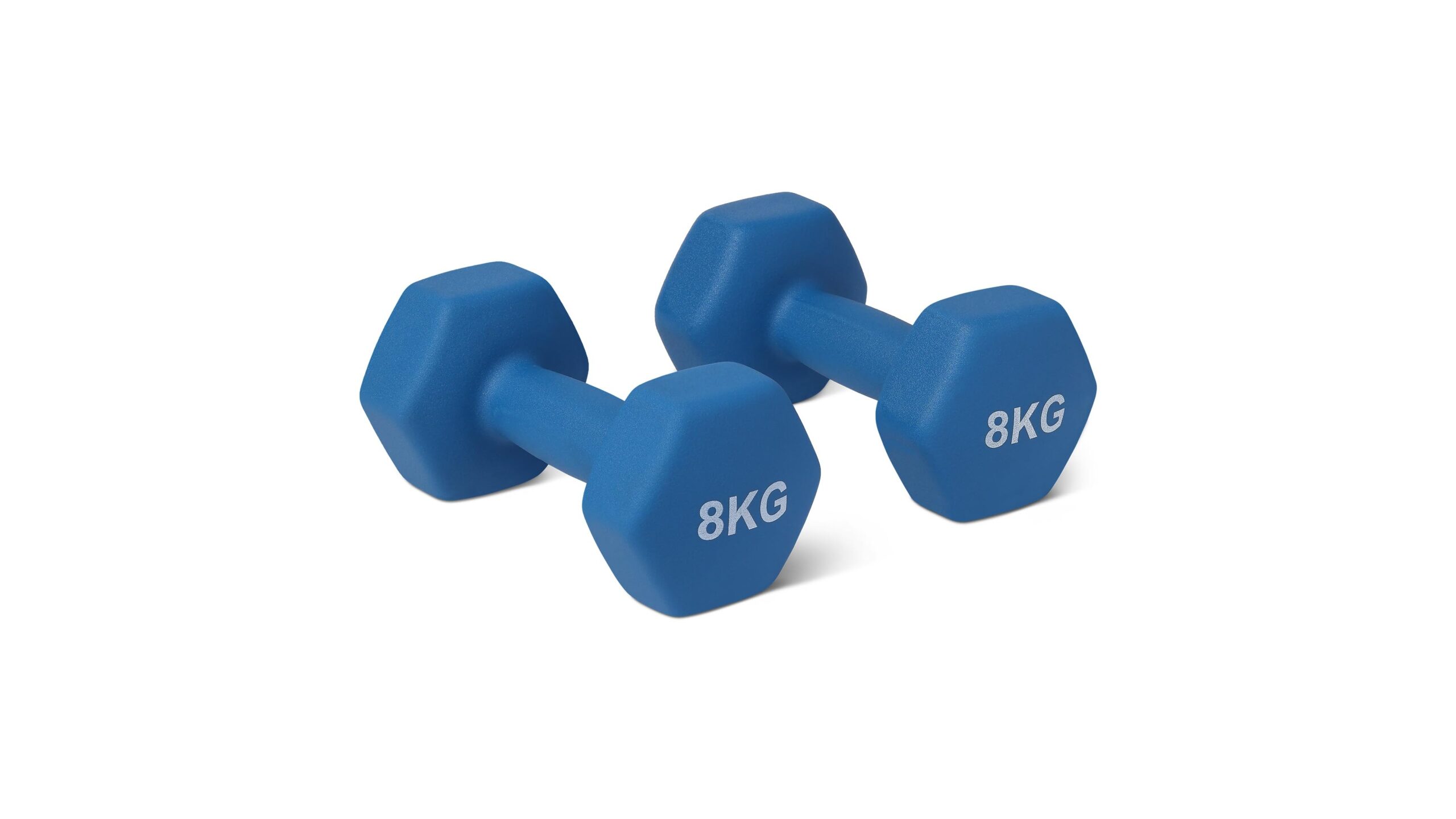
To run this home full body workout, you only need two tools: a pair of dumbbells and a stable chair. Choose dumbbells heavy enough that the last 2 reps of each rung feel challenging but technically clean; having two pairs (one lighter, one heavier) is ideal for mixing upper and lower body work. The chair should be robust, non-folding if possible, and placed on a non-slip surface so it does not move during step-ups, dips or split squats. Before you start, check that the chair does not wobble and that your feet can plant firmly on the floor when you sit to reduce the risk of tipping or sliding.
The 40-minute full body ladder structure
This 40-minute home strength routine is organised into two main ladders plus a short finisher. After a 5-minute warm-up of light mobility and marching in place, move into Ladder A: goblet squats holding one dumbbell, chair supported rows using both dumbbells, and dumbbell overhead press seated on the chair. Perform 4–6–8–10 reps per exercise, resting 30–45 seconds between moves, then rest 1–2 minutes before repeating the entire ladder if you have time and capacity. Ladder B focuses on unilateral work: Bulgarian split squats with the rear foot on the chair, single-arm dumbbell rows supported on the chair, and slow tempo chair dips for triceps and shoulders. Adjust the ladder height based on your level so you finish feeling worked but not wrecked.
Scaling the workout for beginners and advanced lifters
The main power of this ladder workout is scalability. Beginners can use lighter weights, limit themselves to the first two rungs (for example 4 and 6 reps), and extend rest periods to 60 seconds or more. They should prioritise smooth, controlled technique and avoiding failure. Intermediate and advanced lifters can climb higher rungs, use heavier dumbbells, and reduce rest to 20–30 seconds to increase metabolic demand. They can also add extra rounds of each ladder or slow down the eccentric phase to increase time under tension. This means one simple structure can cover fat loss, strength building and muscular endurance goals without needing complex programming or extra gear.
Technique tips and safety using a chair at home
Because you are working without supervision, technique and safety become your main priority. When using the chair for step-ups or Bulgarian split squats, press through your whole foot and keep your torso tall rather than collapsing forward. For rows supported on the chair, brace your core and avoid twisting at the top; think about pulling your elbow back and down to engage the lats. During chair dips, keep your shoulders away from your ears and move only within a pain-free range. Throughout the session, keep your core lightly braced, breathe out on the effort phase, and stop a set if your form breaks down. Over time, small increments in load or ladder height will deliver steady strength gains.
By pairing a simple strength ladder structure with just dumbbells and a sturdy chair, you unlock a versatile full body home workout that fits into busy schedules and almost any living space. Adjusting the rungs, rest periods and loads allows both beginners and advanced trainees to train side by side while each hits an appropriate level of challenge. Commit to running this 40-minute routine two or three times per week, track your ladder progress, and you will steadily build strength, confidence and resilience without ever leaving your living room.