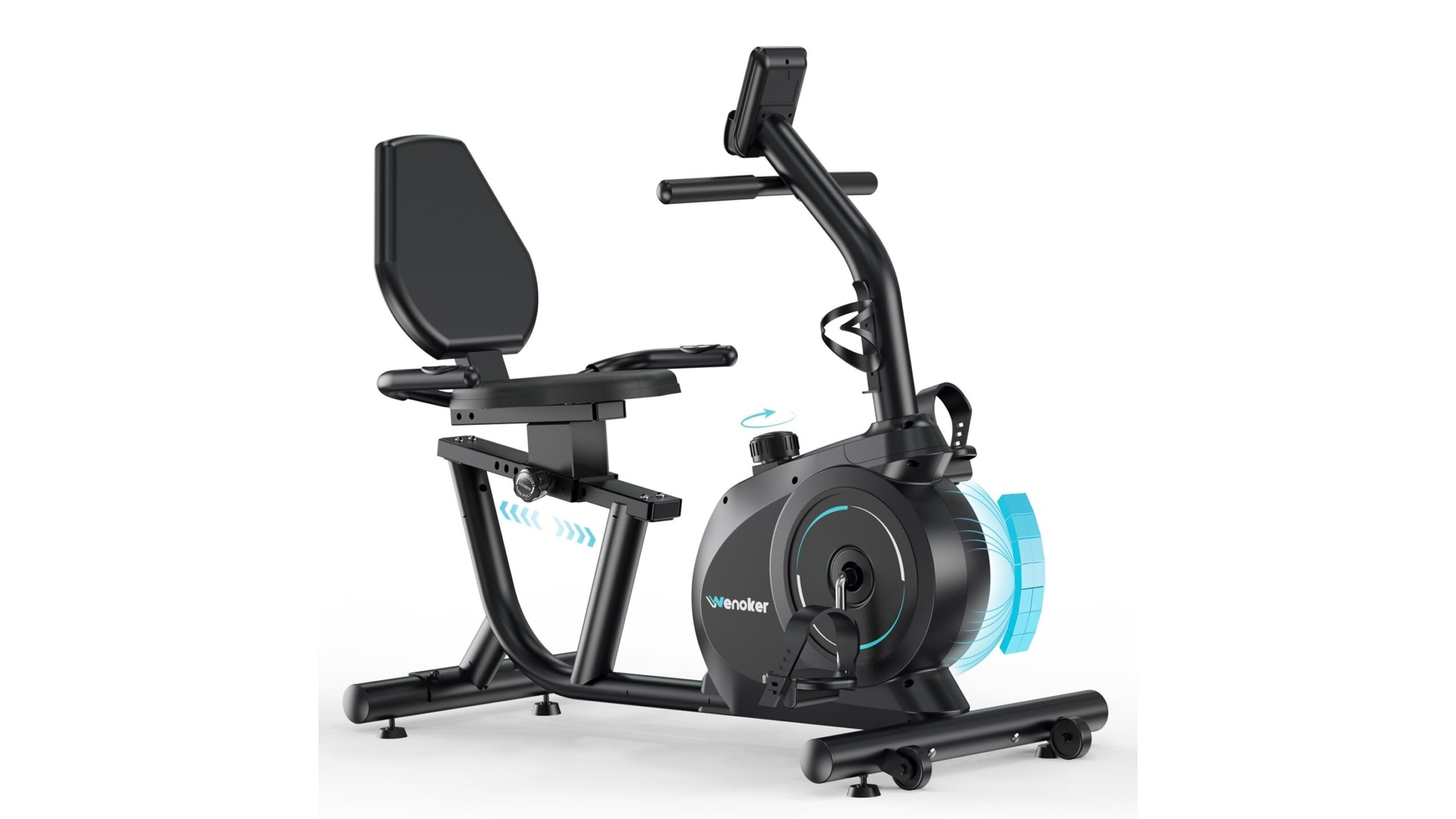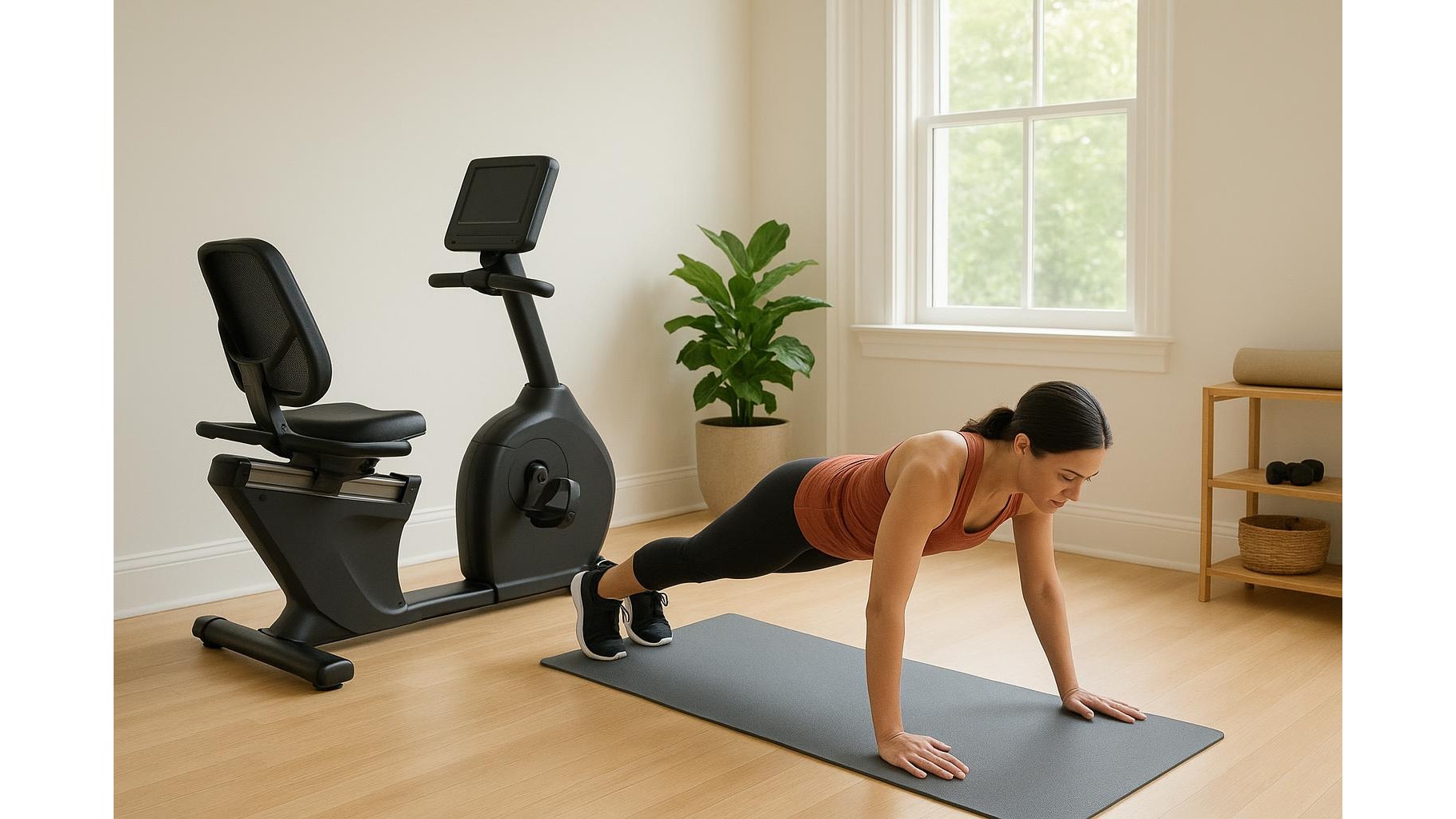
A recumbent bike is usually seen as a low-impact cardio tool, but with a smart plan it can anchor a complete full body workout at home. This 40-minute routine blends interval blocks on the bike with short rounds of bodyweight strength and mobility, giving you a balanced session for legs, core, upper body and joint health using just one piece of equipment and your own body.
Table of contents
How the 40-minute recumbent bike workout is structured
Think of this session as four 10-minute blocks: each block pairs recumbent bike intervals with simple exercises on the floor next to your machine. After a 5-minute easy warm-up ride, you alternate 3 minutes of moderate-to-hard pedaling with 2 minutes of bodyweight moves. You repeat this pattern four times, then finish with 5 minutes of cool-down and mobility. Adjust intensity using your bike’s resistance and cadence: on a 1–10 effort scale, aim for 4–5 on easier sections and 7–8 on harder pushes, always staying pain‑free and in control.
Lower-body power using the recumbent bike
The bike remains the star for lower-body strength. Sit tall with your back supported, core lightly braced and knees tracking in line with your feet. For each 3-minute ride block, alternate 1 minute at a steady moderate resistance, 1 minute of higher resistance “climbs”, then 1 minute slightly faster at a lower resistance. Focus on driving through your whole foot to engage quads, hamstrings and glutes. Between blocks, you can add off-bike wall sits or slow supported squats if your joints tolerate them, keeping tension in the thighs and glutes while maintaining good posture and breathing.
Bodyweight core work between intervals
Use the 2-minute gaps between ride intervals for core training. Rotate through three simple moves: dead bugs (lying on your back, moving opposite arm and leg), glute bridges (lifting hips to line up knees–hips–shoulders) and side planks from knees or feet. Perform 8–12 controlled reps per side instead of rushing. The goal is stability, not exhaustion. If your bike has sturdy handlebars, you can also do seated knee raises on the seat: sit tall, hold the sides for light support and slowly lift one knee at a time without rounding your back, building hip flexor and deep core strength relevant to cycling.
Upper-body and posture using just bodyweight
Even with only a recumbent bike and bodyweight, you can train the upper body. During alternating 2-minute breaks, include incline push-ups against the bike frame or a wall, triceps dips from a sturdy chair, and reverse table-top holds to open the chest and strengthen the back of the shoulders. Add scapular wall slides: lean your back against a wall, elbows and wrists touching, and slide arms up and down to improve shoulder mobility and posture. These moves counter the rounded position many people take while sitting and pedaling, keeping your upper back strong and your chest open.
Mobility-focused warm-up and cool-down
Start with 5 minutes of easy spinning at low resistance while performing gentle neck turns, shoulder rolls and deep breathing. Once off the bike at the end, spend 5 minutes on mobility: seated or standing hip circles, hamstring stretches using the bike as light support, and cat-cow movements on the floor for your spine. Add slow ankle circles to maintain joint health for walking and riding. These short, intentional movements help reduce stiffness, support recovery and make every future home recumbent bike workout feel smoother and more effective.
This 40-minute plan turns your recumbent bike into a compact home gym, combining cardio, strength, core stability and mobility without extra equipment. By cycling through interval rides, targeted bodyweight blocks and quick joint-friendly stretches, you build balanced fitness in a small space and keep boredom at bay. Repeat the routine two to four times per week, adjust the difficulty as you progress and enjoy a truly full body session from the comfort of your home.