Building a full body workout at home with resistance bands is one of the most efficient ways to train when you have limited space, time and equipment. With a smart combination of long resistance bands and mini loop bands, you can load every major muscle group, work on mobility and keep your joints happy. This 45‑minute plan is structured in clear blocks so you can follow it whether you are a beginner or more advanced, simply by adjusting band tension and tempo.
Table of contents
Equipment and setup for your 45‑minute band workout
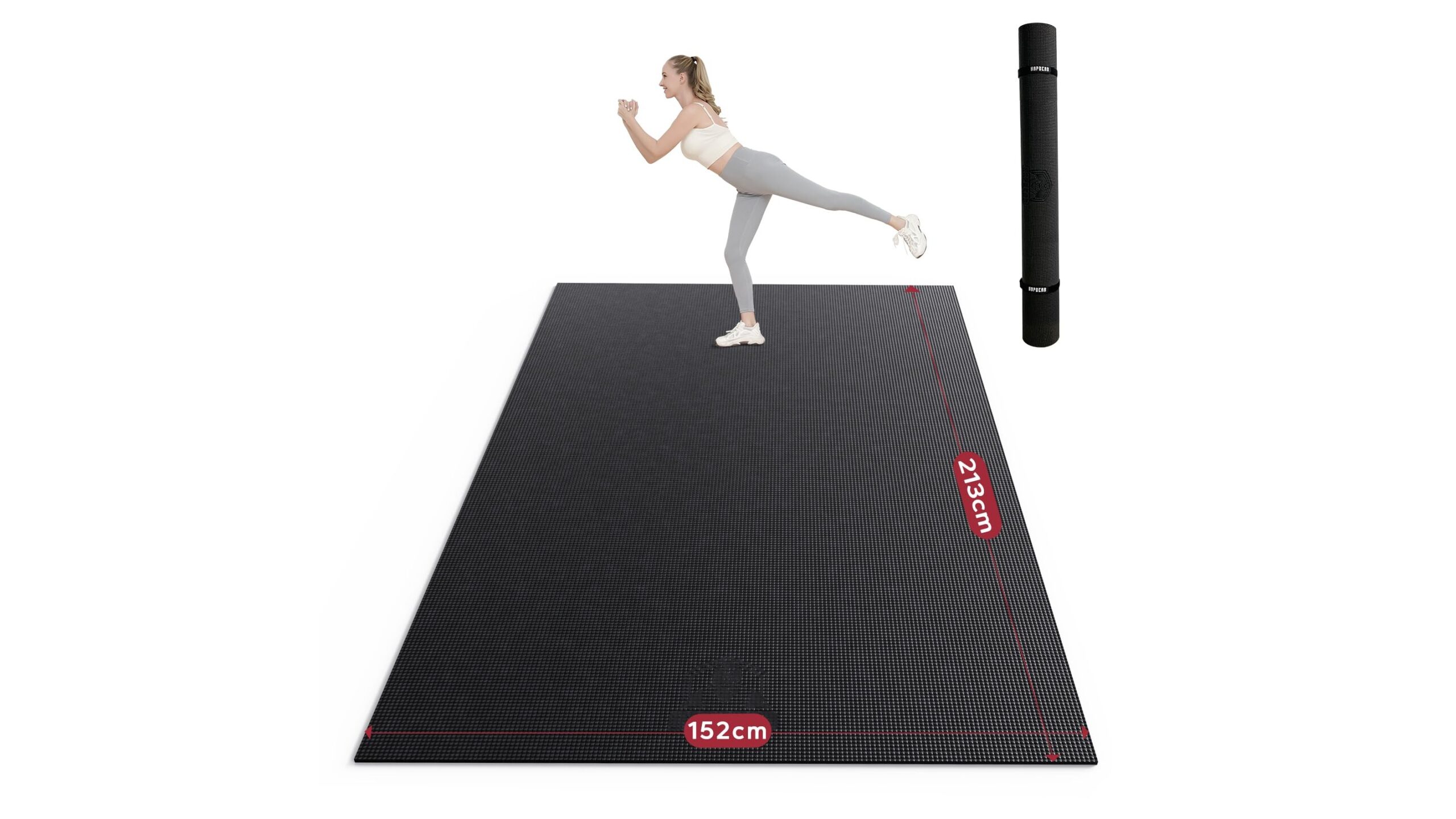
For this routine you only need a mat and a set of bands that covers light to heavy resistance. A typical home‑gym friendly option is a mixed kit that includes both long pull‑up style bands and mini loop bands. Look for a set with clearly labelled resistance levels so you can progress over time and easily switch between upper and lower body moves. Long bands are perfect for rows, presses, deadlifts and squats, while mini bands shine in glute, hip and shoulder activation. Before you start, clear enough floor space to step in all directions, and if you anchor a band around a door, double‑check the door is fully closed and stable to keep your training safe.
Warm‑up and mobility (10 minutes)
The first 10 minutes focus on joint prep and light activation so your body is ready for heavier band work. Begin with 2 minutes of dynamic moves without bands: marching in place, arm circles and hip circles. Then grab a light long band and perform 2 sets of 10–12 band pull‑aparts to open the upper back and shoulders. Follow with 2 sets of 8–10 overhead band dislocates, moving slowly through a pain‑free range to improve shoulder mobility. For the lower body, use a light mini band above your knees for 2 sets of 15 lateral band walks and 10 glute bridges. The goal here is not fatigue but feeling your hips, core and upper back switch on before the main full body circuits.
Strength circuit for upper body (12–15 minutes)
This block targets back, chest, shoulders and arms using long bands. Choose a resistance that lets you complete 8–15 controlled reps per set. Pair three exercises and perform them as a circuit for 3–4 rounds with 45 seconds of work and 15 seconds of transition: 1) Standing row with the band anchored at chest height to train lats and mid‑back; 2) Chest press by looping the band around your back or a sturdy anchor and pressing forward; 3) Overhead press or lateral raise standing on the band. Keep a slight bend in the knees, brace the core and emphasise a slow eccentric (lowering) phase. If the last 3 reps feel too easy, step further from the anchor or use a heavier band to maintain a strength‑building stimulus.
Lower body and glute focus (12–15 minutes)
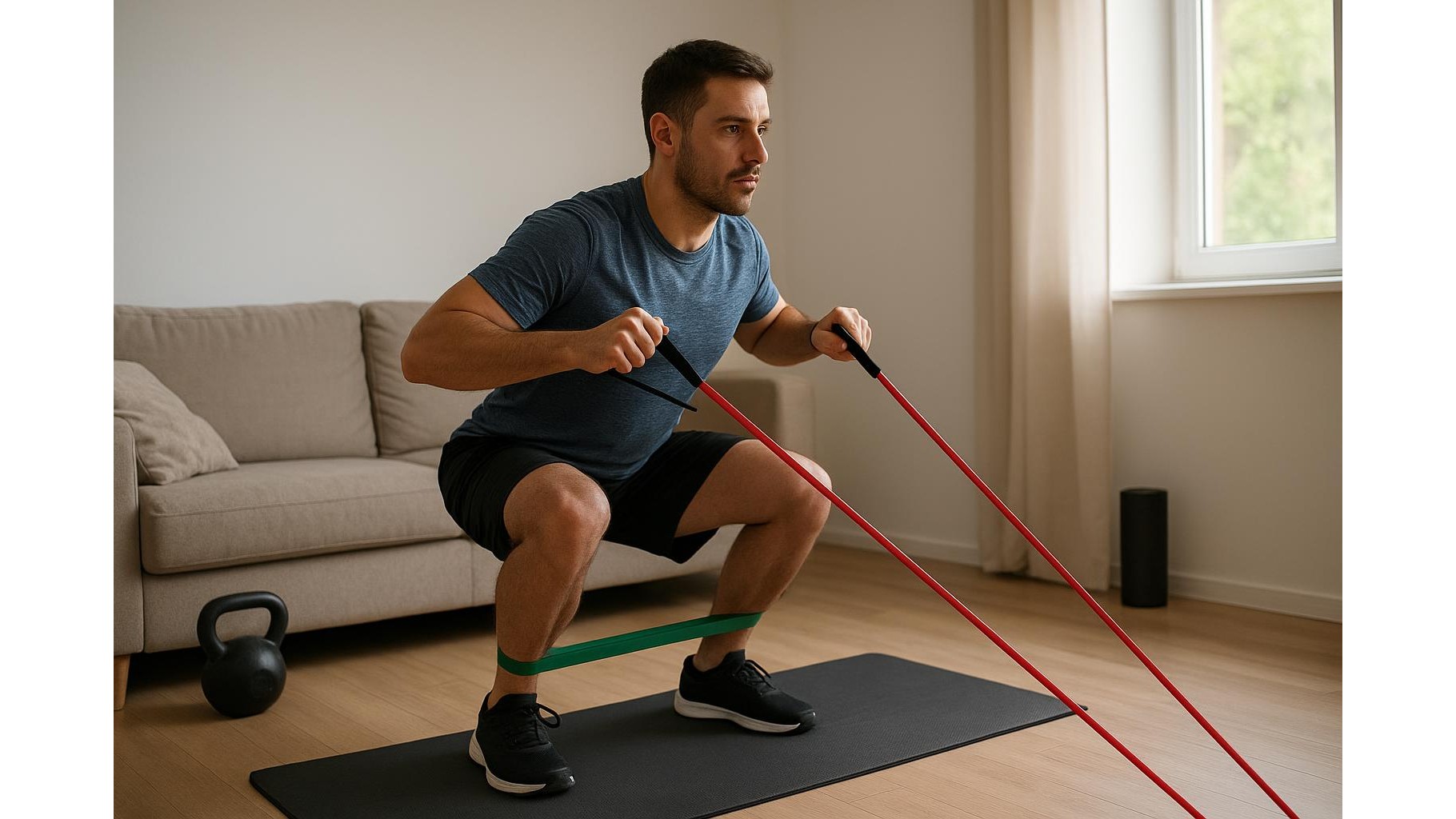
Next comes a lower body circuit using both long and mini bands to train quads, hamstrings and glutes. Perform 3 rounds of 10–15 reps per exercise with about 45 seconds rest between moves. Start with banded squats, standing on a long band and holding the ends at shoulder height to add resistance as you stand. Move into Romanian deadlifts with the same band to load hamstrings and glutes while keeping a neutral spine. Finish each round with mini band work: lateral walks, monster walks or glute bridge abductions with the band above the knees. This combination hits large muscle groups for strength while the mini band finishes the hips with constant tension, ideal for building both stability and muscle endurance.
Core and mobility finisher (8–10 minutes)
To complete the 45‑minute session, finish with a short core and mobility block. Using a long band anchored in front of you, perform 2–3 sets of 20–30 seconds of Pallof press on each side to challenge anti‑rotation core strength. Add 2 sets of 10–12 band‑assisted dead bugs, holding the band overhead to engage lats and deep core together. For mobility, switch to a light band and spend 3–4 minutes on assisted stretches: hamstring stretch by looping the band around one foot while lying on your back, hip flexor stretch in a half‑kneeling position and gentle thoracic rotations with the band for the upper back. Breathe slowly and avoid bouncing; the goal is to leave the session feeling looser, not stiff.
This 45‑minute full body resistance band workout shows how versatile long and mini bands can be for home training. By combining mobility work, upper and lower body strength and a focused core finisher, you create a joint‑friendly routine that is easy to progress by simply changing band tension, tempo or rep ranges. Repeat this session 2–3 times per week, track which bands you use and aim to increase resistance or total volume over time. With consistency, you will build strength, improve stability and maintain healthy, mobile joints without needing a full gym setup.