
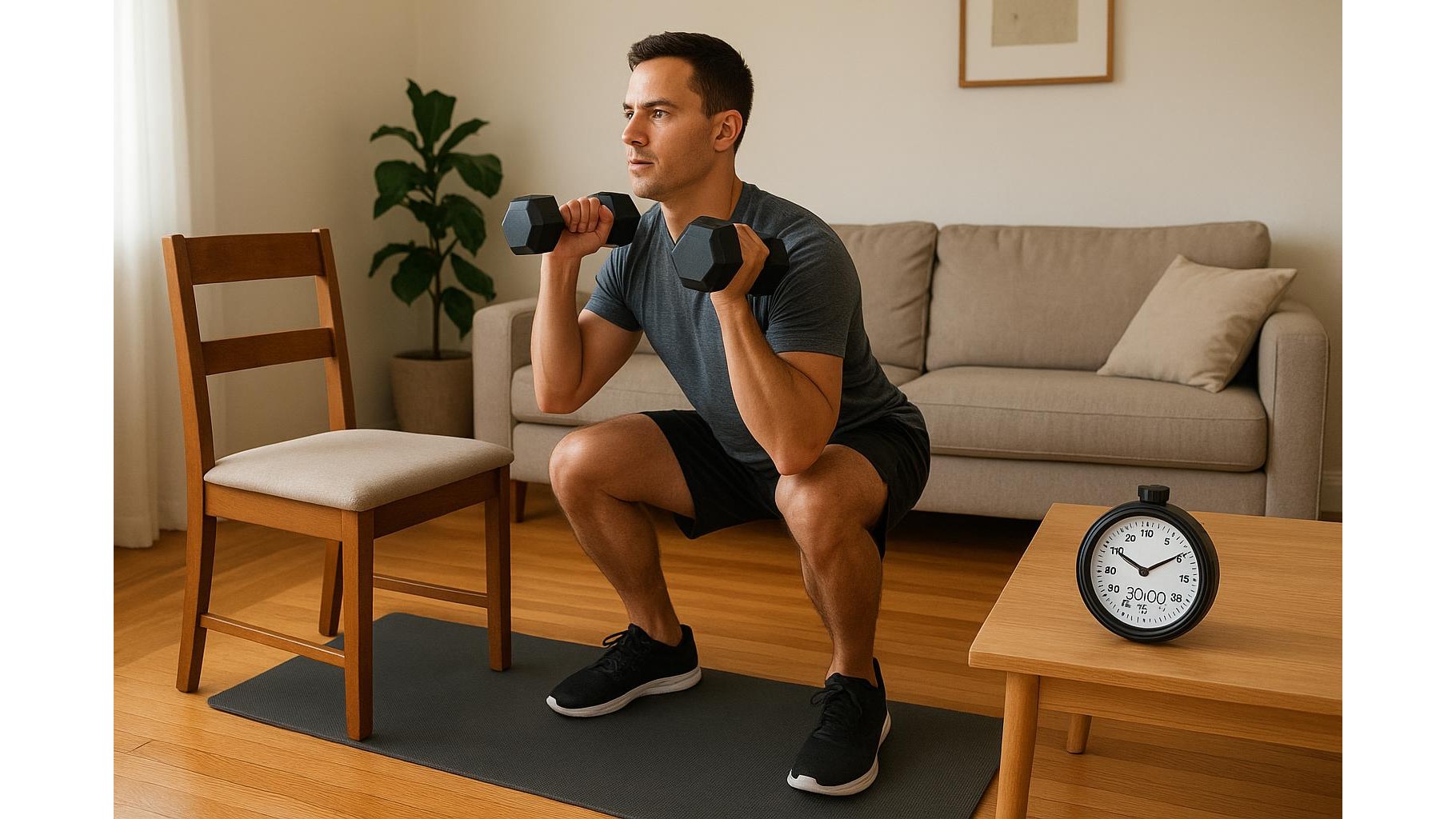
A full body pyramid workout at home is one of the most efficient ways to combine strength, cardio and core training in a short session. In just 30 minutes, you can use simple mixed tools – a pair of dumbbells, a sturdy chair and the floor – to hit every major muscle group while keeping your heart rate elevated. This routine is scalable for beginners and more advanced athletes by simply adjusting the load, range of motion and tempo, making it a smart choice for any home gym setup.
Why a pyramid structure works at home
The pyramid workout structure increases and then decreases either reps or time, creating a natural warm-up, peak effort and cool-down within a single 30‑minute block. For example, you can work in 30‑second, 45‑second and 60‑second efforts before coming back down, or climb from 8 to 12 to 15 reps and then reverse. This format is perfect for a home full body workout, because it limits the need for many different weights. Using just a pair of dumbbells, you can stay at the same load while the changing volume and density of the pyramid drive overload, conditioning and progression over weeks.
Dumbbell moves to anchor your pyramid
At the core of this session are compound dumbbell exercises that recruit multiple joints and muscle groups. Think of moves such as goblet squats, Romanian deadlifts, bent‑over rows, floor presses and overhead presses. With a solid pair of dumbbells, you can alternate upper and lower body to maintain intensity without burning out a single area. For beginners, lighter loads and higher reps fit well with the ascending phase of the pyramid; advanced users can push heavier loads and slower eccentrics. Focus on maintaining a neutral spine, full‑foot contact with the floor and smooth, controlled tempo to get the most from each repetition and keep joints healthy.
Using a sturdy chair for unilateral and support work
A sturdy chair turns your living room into a versatile training station. You can use it for Bulgarian split squats, step‑ups, triceps dips and incline push‑ups, all slotted into the pyramid as either strength or accessory blocks. Elevating the rear foot or hands increases the range of motion and makes bodyweight work more challenging without extra equipment. Just ensure the chair is stable, placed against a wall if possible, and free from wheels. The chair also offers support for balance during single‑leg Romanian deadlifts or hip thrusts, helping you safely explore unilateral patterns that build glute, hamstring and core strength.
Floor‑based core and conditioning segments
The floor component of this home pyramid workout ties everything together with focused core training and low‑impact conditioning. Alternate planks, dead bugs, glute bridges and mountain climbers within the middle tiers of your pyramid to keep the heart rate elevated between heavier dumbbell blocks. Use the lower rungs of the pyramid for static holds, such as side planks, and the higher rungs for dynamic moves like cross‑body mountain climbers or high‑knee marches. Training directly on the floor improves proprioception and stability, but you can add a comfortable non‑slip mat if you need more cushioning for wrists, knees or spine.
Structuring your 30‑minute pyramid session
To build a complete 30‑minute full body pyramid, choose one dumbbell lower‑body move, one dumbbell upper‑body move, one chair‑based exercise and one floor‑core drill. Work in circuits of 30, 45 and 60 seconds per exercise as you climb the pyramid, then return down to 45 and 30 seconds with minimal rest. This creates roughly 25 minutes of focused effort, leaving time for a brief warm‑up and cool‑down. Track your rounds and note when you can increase dumbbell load, add a more advanced chair variation or extend your core segments. Over time, this simple, repeatable structure becomes a powerful framework for progressive home strength and cardio training.
By combining dumbbells, a chair and the floor into one structured pyramid, you maximise the training effect of limited equipment and space. The ascending and descending format naturally scales to your current level while still providing a clear path for progression. Commit to this routine two or three times per week, focus on controlled movement quality and steady breathing, and you will build full‑body strength, better cardiovascular fitness and a more resilient core without ever leaving your home.









