If you struggle with standing leg exercises due to knee pain, balance issues or limited space, a floor-only home leg workout can be a game changer. In just 30 minutes, you can challenge your glutes, hamstrings and quads using controlled movements on a mat, without a single squat or lunge. This no-stand routine reduces joint impact while still building strength, improving stability and supporting everyday activities like walking, climbing stairs and lifting.
Why a floor-only workout is knee-friendly
Traditional leg days often revolve around squats, lunges and step-ups, which load the knees in deep flexion and can feel brutal if you have sensitive joints. A floor-only leg routine keeps you lying on your back, side or front, significantly reducing compressive forces on the knees. Instead of chasing heavy weights or explosive jumps, you focus on controlled bridges, side-lying abduction and isometric holds that load the muscles without aggravating the joints. You still train the full lower body, but with more emphasis on the posterior chain and hip stability, which in turn helps protect the knees over time.
Essential kit: a supportive floor exercise mat
For any floor-based home workout, a good mat is your main piece of equipment. Choose a thick, supportive exercise or yoga mat that offers enough cushioning for your spine, hips and knees when you lie on your side or back, and that won’t slip on hard floors. Look for features like non-slip surfaces, at least 6–8 mm of padding and easy-to-clean materials, especially if you train several times per week. A quality mat makes bridges, hamstring curls and side-lying work noticeably more comfortable, so you can focus on muscle engagement instead of fidgeting around to avoid pressure points.
30-minute no-stand lower body routine
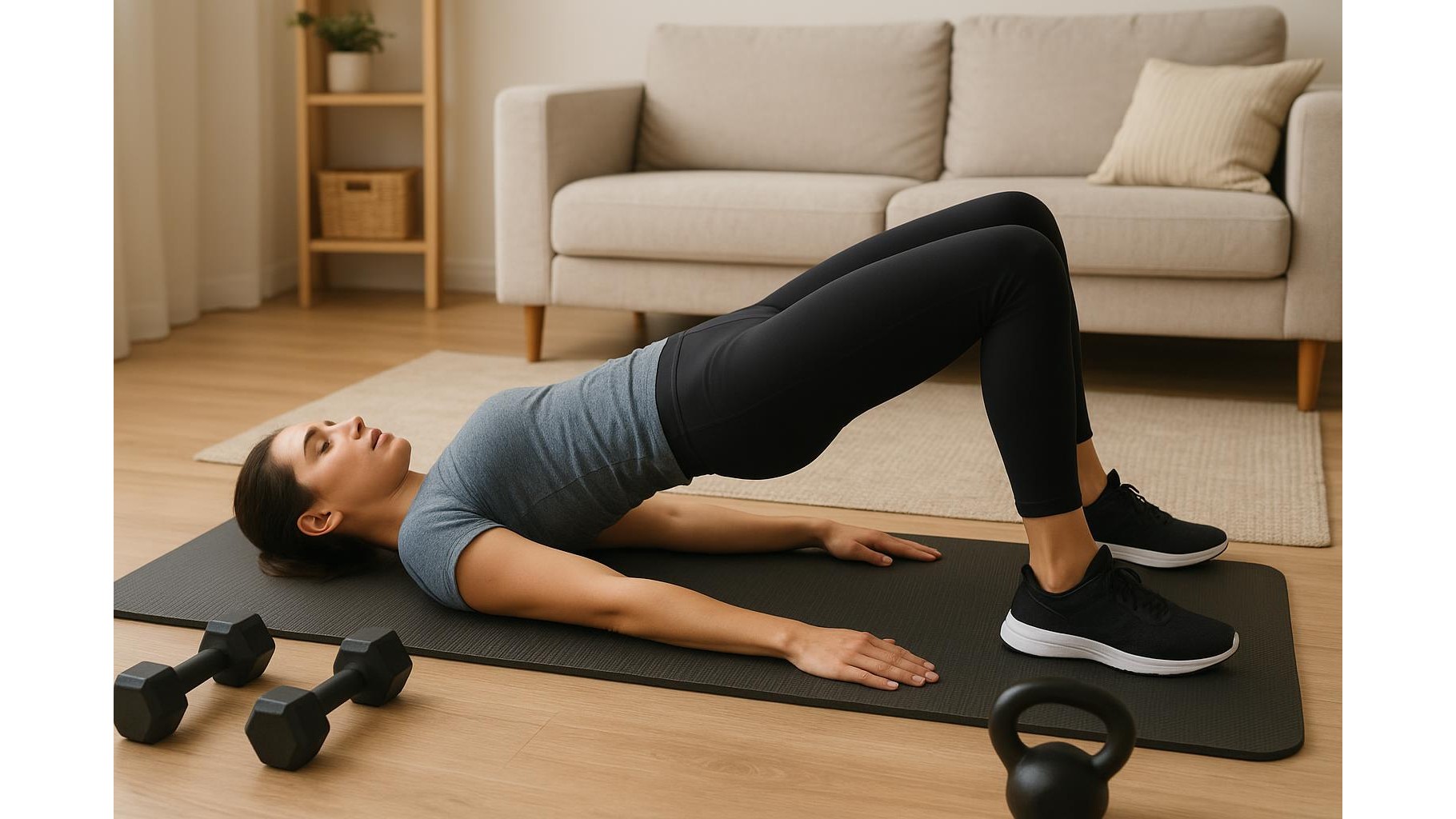
This 30-minute no-stand leg workout is structured as three 8-minute blocks plus a short warm-up and cool-down. Start with 3–4 minutes of gentle mobility on the floor: lying knee hugs, ankle circles and light glute squeezes. Then move into Block 1: glute bridges (3 sets of 12–15 reps), bridge holds (3 sets of 20–30 seconds) and alternating marching bridges to challenge stability. Block 2 targets the lateral hips with side-lying leg raises, clamshells and side-lying isometric holds, 2–3 sets each per side. Block 3 shifts to hamstrings and quads: prone hamstring curls (bodyweight squeeze), quad sets and straight-leg raises with slow, controlled tempo. Finish with light stretching for hip flexors, glutes and hamstrings.
Technique tips to protect knees and boost results
To keep this routine truly knee-friendly, pay attention to alignment and tempo. In bridges, plant your feet hip-width apart with shins roughly vertical at the top; push through your heels and focus on squeezing your glutes rather than arching your lower back. During side-lying exercises, keep your hips stacked and avoid rolling backward to cheat the movement—imagine a straight line from shoulder to hip to knee. For isometric holds, breathe steadily instead of holding your breath, and aim for smooth tension rather than shaking as you chase maximum time. Prioritise quality reps, slow lowering phases and pain-free ranges of motion.
Progressions, regressions and weekly structure
If you are a beginner, start with fewer sets (1–2 per exercise) and shorter isometric holds of 10–15 seconds, adding volume as your strength and confidence grow. To progress, you can increase hold times to 30–45 seconds, add extra sets, or introduce simple tools like a light resistance band around the thighs for bridges and clamshells. Aim to perform this floor-only lower body workout 2–3 times per week, leaving at least one rest day between sessions. On alternate days, you can pair it with upper-body or core work, creating a balanced home programme that supports joint health and functional strength without needing any big equipment.
This 30-minute floor-only home leg workout offers a joint-friendly way to strengthen your glutes, hamstrings and quads entirely on the mat. By focusing on controlled bridges, side-lying moves and isometric holds, you avoid the knee strain of heavy squats and lunges while still building meaningful strength for daily life. With just a supportive mat and consistent practice, you can create a reliable lower body routine that fits into any home space and keeps your knees feeling supported rather than stressed.