If you want a fast, effective home workout that hits both strength and cardio without filling your living room with machines, this 40‑minute dumbbell-only routine is for you. Using just a pair of dumbbells, you’ll cycle through a warm-up, a strength-and-cardio main circuit, and smart regressions and progressions so beginners and advanced lifters can train side by side. All you need is some floor space, a timer and the willingness to push yourself.
Table of contents
Warm-up: prime your body in 5 minutes
Spend 5 minutes preparing your joints and raising your heart rate before you touch a dumbbell. Start with 60 seconds of marching in place or light jogs, then 30 seconds each of arm circles, hip circles and bodyweight squats. Add 30 seconds per side of world’s greatest stretch (lunge with rotation) and finish with 30 seconds of walkouts (standing to plank and back). Keep everything smooth and controlled, breathing through the movements. This warm-up wakes up your posterior chain, opens tight hips and shoulders, and gently nudges your heart rate into the training zone so the main circuit feels strong, not shocking.
Main circuit overview: structure of the 40-minute plan
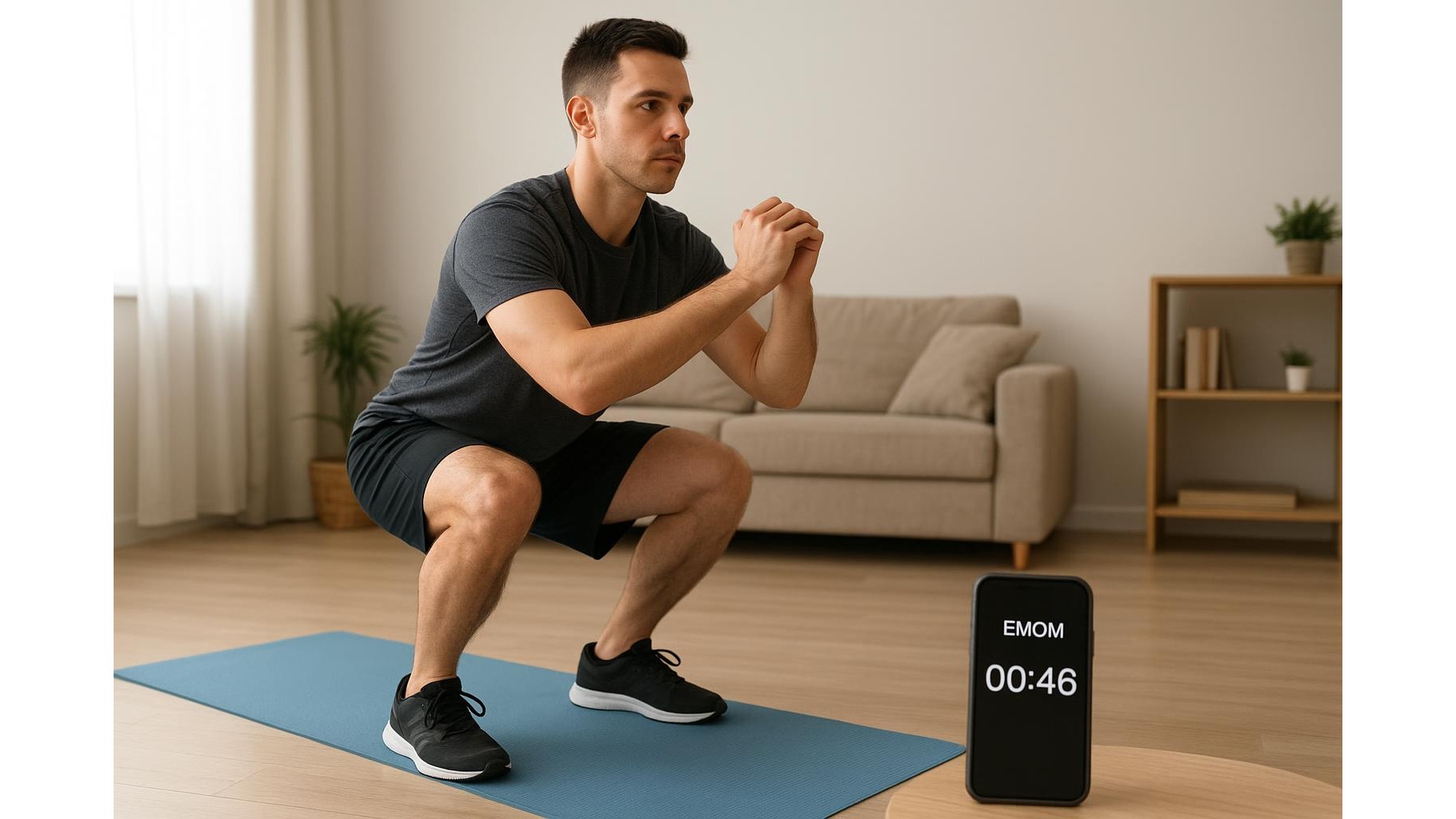
The workout is built around one 40-minute session: 5 minutes warm-up, 30 minutes of strength and cardio intervals, and 5 minutes of cool-down. The 30‑minute block uses a 40 seconds work / 20 seconds rest structure. Complete 6 dumbbell-focused moves in sequence, rest 60–90 seconds, and repeat for 3 total rounds. The six core exercises are:
- Dumbbell goblet squat (legs and glutes)
- Dumbbell bent-over row (back)
- Dumbbell push press (shoulders and power)
- Dumbbell reverse lunge (single-leg strength)
- Dumbbell floor press (chest and triceps)
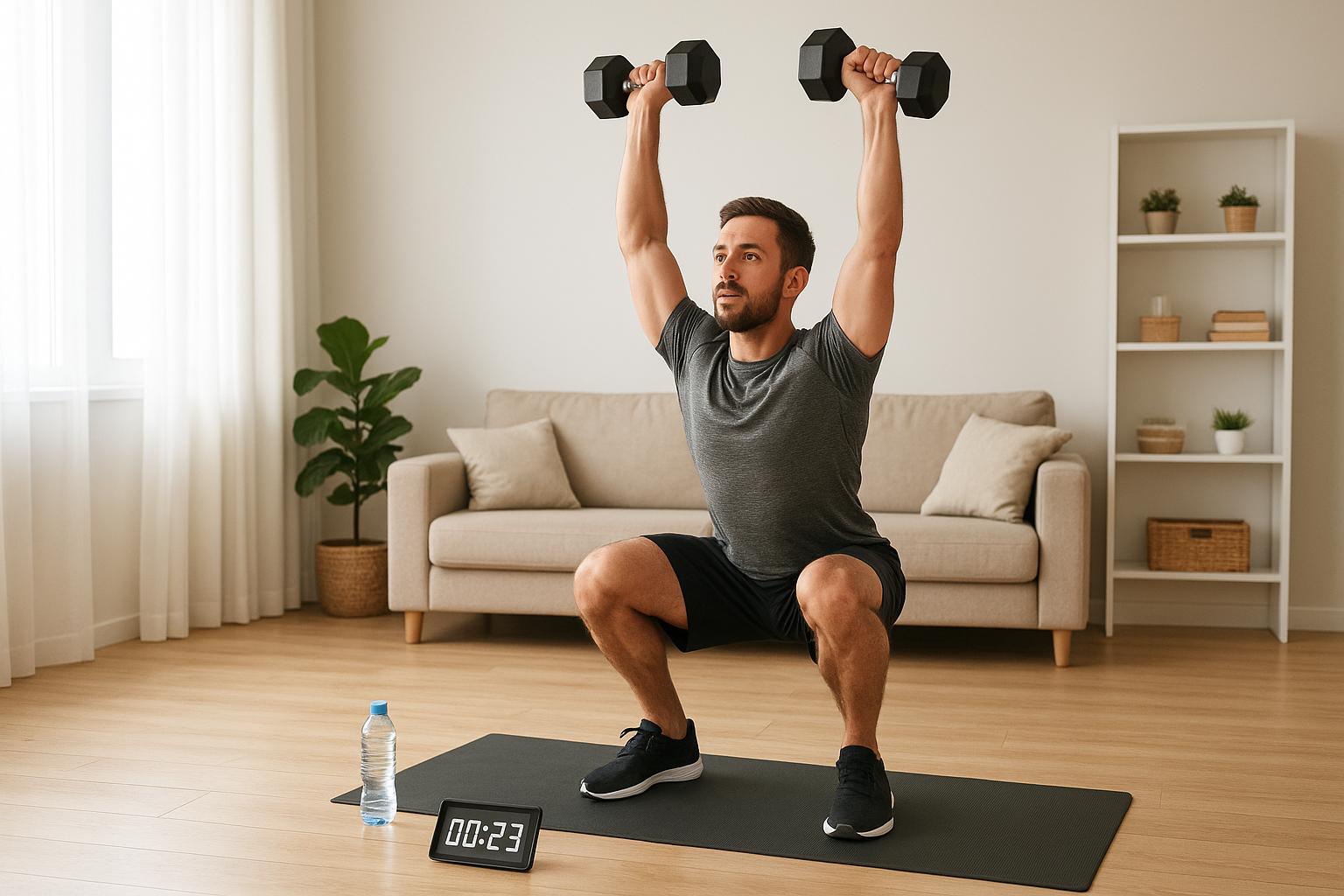
- Dumbbell squat to alternating press (strength + cardio finisher)
Set a timer and aim to move with intent, not speed. The built-in rest keeps quality high while still delivering a serious conditioning effect.
Exercise details and technique tips
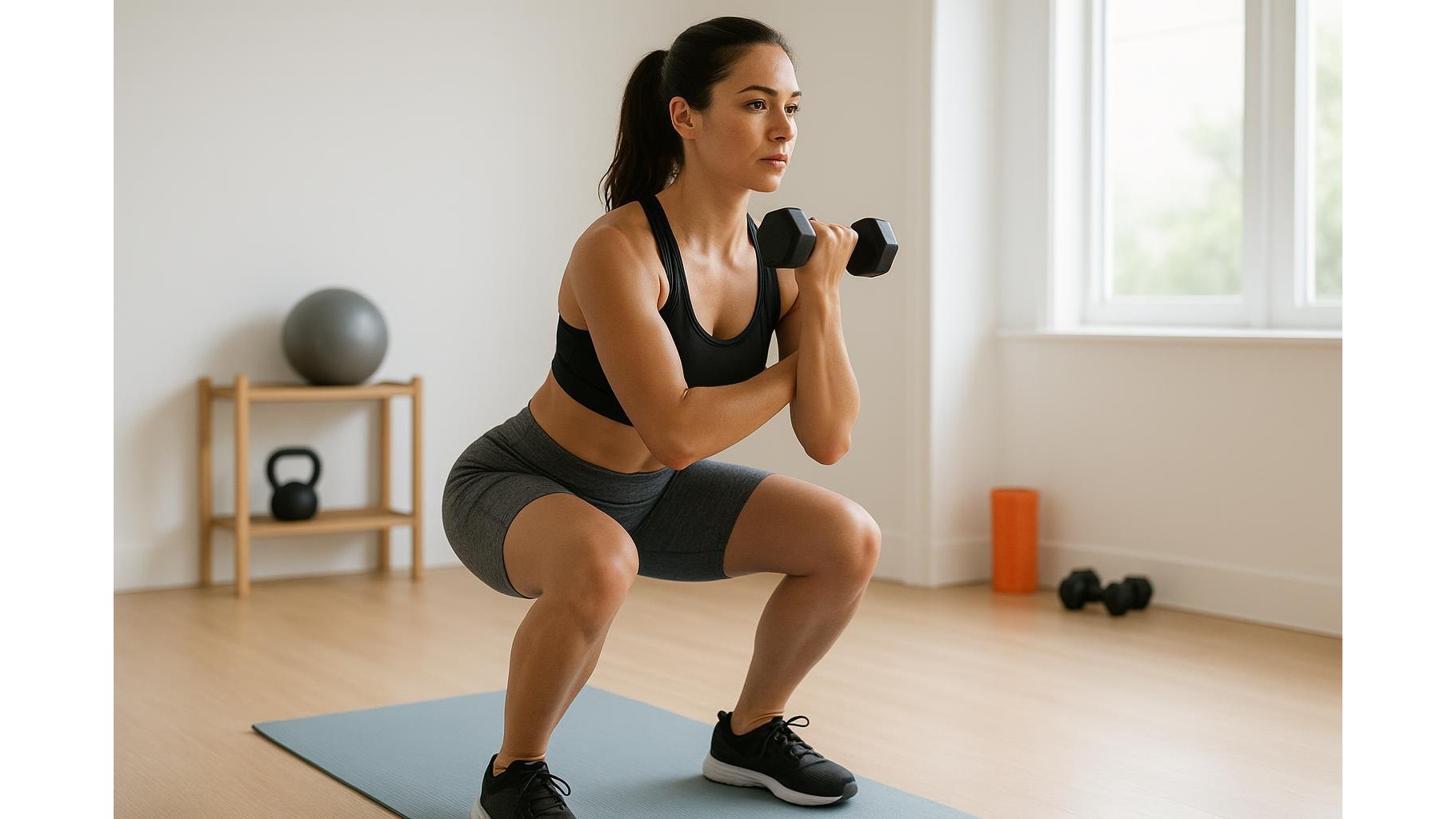
For the goblet squat, hold one dumbbell vertically at your chest, feet shoulder-width apart, knees tracking over toes, chest tall and spine neutral as you sit into your hips. The bent-over row uses two dumbbells; hinge at the hips with a flat back and pull the weights toward your lower ribs, squeezing your shoulder blades together. In the push press, dip slightly at the knees then drive the dumbbells overhead using leg power and a tight core. The reverse lunge steps back under control, front knee stacked over ankle. For the floor press, lie on your back with dumbbells over your chest, lower elbows to about 45 degrees from your torso, then press up without over-arching your lower back. The squat to alternating press combines a strong squat with a single-arm overhead press each rep, spiking your heart rate while training coordination.
Regressions: making the session beginner-friendly
If you are new to strength training or returning after a break, start with lighter dumbbells and shorten work intervals to 30 seconds, extending rest to 30–40 seconds. Swap reverse lunges for a stable split squat or even bodyweight lunges while you build control. For upper body, you can perform elevated floor presses by lying with your upper back on a firm cushion to reduce the range of motion, or switch to kneeling push presses to reduce lower-body demand. If squats are challenging, use a box squat: tap your hips to a sturdy chair and stand back up. Focus on smooth breathing, keeping reps slow and precise rather than chasing speed.
Progressions: pushing strength and cardio further
Once the base circuit feels comfortable, increase intensity by raising dumbbell weight, adding a fourth round or shifting to a 45 seconds work / 15 seconds rest pattern. You can turn the goblet squat into a front squat with two dumbbells at your shoulders, and the bent-over row into a single-arm row to challenge core stability. For more cardio, add a half-burpee (no push-up) after each set of squat to press, or finish the session with 2–3 minutes of dumbbell swings using a hinge pattern. Always progress only one variable at a time—load, duration or complexity—so your joints and connective tissues have time to adapt safely.
Cool-down and recovery essentials
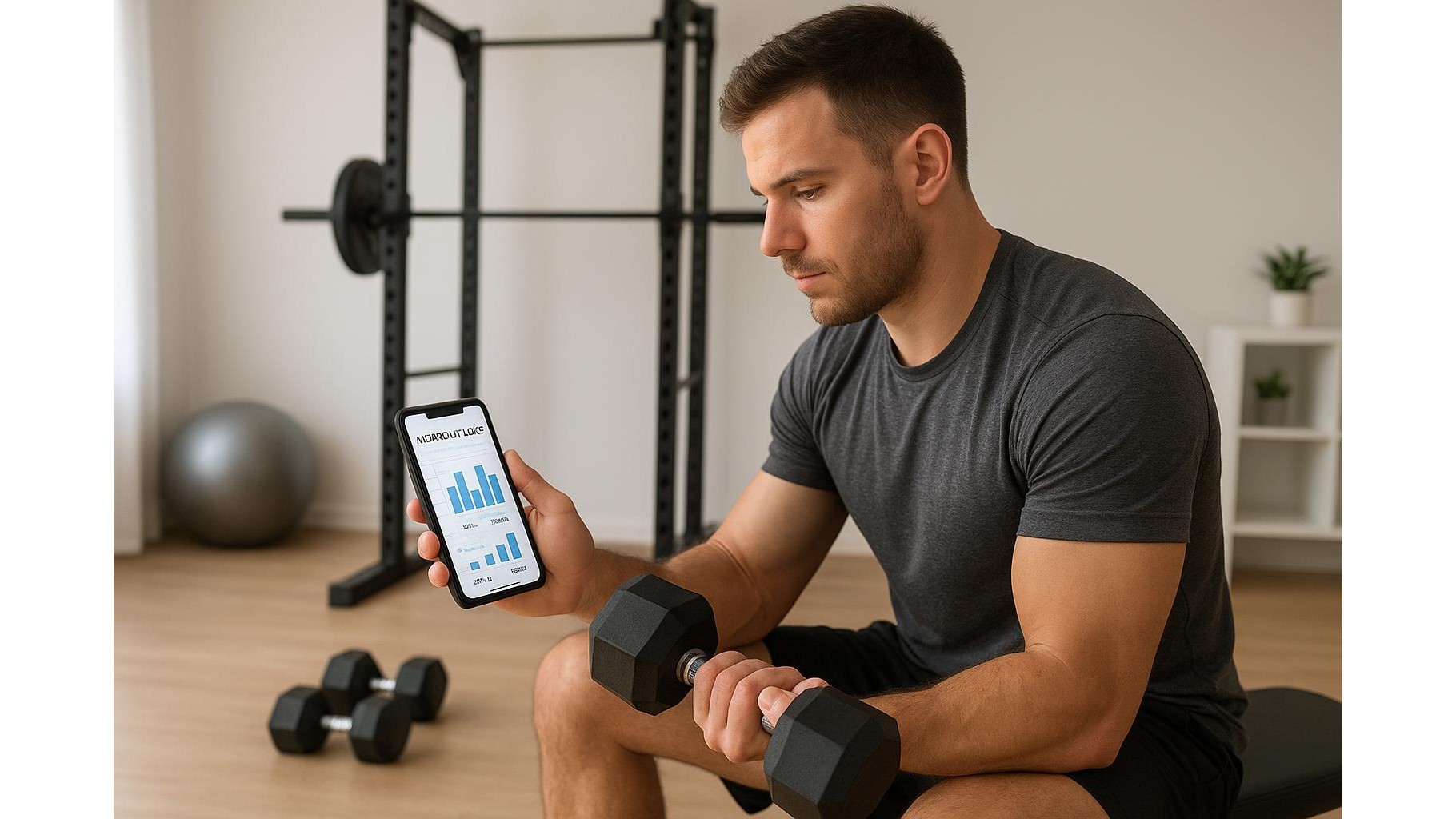
End your 40-minute workout with 5 minutes of cool-down. Walk slowly around your space for a minute while breathing deeply, then move into static stretches: 30–45 seconds each for quads, hamstrings, hip flexors, chest and shoulders. This helps your heart rate return to baseline and reduces next-day soreness. Hydrate, have a protein-rich snack within a couple of hours to support muscle recovery, and aim for consistent sleep. Repeat this dumbbell-only strength and cardio combo two to three times per week, and you’ll steadily build strength, conditioning and confidence—all without leaving your home gym.
This 40-minute dumbbell workout plan shows how a simple pair of weights can deliver a complete strength and cardio session: a structured warm-up, time-efficient intervals, and options for every fitness level. Stick with it, track your loads and rest, and you’ll build a home routine that is sustainable, challenging and easy to maintain over the long term.