
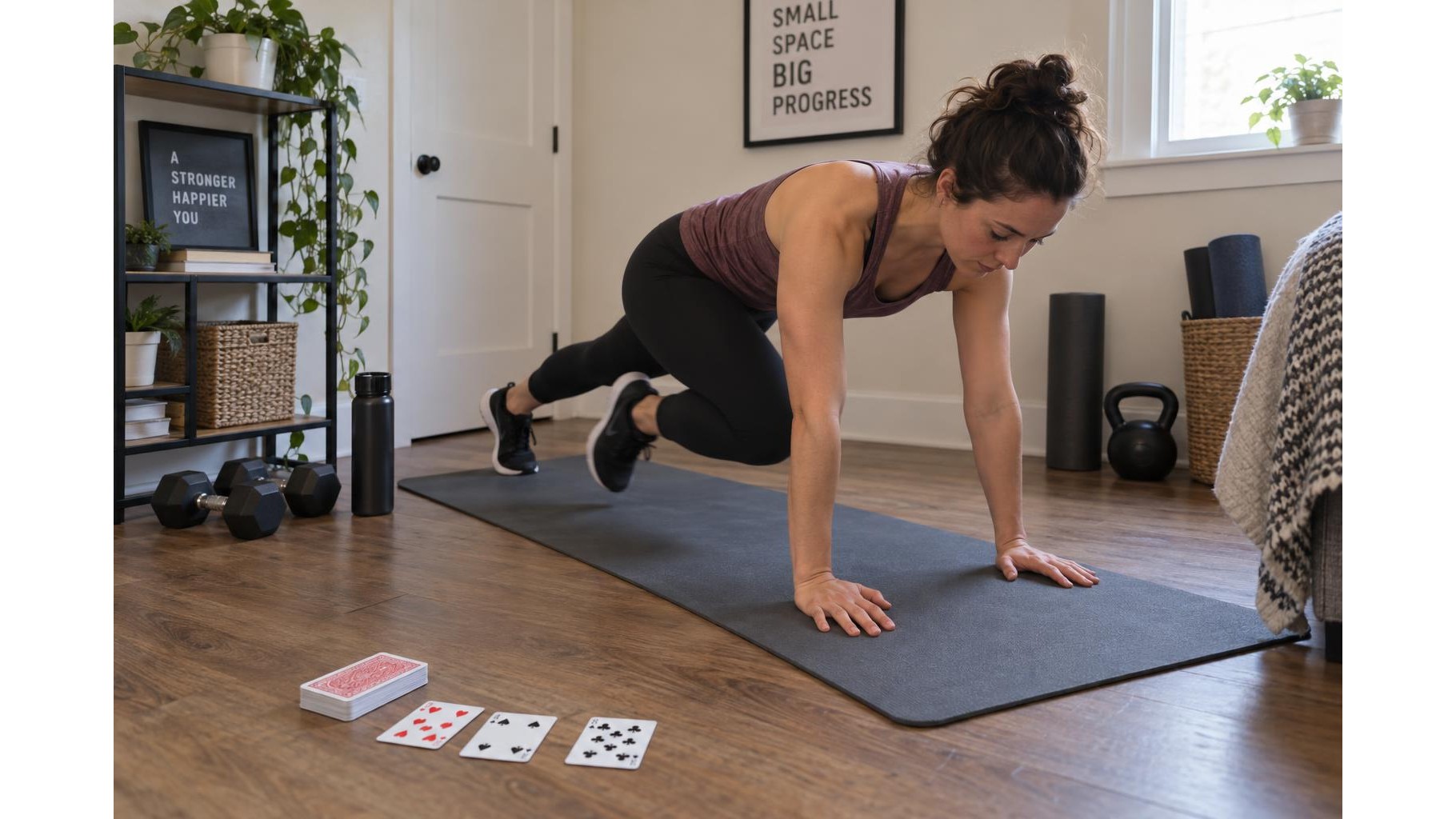
A deck of cards can turn a small patch of floor into a simple, adaptable training space. Each draw sets your exercise and repetition target, so you can build a varied 30-minute home workout without equipment beyond a standard deck. Choose movements that suit your fitness level, keep the pace controlled and pause whenever you need. The aim is consistent effort, not racing through every card.
Set up your deck and your space
Clear enough room to step back, lie down and move your arms freely. Keep water nearby, and use a mat or folded towel for floor exercises if you have one. Remove the jokers, shuffle the deck and decide on a repetition value for each card: number cards count as printed, aces are 11, and face cards are 10. For a gentler session, make aces worth 8 and face cards worth 6. Before starting, spend about three minutes warming up with marching in place, shoulder circles, hip hinges and easy squats.
Give each suit a movement
Assign one bodyweight exercise to each suit, then keep the same mapping throughout the workout. For example, hearts can mean squats, diamonds push-ups, clubs reverse lunges and spades mountain climbers. Draw a card, check its suit and number, then complete that many repetitions. Count alternating sides as individual reps for lunges, or count one rep after completing both sides—just choose one method and stick with it. If you prefer, substitute a familiar move, such as glute bridges for lunges or marching knee drives for mountain climbers.
Use a steady 30-minute format
Set a timer for 30 minutes. Use the first three minutes to warm up, then work through the deck for up to 22 minutes, drawing one card at a time. Rest briefly between cards as needed; aim for a pace that lets you maintain good form and speak a short sentence. When the work period ends, stop where you are rather than trying to finish the deck at any cost. Use the final five minutes to cool down with easy walking, relaxed breathing and gentle stretches. If you finish the deck early, reshuffle and continue until the work period ends.
Scale the exercises to your level
Adjust the movement before reducing control. For push-ups, use a wall, sturdy counter or knees on the floor. Make squats shallower, or sit down and stand up from a stable chair. For reverse lunges, hold a wall for balance or replace each rep with a step-back toe tap. Slow mountain climbers down or perform them standing, bringing one knee toward your chest at a time. You can also lower the card values, complete half the repetitions, or draw fewer cards. Choose an option that feels challenging but manageable, and stop if you feel sharp pain, dizziness or unusual shortness of breath.
Keep the workout organized and repeatable
Place completed cards in a discard pile so you can see your progress. Take extra rest when your technique starts to slip, and don’t feel obliged to match another person’s pace. To make the session harder over time, first aim to move with better control; later, increase the work interval or use slightly higher card values. Record the suits, substitutions and number of cards completed so you can compare sessions fairly. Leave at least a little recovery between demanding workouts, especially if you are new to regular exercise.
This deck-of-cards workout offers a flexible way to train strength and conditioning in a small space with no specialist equipment. Pick suitable movements, adapt the repetitions and work at a pace you can sustain. With a clear structure and easier alternatives ready, you can make the session your own and build a routine that is practical to repeat.









