
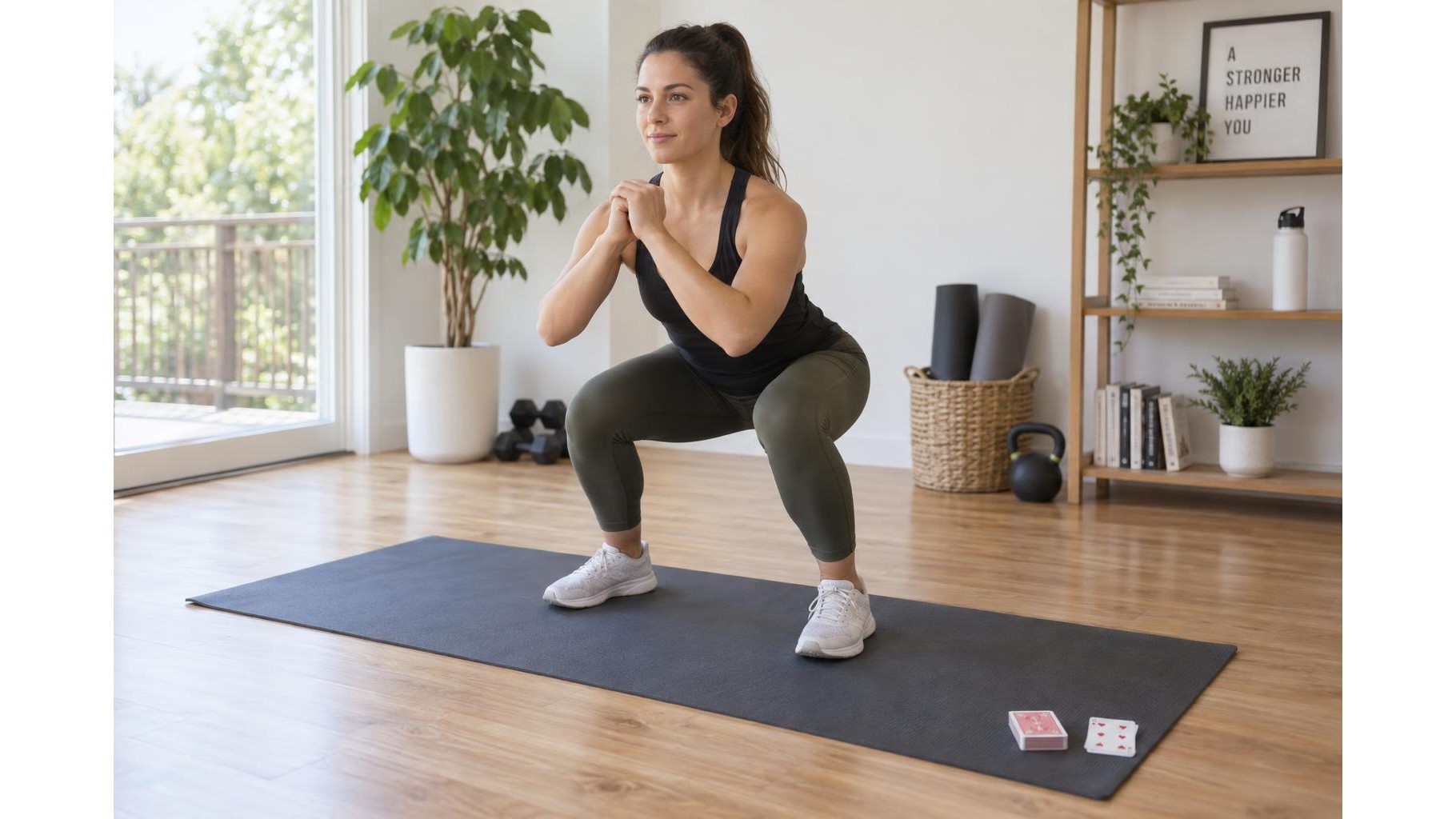
A standard deck of cards can turn a small space and a few simple movements into a varied 30-minute home workout. Each draw sets the exercise and repetition target, so you can adjust the pace to your fitness level without equipment. The key is to move with control: the aim is not to race through the deck, but to perform every repetition with good form.
Set up your deck and workout space
Clear a stable area where you can step, squat and lie down comfortably. Remove the jokers, shuffle the remaining 52 cards, and place the deck face down. Set a timer for 30 minutes, including your warm-up and cool-down. Before drawing, spend about four minutes warming up with easy marching, arm circles, hip hinges and gentle bodyweight squats. Keep water nearby and choose a pace that lets you maintain steady breathing.
Assign a movement to each suit
Give every suit one movement so each draw tells you what to do. For example, use hearts for squats, diamonds for reverse lunges, clubs for push-ups and spades for glute bridges. If lunges or push-ups are uncomfortable, swap them for supported split squats and wall push-ups. Write your assignments down before starting; keeping the rules simple makes it easier to focus on your technique rather than remembering what comes next.
Use card values to set repetitions
Number cards count as their printed value, with a practical cap to keep the workout manageable: treat cards 2–5 as 5 repetitions, 6–10 as their face value, and aces as 10. For face cards, use 10 repetitions for a jack, 11 for a queen and 12 for a king. Complete the assigned number for the movement linked to the suit, then draw again. For one-sided exercises, such as reverse lunges, count repetitions per leg only if you can maintain control; otherwise, count each full left-and-right pair as one repetition.
Keep the session within 30 minutes
Work through cards for up to 20 minutes, resting for 20–40 seconds between draws or longer when needed. You do not have to finish the deck. If you reach the time limit early, stop there and use the remaining minutes to cool down with easy walking and relaxed stretches. If you finish all 52 cards before the workout window ends, reshuffle and continue only if your form and energy still feel good. The timer is a guide, not a reason to rush.
Scale the workout to your level
Beginners can draw fewer cards, lower the repetition cap, or take a longer rest after each set. For squats, use a chair as a depth target; for lunges, hold a wall for balance; and for push-ups, place your hands on a sturdy elevated surface. More experienced exercisers can use a slower lowering phase or choose a more challenging variation, but should keep the same controlled pace. Stop if you feel sharp pain, dizziness or unusual shortness of breath, and resume only when it is safe.
With four movements, clear card values and flexible rest, a deck becomes a simple bodyweight workout generator. Warm up, draw at a sustainable pace and finish with a cool-down. Prioritize smooth, controlled repetitions over chasing the next card; consistency and sound technique matter more than completing the deck.









