Training your back and chest at home doesn’t require a full rack of machines. With a pair of dumbbells, some floor space and a smart push–pull structure, you can build a stronger upper body in just 45 minutes. This routine balances chest, back and arm work so you hit pressing and pulling muscles evenly, helping you gain strength, improve posture and avoid common imbalances from doing only push-ups or bench work.
Why a push–pull dumbbell workout works
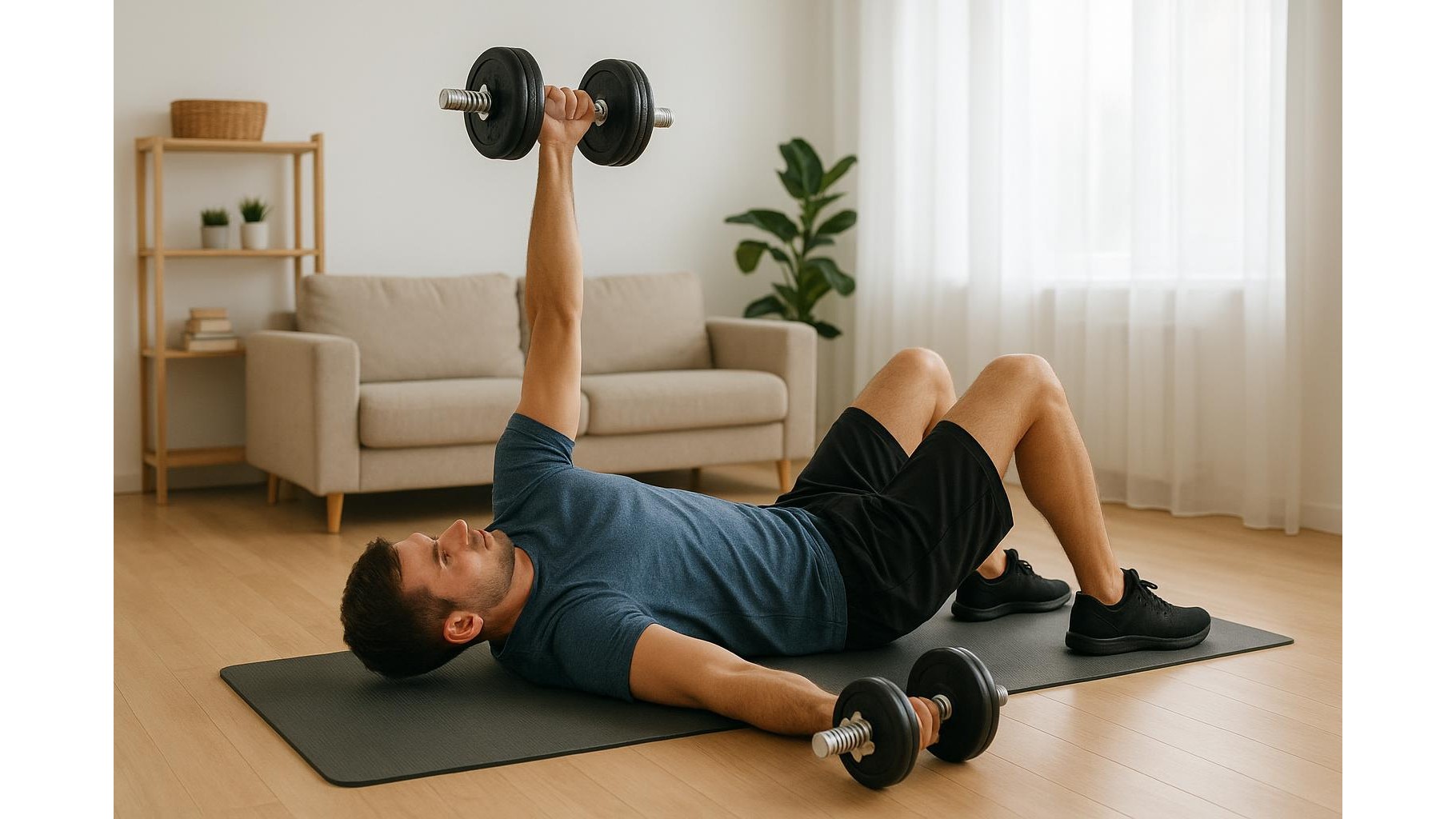
A well-designed push–pull workout pairs pressing moves for the chest, shoulders and triceps with pulling exercises for the back and biceps. That balance is ideal for home training, where equipment is limited. In this 45-minute plan, you’ll alternate upper-body pushes like dumbbell floor press with pulls such as bent-over rows. This not only saves time by allowing some muscles to recover while others work, but it also reinforces healthy shoulder mechanics and better posture, especially if you sit at a desk all day.
Warm-up: 5 minutes to prime your upper body
Before you grab the dumbbells, spend 5 minutes on a quick warm-up to protect your shoulders and get more from every rep. Cycle through: arm circles (forward and backward), cat–cow on the floor, scapular push-ups and light band pull-aparts or towel pull-aparts if you don’t have a band. Keep the movements smooth and controlled, focusing on opening the chest and activating the upper back. A proper warm-up reduces injury risk and helps you feel more stable in pressing and rowing exercises.
The 45-minute back and chest dumbbell routine
This home upper-body workout is structured as three main supersets plus a finisher. Aim for 3 sets of 8–12 reps per exercise, resting 30–45 seconds between moves and 60 seconds between rounds. The circuit:
- Superset 1: Dumbbell floor press + Bent-over dumbbell row
- Superset 2: Dumbbell incline press on cushions or a step + Single-arm dumbbell row
- Superset 3: Dumbbell pullover (focus on lats and chest) + Dumbbell reverse fly
- Finisher: Push-up to renegade row (bodyweight push, dumbbell pull)
Choose a weight that challenges you but allows clean form—your last 2 reps should be tough yet controlled.
Progressions and regressions for every level
If you’re a beginner, start at the lower end of the rep range and lighten the load, or reduce to 2 sets per superset. You can also perform incline push-ups on a sturdy table instead of full floor presses. For intermediate and advanced lifters, increase dumbbell weight, add a 2–3 second pause at the bottom of presses and rows, or extend sets to 12–15 reps. You can also turn the finisher into an EMOM (every minute on the minute) for 5–8 minutes, aiming for perfect, explosive reps each round while maintaining tight core engagement.
Form tips to protect your shoulders and spine
Good technique is crucial when you’re lifting at home without a spotter. For all presses, keep your shoulder blades pulled back and down, ribs stacked over your pelvis and feet planted to create full-body tension. In rows, hinge at the hips with a flat back, think of pulling the dumbbells toward your hips rather than your neck, and avoid jerking the weight. Keep your core braced in every movement—imagine someone is about to tap your stomach. If you feel strain in your lower back or shoulders, reduce the load and shorten the range of motion slightly until you can move pain-free.
How often to train and track progress
For most people, performing this back and chest workout 2 times per week with at least one rest day between sessions is ideal. Track your progress by noting the weight used, reps completed and total sets in a simple log. When you can hit the top of the rep range with solid form for all sets, increase the weight by the smallest increment you have available. Over a few weeks, you should notice stronger pushes, more defined lats and better posture. Stick with the routine for 6–8 weeks, then adjust exercise variations to keep your body challenged and your home workouts fresh.
This 45-minute dumbbell workout gives you a simple but effective way to train back and chest at home using push–pull balance, smart progressions and minimal gear. Commit to consistent sessions, focus on clean form and gradual overload, and your upper body strength—and confidence—will steadily climb.