Drawing inspiration from aerial arts, this 30-minute home routine targets core strength, grip endurance and shoulder stability using only a pull-up bar, a sturdy chair and the floor. You will blend hanging holds, controlled leg lifts and grounded core drills to mimic the demands of silks and hoop training, without needing a full rig. This structured session works well for both aerialists who want extra conditioning at home and fitness enthusiasts aiming to build a stronger, more resilient upper body.
Minimal gear for aerial-style training at home
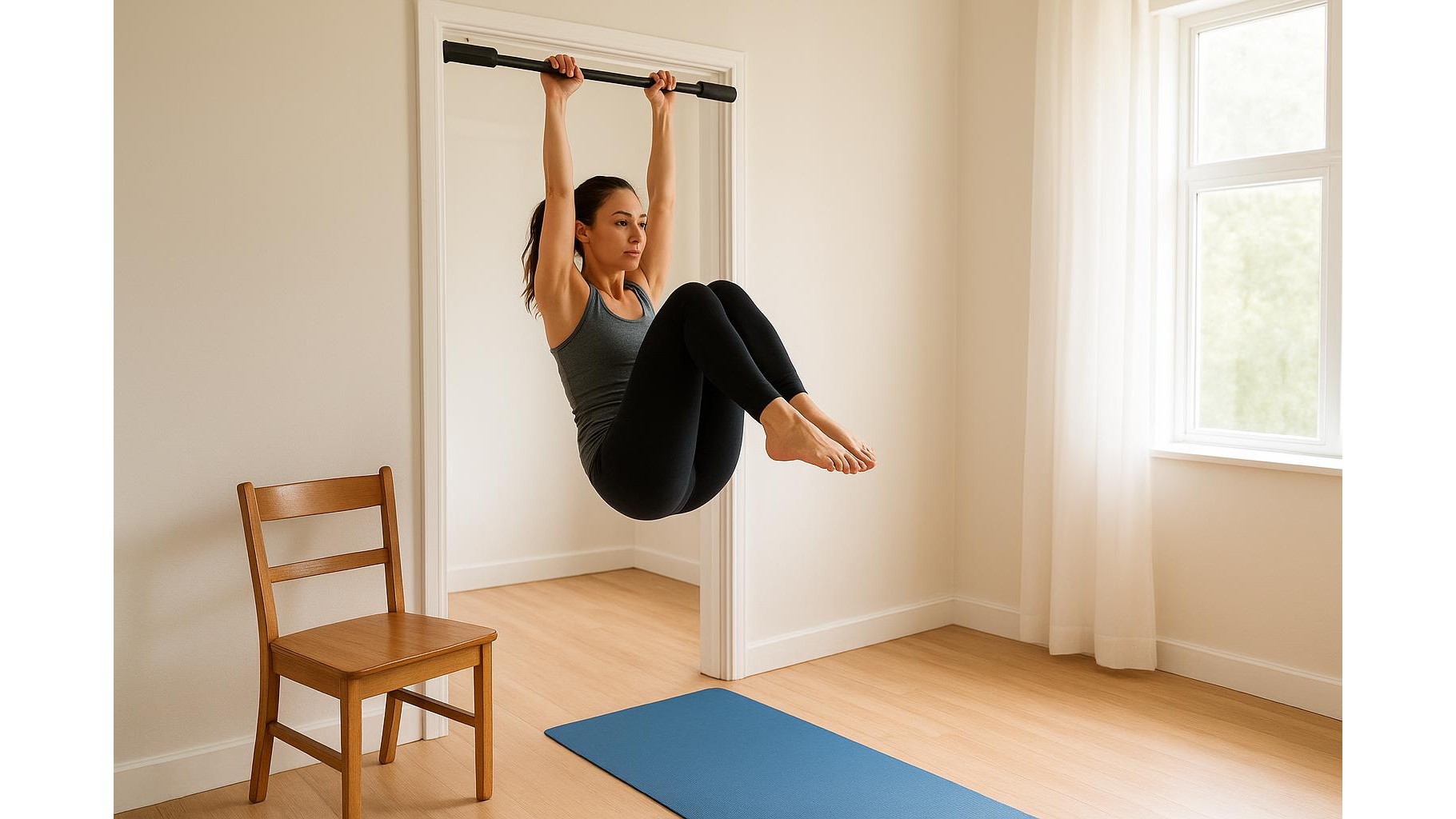
To recreate the demands of aerial training in a small space, you just need three reliable pieces of equipment: a secure pull-up bar mounted in a doorway or on the wall, a sturdy chair or low step that does not wobble, and a comfortable spot on the floor for core and shoulder work. The pull-up bar lets you train hangs, active shoulders and grip endurance, closely mirroring time spent on silks or a hoop. The chair becomes a makeshift trapeze support for L-sits and elevated push-ups, while the floor work ties everything together with anti-rotation drills, hollow holds and glute activation. Before starting, double-check that your bar is correctly installed and that your chair is solid enough to support your bodyweight in leaning positions.
Warm-up: activating shoulders and core
Begin with 5 minutes of focused warm-up to protect your shoulders and wrists. From standing, circle the arms forward and backward for 30 seconds each, then add scapular shrugs while lightly hanging from the bar, keeping elbows straight and moving only the shoulder blades. On the floor, flow through cat–cow, thread-the-needle and plank walkouts to mobilise the spine and wake up the deep core. Finish with wrist circles and gentle finger stretches to prepare for longer grip-intensive work. The goal is to feel heat in the upper back and a mild burn in the abdominals, not fatigue; you are setting up quality movement for the harder sets that follow.
Core-focused hanging: mimicking aerial shapes
The main block starts with 10–12 minutes on the pull-up bar to replicate aerial core demands. Perform 3 rounds of 20–30 second dead hangs, focusing on active shoulders and a slightly tucked ribcage. Progress to bent-knee hanging leg raises or knee tucks: 3 sets of 6–10 controlled reps, keeping your swing minimal and using your lower abs rather than momentum. Between sets, add hanging knee side-tucks to challenge obliques, as if preparing for meathooks or windmills. Rest 45–60 seconds between rounds. This section not only conditions your grip but also trains your body to stabilise under load, a key skill for any aerial-inspired movement practice.
Chair-based drills for grip and shoulder stability
Next, use the sturdy chair as a low fixed point, similar to a static bar. Sit on the edge, place your hands beside your hips and perform supported L-sit holds: press through the hands, lift your hips off the seat and bring knees towards your chest, holding for 10–15 seconds. Aim for 3–4 rounds. Follow with elevated push-ups with hands on the chair and a slow 3-second lowering phase to build shoulder stability and control. For extra aerial carryover, add pike walk-ins: from a plank with feet on the floor and hands on the chair, walk feet towards the chair to raise the hips, mimicking an inversion entry. Keep your core braced and neck relaxed to protect your spine.
Floor work finisher: anti-rotation and posterior chain
Finish the 30 minutes with a 6–8 minute floor series targeting anti-rotation strength and the posterior chain, both essential for aerial control. Alternate 30 seconds of hollow body holds with 30 seconds of glute bridges, completing 3–4 cycles. In the hollow hold, think of pressing your lower back into the floor and lengthening through your fingertips and toes, just like maintaining tension in a straddle inversion. Follow with slow side planks on each side to train lateral stability and protect the lumbar spine. These grounded drills reinforce the shapes and tension you used on the bar and chair, helping you translate new strength into cleaner lines when you return to full aerial equipment.
This aerial-inspired home workout condenses the key demands of silks and hoop into a compact 30-minute session with minimal equipment. By combining active hanging, controlled core lifts, chair-based support work and intentional floor conditioning, you build the core strength, grip endurance and shoulder stability that aerial arts require. Repeat this routine two to three times per week, focusing on form and progressive holds, and you will notice stronger hangs, steadier inversions and better overall control in both your home workouts and future aerial sessions.