Stronger calves and steadier ankles can support everyday movement, walking and lower-body training. This 30-minute resistance-band workout combines calf raises, controlled ankle movements and balance practice in a progressive home session. Use a light band, a stable chair or wall for support, and a clear floor space. Move without pain; if you have an ankle injury or ongoing symptoms, seek professional guidance before starting.
Warm up and set your pace
Spend the first four minutes marching gently in place, making small ankle circles and shifting your weight from one foot to the other. Keep your posture tall and your knees soft. The session uses deliberate repetitions rather than speed: take about two seconds to move, pause briefly, then return over two to three seconds. Rest for 30–45 seconds between sets, and take longer whenever you need to regain steady form. Keep the band secure and check it for damage before use.
Build strength with calf raises
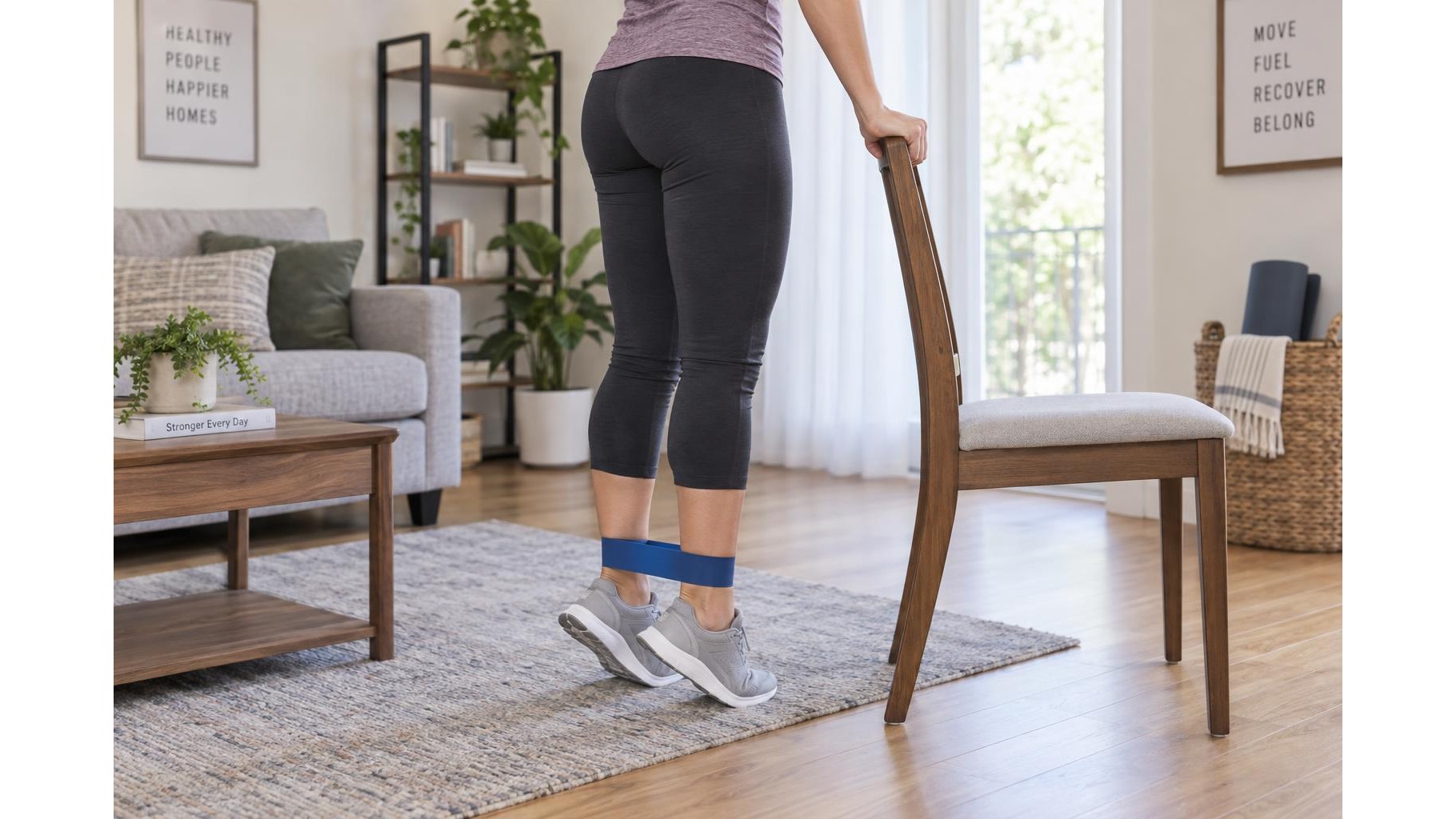
For minutes 4–11, stand with feet hip-width apart and fingertips on a wall or chair. Rise onto the balls of both feet, pause at the top, then lower your heels slowly until they reach the floor. Complete two sets of 12–15 repetitions, resting 45 seconds between sets. Keep your weight spread across the base of the big toe and little toe; avoid rolling your ankles outward. To make it easier, use a smaller range of motion or sit and lift your heels from the floor. If that feels comfortable, try the final few repetitions with more weight on one leg while keeping support close.
Train ankle movement against the band
For minutes 11–19, sit with one leg extended and loop the band around the forefoot, holding its ends to create gentle tension. First point your toes away, then draw them toward your shin. Perform 10–12 slow repetitions in each direction per foot. Next, anchor the band safely to a sturdy object and place it around the forefoot to work the ankle inward and outward, moving only as far as you can control. Do 10 repetitions each way per foot, with 30 seconds of rest between movements. Beginners can use less tension or skip the sideways directions. Keep the knee quiet and let the ankle do the work.
Add controlled balance practice
For minutes 19–25, stand beside a wall or chair. Balance on one foot for 20–30 seconds, then switch sides; repeat twice per leg, resting 20–30 seconds between attempts. Keep a soft bend in the standing knee and look at a fixed point. To progress, perform five small heel raises while balancing, or lightly tap the free foot forward and back. For a beginner-friendly option, keep the toes of the free foot on the floor like a kickstand. Use support whenever your balance wavers rather than trying to catch yourself.
Combine the movements and cool down
Use minutes 25–28 for one easy round: 10 calf raises, eight banded toe points and pulls per foot, then a 20-second supported single-leg stand per side. Choose light resistance and stop each set before your form slips. Finish with two minutes of relaxed walking and gentle ankle circles. Breathe normally throughout, and keep every repetition smooth, with no bouncing or sudden release of band tension. If you feel sharp pain, stop the exercise.
This short routine progresses from supported strength work to resisted ankle control and balance. Repeat it two or three times a week, leaving a day between sessions at first. As the movements become steadier, add a few repetitions or slightly more band tension—not both at once. Consistent, controlled practice is the goal.