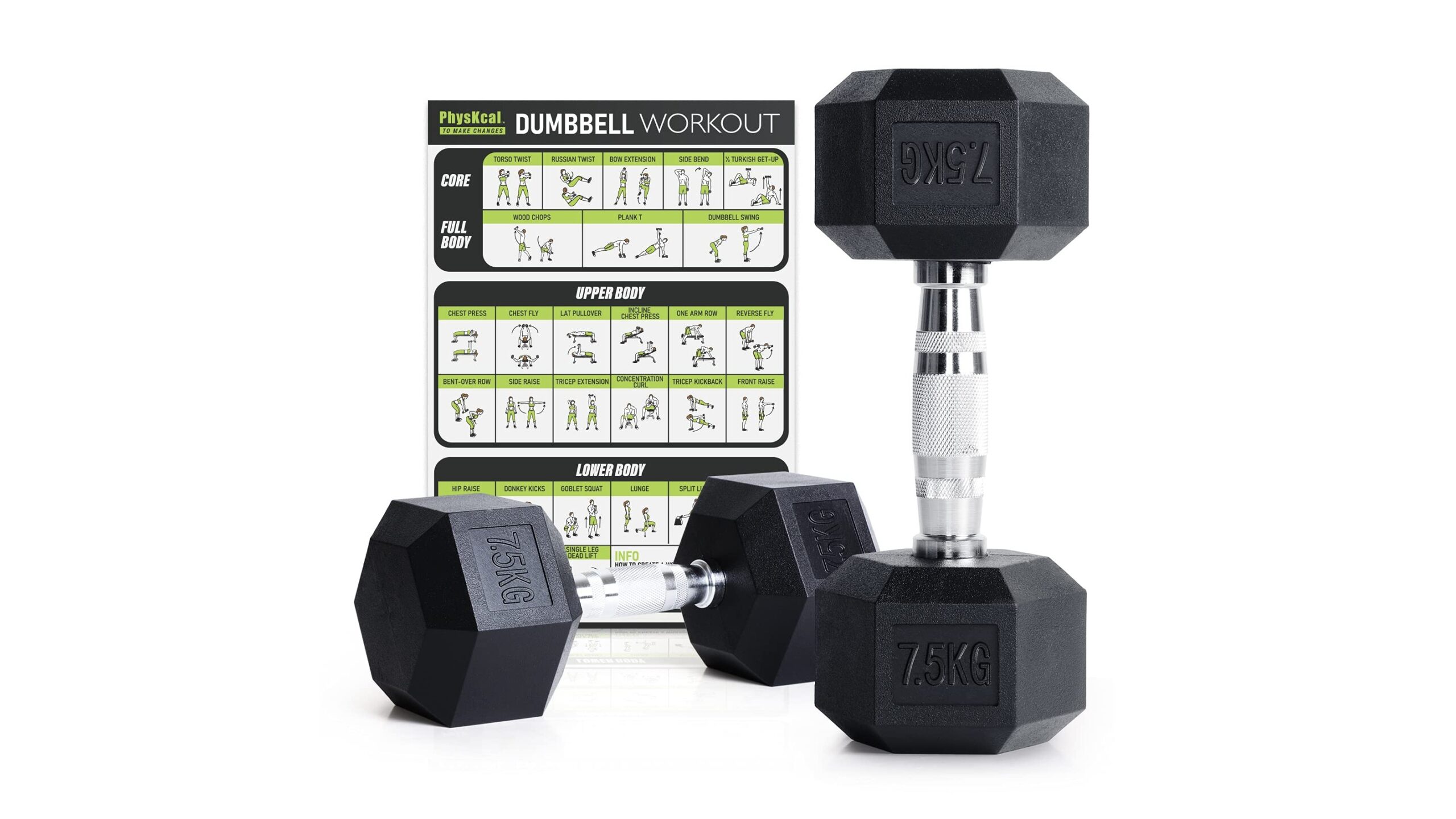
Build stronger glutes and steadier hips with this practical 30-minute dumbbell workout. It combines hip hinges, split-stance strength work and targeted glute exercises in a progressive session you can do at home. You will need a pair of dumbbells and enough space to step forward and back. Choose a weight that lets you move smoothly, keep good form and complete every repetition without pain.
Warm up and prepare your hips
Start with four minutes of easy movement: march in place, perform bodyweight hip hinges, and alternate controlled reverse lunges. Add a few glute bridges, gently squeezing at the top, then practise standing on one leg for 15–20 seconds per side. These movements raise your body temperature and introduce the balance demands of the workout. Keep the warm-up comfortable rather than tiring; the goal is to feel ready, not fatigued.
Set your pace and choose a suitable load
Use a timer or count repetitions, resting about 30–45 seconds between sets. For each exercise, aim for two or three sets of 8–12 controlled repetitions, completing one side at a time where appropriate. Start with lighter dumbbells than you think you need. The right load should make the final repetitions challenging while allowing you to maintain balance, a steady tempo and a comfortable range of motion. Stop if you feel sharp pain, and reduce the weight or range if your technique changes.
Build strength with a dumbbell Romanian deadlift
Hold one dumbbell in each hand in front of your thighs, feet about hip-width apart. Soften your knees, brace your abdomen and push your hips back as the weights travel close to your legs. Lower only as far as you can while keeping your back neutral and feeling a stretch in your hamstrings. Drive through your feet and bring your hips forward to stand tall, squeezing your glutes without leaning back. This hip hinge develops the glutes and hamstrings while teaching controlled movement at the hips.
Train hip stability with a reverse lunge
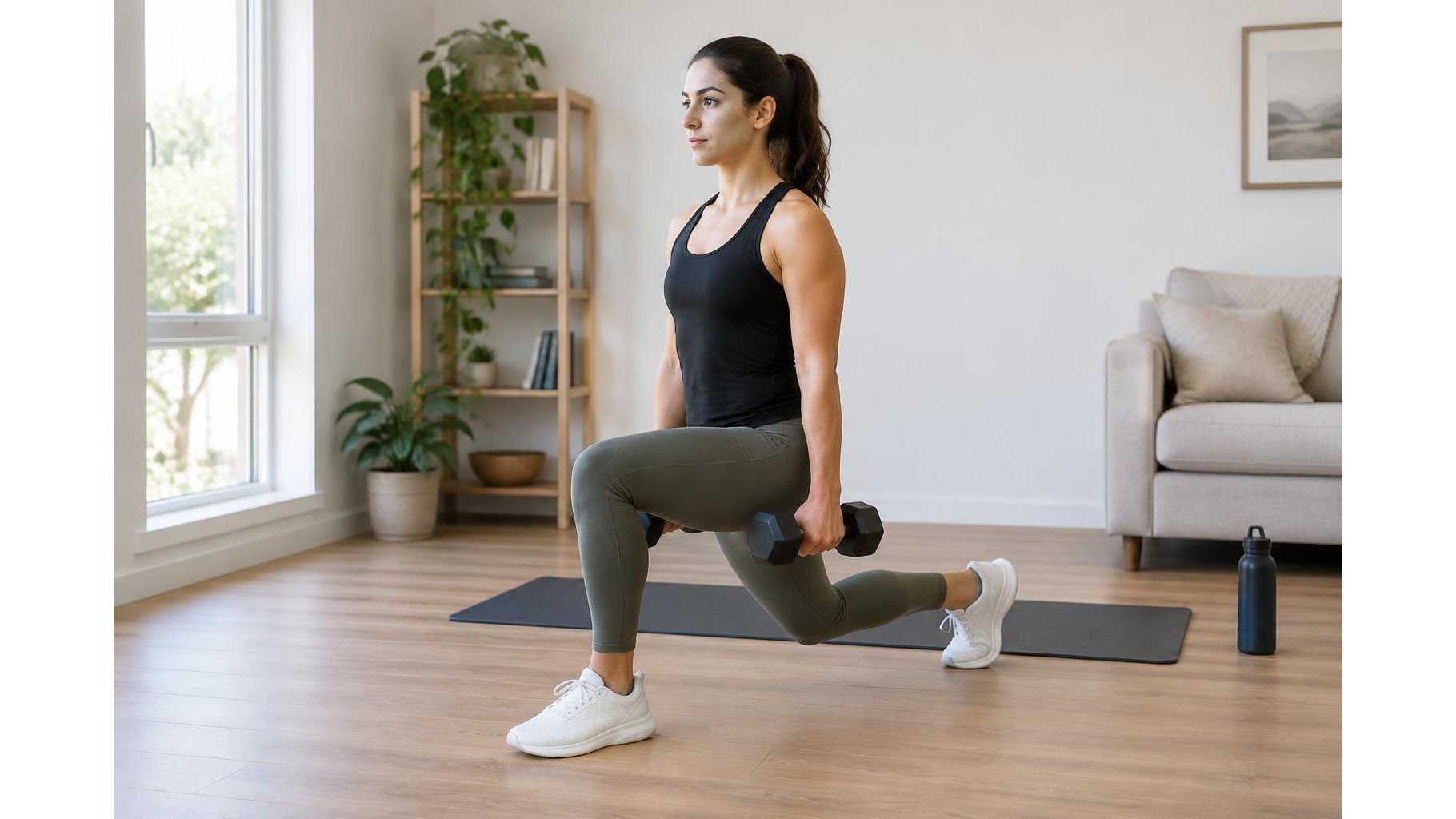
Hold the dumbbells by your sides and step one foot back into a reverse lunge. Bend both knees within a comfortable range, keeping your front foot planted and your torso steady. Push through the front foot to return to standing, then switch sides. Keep your hips facing forward and avoid letting the front knee collapse inward. For a beginner-friendly option, practise without weights, use a shorter step or lightly hold a wall for balance. Smooth repetitions matter more than depth.
Target the glutes with bridges and split squats
For a glute bridge, lie on your back with knees bent and feet flat. Rest one dumbbell securely across your hips, or begin with body weight. Press through your heels and lift your hips until your body forms a comfortable line from shoulders to knees; pause, then lower with control. Follow with a supported split squat: stand in a staggered stance, hold the dumbbells at your sides if comfortable, and lower straight down before driving through the front foot. Do 8–10 repetitions per side. If balance is difficult, use body weight or reduce the movement depth.
Finish with control and recover
Use the final few minutes to repeat any set that needs attention or walk gently around the room while breathing steadily. Avoid rushing to fit in extra repetitions. Across the session, keep your feet grounded, move through a pain-free range and let each repetition look much like the last. If you are new to strength training, begin with two sets per exercise and build gradually as the movements feel more familiar.
This session pairs a dumbbell hip hinge with lunges, bridges and split squats to challenge glute strength and hip control at home. Start with a manageable load, prioritise stable technique and progress one step at a time—by adding a repetition, a set or slightly more weight only when you can move comfortably and confidently.