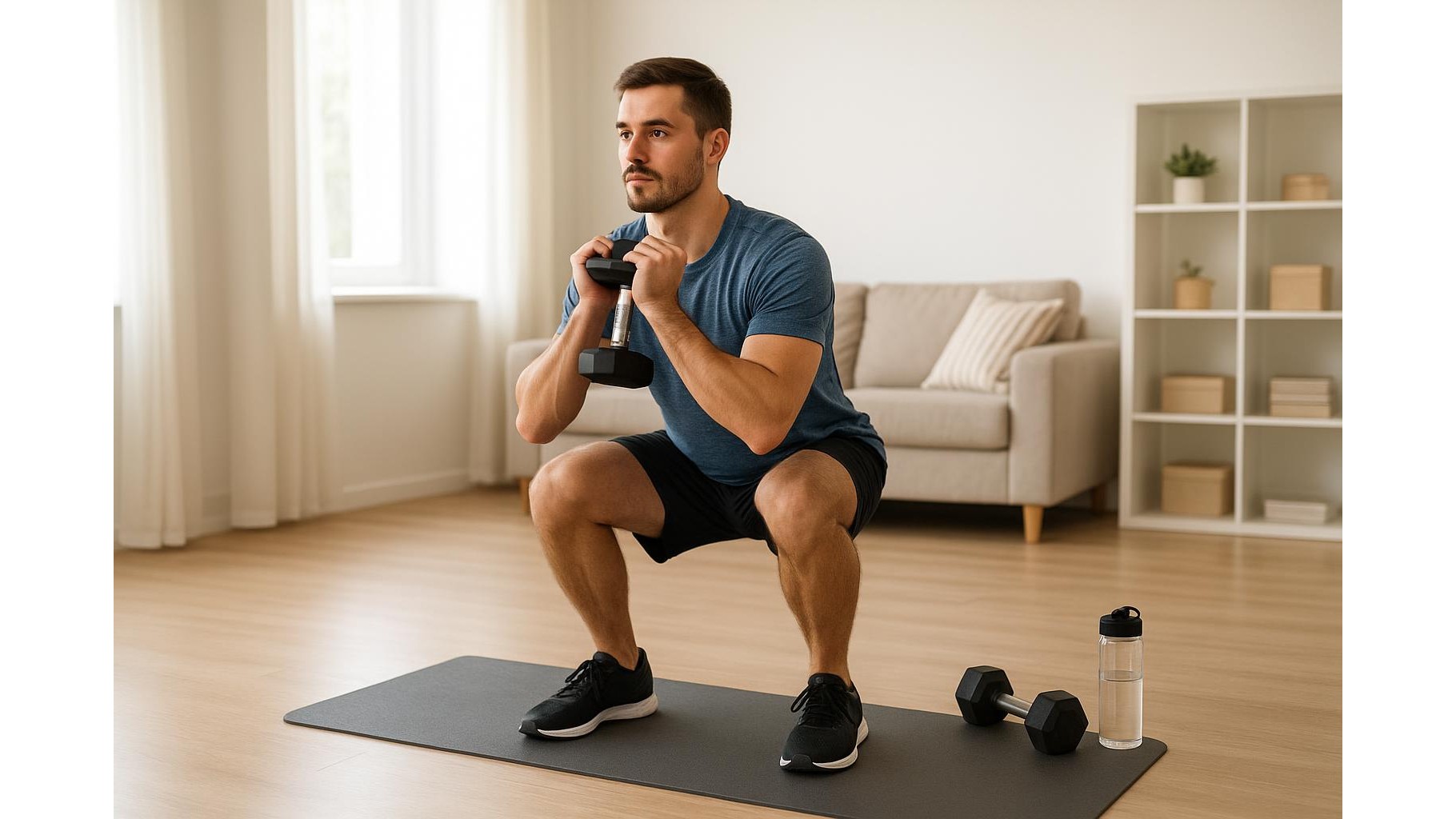
This 45-minute full body dumbbell ladder is a simple but intense home workout that blends strength and cardio using just a pair of dumbbells and a mat. You will climb up a ladder of reps with controlled rest, targeting every major muscle group while keeping your heart rate elevated. With clear scaling options, both beginners and intermediates can safely push their limits and build consistency in their home gym routine.
What is a dumbbell ladder workout?
A dumbbell ladder workout is a structure where you increase reps over time, often while keeping the weight the same. In this 45-minute full body session, you will move through a circuit of compound moves, adding reps each round. The goal is to challenge muscular endurance and cardiovascular fitness simultaneously. Because the time is fixed, you can scale difficulty by adjusting dumbbell load, pace, and rest between rounds, making it ideal for a compact home workout with minimal equipment.
Equipment, setup and warm-up
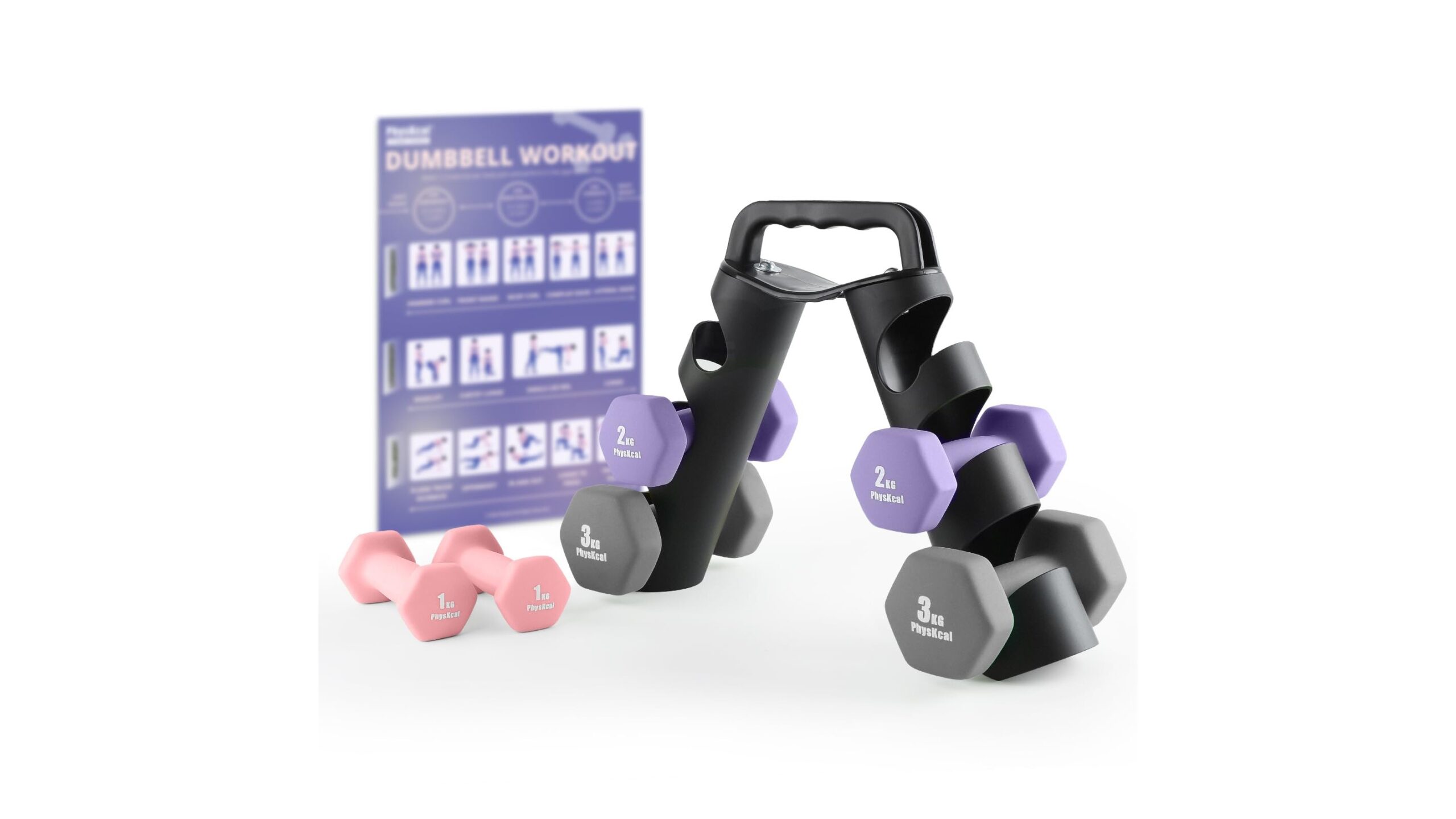
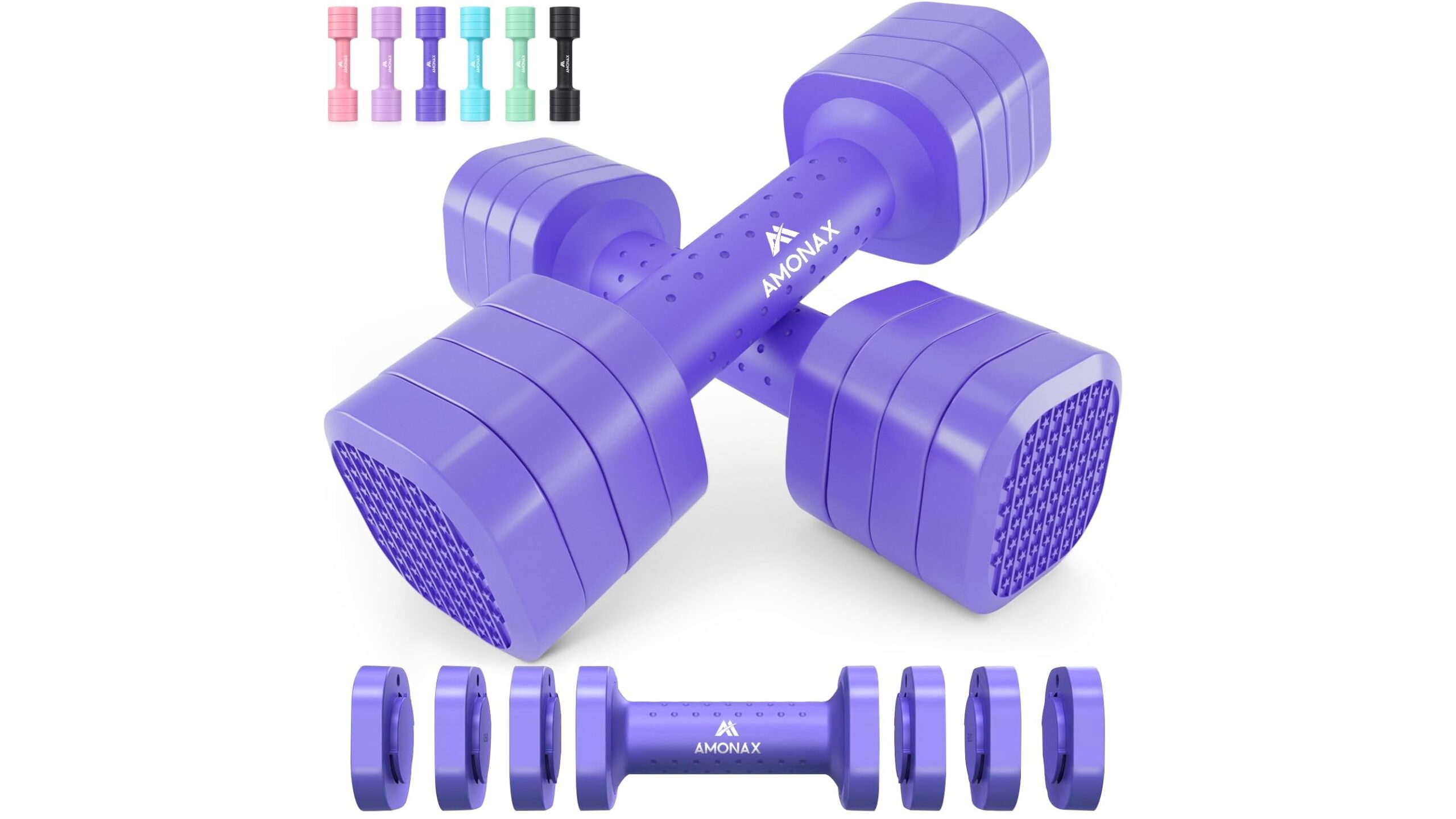
You only need three things: a pair of dumbbells, a mat, and some floor space. Choose a weight that feels light-to-moderate for 12–15 controlled reps in most exercises. For beginners, this might be 3–6 kg per hand; intermediates can opt for 8–15 kg depending on strength. Before the ladder, perform a 7–8 minute warm-up: 2 minutes of light cardio (marching, jogging in place), followed by dynamic moves like arm circles, hip hinges, bodyweight squats and lunges. Finish with a few light practice reps of each dumbbell exercise to groove the movement pattern.
The 45-minute full body dumbbell ladder structure
The workout is built around five compound exercises: goblet squat, bent-over row, floor press, dumbbell deadlift, and dumbbell reverse lunge. You will perform them in a circuit, increasing reps each round. Structure: Round 1 = 6 reps per exercise, Round 2 = 8 reps, Round 3 = 10 reps, Round 4 = 12 reps, Round 5 = 14 reps, then, if time allows, descend back down (12–10–8–6). Rest 45–75 seconds between rounds as needed. Work for up to 35 minutes on the ladder itself, leaving a few minutes at the end for a cool down and breathing work.
Exercise technique and cues
For the goblet squat, hold one dumbbell vertically at chest height, brace your core and sit hips back and down, keeping knees tracking over toes. The bent-over row uses two dumbbells; hinge at the hips with a flat back and pull elbows toward your ribs. In the floor press, lie on your mat, dumbbells above chest, lower with control until elbows lightly touch the floor, then press up. For the dumbbell deadlift, keep weights close to your legs, hinge to mid-shin and squeeze glutes to stand tall. Finally, with the reverse lunge, step back under control, lower until both knees are about 90 degrees, then drive through the front heel to stand.
Scaling options for beginners and intermediates
Beginners can shorten the ladder (for example 6–8–10–12 only), use lighter dumbbells, and rest 60–90 seconds between rounds. If needed, remove one lower-body move (such as the deadlift) on the final round to manage fatigue. Intermediates can add load, keep rest under 45 seconds, or perform a full up-and-down ladder within the 35-minute working window. Another option is to turn the last 5 minutes into a conditioning finisher: choose one exercise (like goblet squats or deadlifts) and alternate 30 seconds of work with 30 seconds rest for 5 rounds.
To finish, walk around the room and breathe deeply through the nose for 1–2 minutes, then stretch the hips, chest and hamstrings on the mat. This 45-minute full body dumbbell ladder gives you a repeatable template to build strength, cardio capacity, and movement quality at home. Track your reps, weights and rest times across weeks, and progressively tighten the ladder to keep your home gym training both efficient and challenging.