If you spend your days hammering the keyboard and your evenings gripping barbells or dumbbells, your wrists and elbows take a double hit. That familiar tightness in the forearms, nagging ache around the elbow, or stiffness in the wrists is usually not a sign that you should stop moving altogether, but that you need smarter recovery. This home routine blends mobility, self‑massage and simple loading tweaks so you can keep both your desk work and your strength sessions on track.
Understand what’s stressing your wrists and elbows
Long hours of typing hold your wrists in a fixed, slightly extended position while your fingers repeat the same small movements thousands of times. Then you go to lift, where gripping bars, dumbbells and kettlebells adds heavy load to already tense tissues. The combination can irritate the tendons that cross the wrist and attach around the elbow, leading to issues often labelled as “golfer’s elbow” or “tennis elbow” and general forearm tightness. The goal of this routine is to restore mobility, improve blood flow, and distribute load more evenly, so the joints can tolerate both your office work and your training.
Daily mobility resets for wrists and elbows
Start with 5–10 minutes of gentle mobility drills after work or before training. Begin with slow wrist circles: elbows by your sides, make fists and move your wrists through full circles in both directions, focusing on smooth control. Follow with wrist flexor and extensor stretches: arm straight, gently pull your fingers back towards you, then turn the palm down and flex the wrist the other way. For the elbows, try controlled pronation/supination of the forearm (rotating your palm up and down) while keeping the elbow close to the body. These simple moves help lubricate the joint surfaces, reduce stiffness from desk posture and prepare the tissues for gripping and pressing in your home gym.
Self‑massage and trigger point work for forearm relief
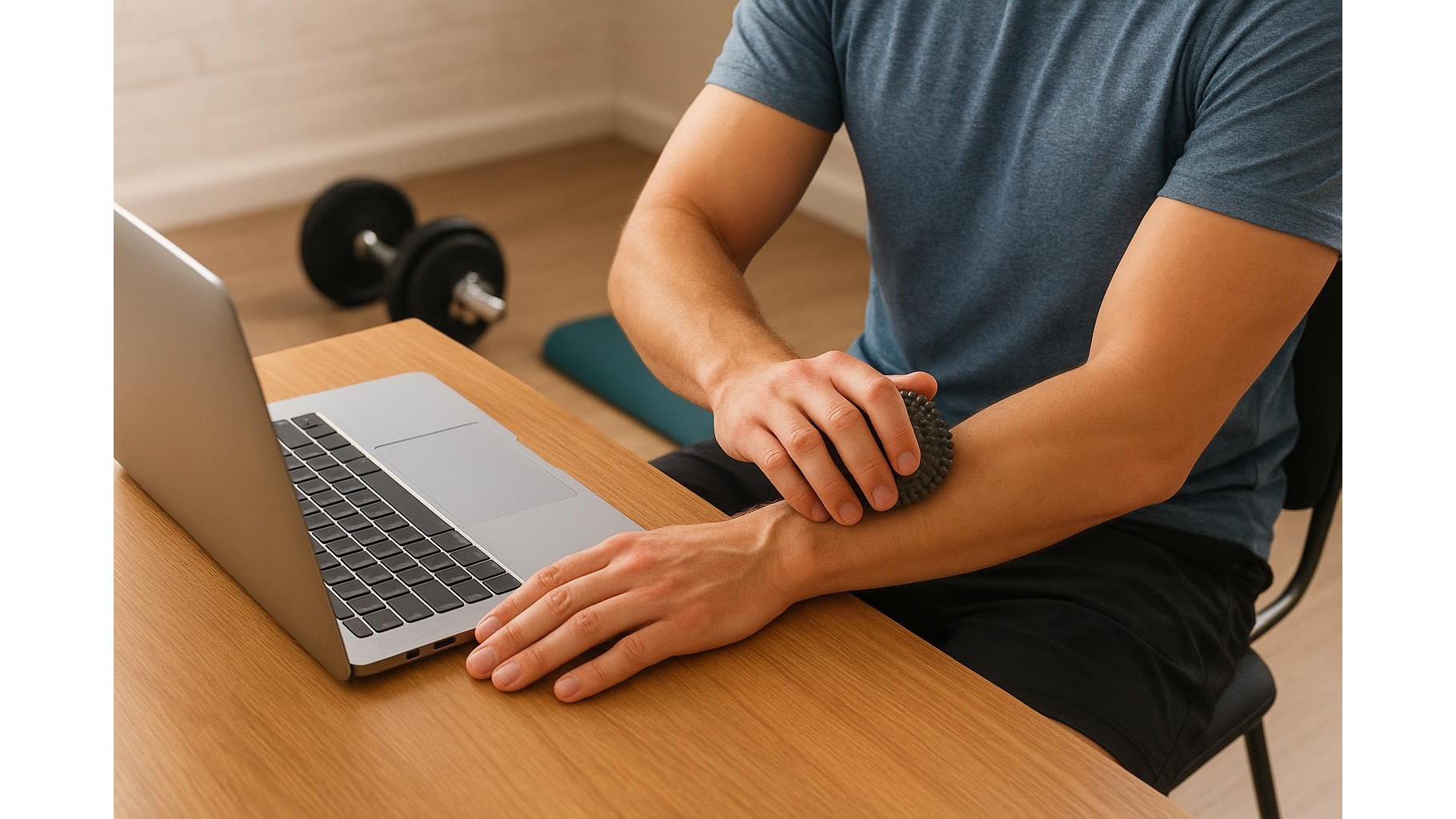
Next, add 5 minutes of self‑massage to the forearms to calm down overworked muscles. Sit at your desk or on the floor and use your opposite hand to slowly knead the muscle along the inside and outside of your forearm, hunting for tender, tight spots. Once you find one, apply gentle pressure for 20–30 seconds while breathing slowly until the sensation eases. If you have a simple massage ball or even a tennis ball, place it on a table, rest your forearm on top and roll from wrist towards elbow. This light trigger point work can reduce perceived tension, improve circulation and make your subsequent mobility and strengthening drills more comfortable and effective.
Strengthen the small muscles that protect joints
Rather than avoiding movement, strategically strengthening the smaller muscles around the wrist and elbow often provides long‑term relief. Incorporate light wrist curls and reverse curls with very moderate weight, focusing on high control and no sharp pain. Add grip variations such as towel hangs or squeezing a soft ball to build endurance without overloading the joints. A particularly useful pattern is the “reverse carry”: hold a light dumbbell at your side with the palm facing back and walk slowly, keeping the wrist neutral. Two to three sets of 12–15 smooth reps, two or three times per week, can build capacity in the forearm flexors and extensors, helping your joints better tolerate both daily keyboard work and heavy lifts.
Smart loading tweaks for people who type and lift
When elbows or wrists feel irritated, you don’t need to abandon your home gym—you need smarter exercise selection and loading. Temporarily swap straight‑bar pressing and curling for neutral‑grip variations (using dumbbells) that keep the wrist aligned with the forearm. Reduce volume of heavy gripping work like thick‑bar holds and replace some of it with exercises that distribute load, such as push‑ups on handles and band‑resisted rows. Keep your effort a little lower (around 6–7 out of 10) for a couple of weeks while maintaining frequency, and prioritise perfect technique. These loading tweaks reduce peak stress on irritated tissues while still giving your muscles the stimulus they need.
Integrating recovery into your daily routine
The most effective recovery plan is the one you actually follow. Anchor your new wrist and elbow routine to existing habits: 5 minutes of mobility before you open your laptop, 5 minutes of self‑massage right after shutting it, and a short block of targeted strengthening two or three evenings per week before your main workout. Combine that with occasional breaks from typing, a more neutral keyboard and mouse position, and balanced training that doesn’t obsess over only heavy presses and curls. Over time, this consistent approach will help you move from chronic tightness and soreness to resilient, reliable joints that can handle both long days at the office and demanding sessions in your home gym.
By respecting what your wrists and elbows go through each day and giving them focused support and recovery, you’ll be able to type, lift and live with less pain and more performance.