Tight, cranky hips can ruin your squat session or make every run feel like a grind. A simple hip flexor self-massage with a lacrosse ball can unlock range of motion, ease nagging aches and prime your body for lifting or cardio. Below you’ll find a practical, step-by-step home hip flexor release routine using a basic massage ball and bodyweight. You don’t need a physio table or fancy tools—just a bit of floor space, smart positioning, and attention to breathing and pressure.
Why your hip flexors feel tight before lifting
Long hours of sitting plus heavy lifting is the perfect recipe for tight hip flexors. When you sit, your hips stay flexed, teaching the iliopsoas and rectus femoris to stay short and switched on. Then you ask them to stabilize heavy squats, lunges, or deadlifts and they respond with tension, pinching at the front of the hip or a pull in the lower back. A simple lacrosse ball hip flexor release helps down-regulate this overactivity, boost blood flow, and give your glutes and core room to fire properly. Think of it as clearing the brakes before you press the gas.
Gear you need for home hip flexor self-massage
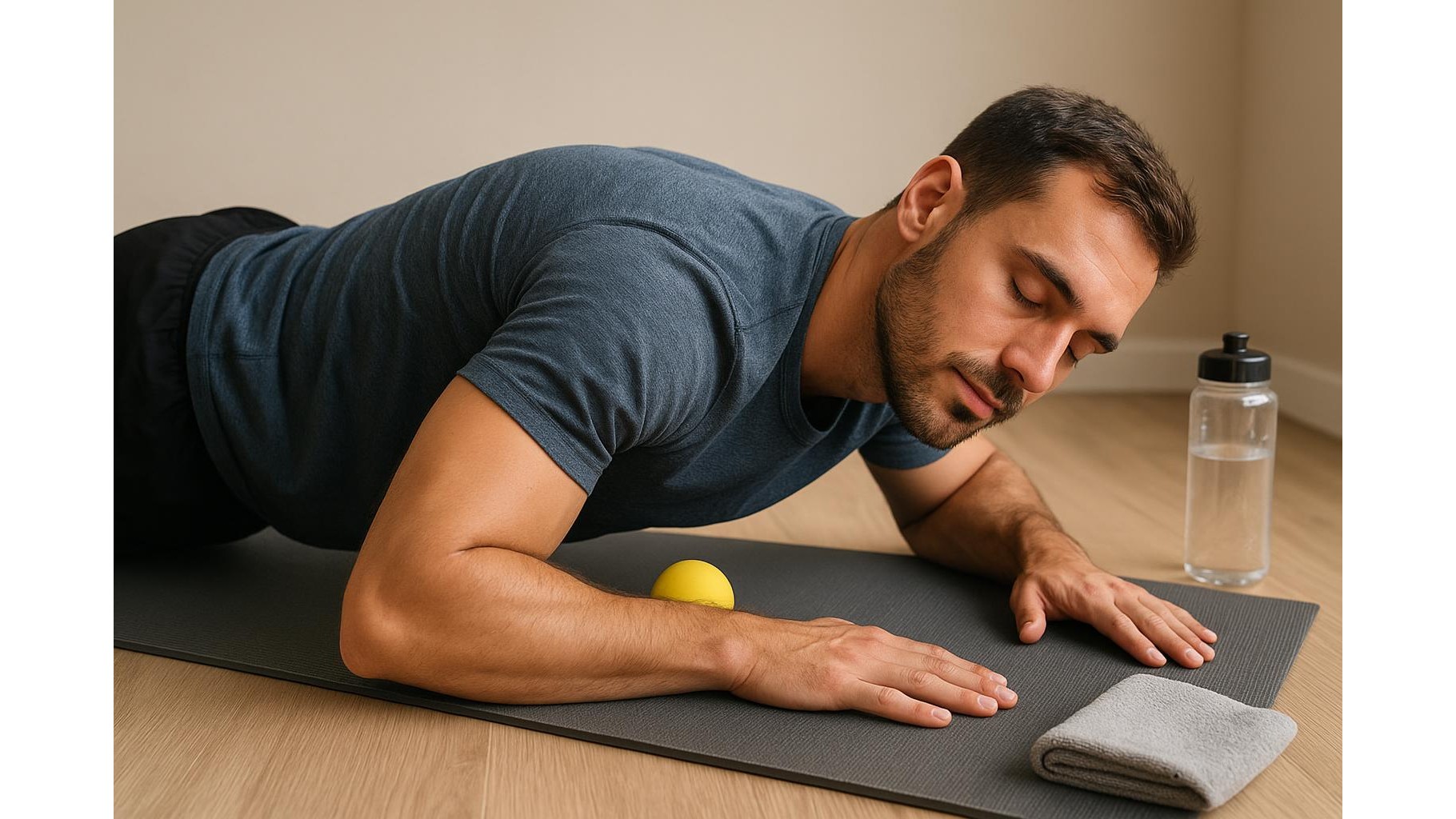
You only need a firm ball (lacrosse, rubber or dense massage ball), a yoga mat or soft floor, and a small folded towel for comfort. A lacrosse-style massage ball is ideal because it’s small and doesn’t collapse under pressure, allowing precise targeting of the hip flexor line without slipping. Avoid overly squishy foam balls—they disperse force and make it harder to reach deeper tissue. Wear light, flexible clothing so the ball can sink into the muscle rather than sliding over fabric. If this is your first time doing hip flexor self-myofascial release, start with a slightly softer ball and progress to a firmer one as your tolerance improves.
Step-by-step lacrosse ball hip flexor release routine
Begin by lying face down on your mat. Find the bony front point of your hip (ASIS) with your fingers, then place the ball just inside and slightly below that point—this is along the hip flexor line. Gently lower your bodyweight onto the ball, supporting yourself on your forearms and opposite knee. Aim for a pressure level of about 6–7 out of 10: intense but not sharp or electric. Breathe slowly through your nose: 4 seconds in, 6–8 seconds out. Stay on each tender spot for 60–90 seconds, waiting for the tissue to soften. You can gently bend and straighten the same-side knee or rotate the leg in and out to add a flossing effect while keeping the ball pinned in place. Then move the ball 1–2 cm along the line between your hip bone and belly button, repeating for 3–4 spots per side.
Breathing, safety and timing around workouts
Effective self-massage for hip flexors is less about brute force and more about how your nervous system responds. If you hold your breath or tense your jaw, your body will resist the pressure. Keep your breath quiet and slow, letting your ribs expand 360 degrees. If pain spikes above 7/10, ease off or shift the ball slightly—it should feel like deep pressure and a good ache, not sharp pain or tingling down the leg. For strength training, do this routine for 3–5 minutes per side before lifting to improve comfort at the bottom of squats and split squats. For runners or HIIT sessions, use it after your warm-up or post-training to reduce post-session tightness without making your hips feel unstable.
Integrating hip flexor release with mobility and strength
A lacrosse ball is a powerful tool, but results stick only if you combine hip flexor release with smart mobility and strength work. After you finish the self-massage, move straight into dynamic drills: half-kneeling hip flexor stretches, leg swings, or deep bodyweight squats focusing on staying tall through the torso. Follow up with strength exercises that reinforce better hip mechanics, like glute bridges, Romanian deadlifts and split squats. This sequence—release, mobilise, then strengthen—helps your body “learn” the new range of motion and keeps tightness from returning. Done 3–4 times per week, this simple hip flexor lacrosse ball routine can be the difference between cranky, stiff hips and smooth, powerful lifts.
Targeted hip flexor self-massage at home doesn’t require special equipment or a long time commitment, just consistency and attention to pressure and breathing. By spending a few focused minutes with a lacrosse ball, you prime your hips for squats, deadlifts, running and daily life, reducing discomfort and unlocking a more efficient movement pattern. Make this routine a regular part of your warm-up or cool-down and you’ll quickly notice a difference in how freely your hips move and how strong you feel in your lower-body training.