Night-time leg cramps after a tough home workout can turn a good training day into a miserable night. Calf and hamstring spasms are often linked to a mix of tight muscles, fatigue, sub‑optimal electrolytes, and awkward sleep positions. The good news: with a smarter warm‑down routine, better hydration and a few simple bedroom tweaks, most home trainees can dramatically cut the frequency and intensity of those painful wake‑up calls.
Why home workouts trigger night leg cramps
Training at home often means fast, efficient sessions with lots of squats, lunges, deadlifts and cycling on a bike trainer. These moves heavily load the calves and hamstrings, and if you skip a proper cool‑down, the muscle fibres stay shortened and irritable. Add in mild dehydration from sweating in a small space and a day spent sitting at a desk, and you have the perfect recipe for night cramps. The muscles are both overworked and under‑stretched, circulation is reduced, and your nervous system is more likely to misfire a sudden, painful contraction in the early hours.
Post‑workout stretches to calm calves and hamstrings
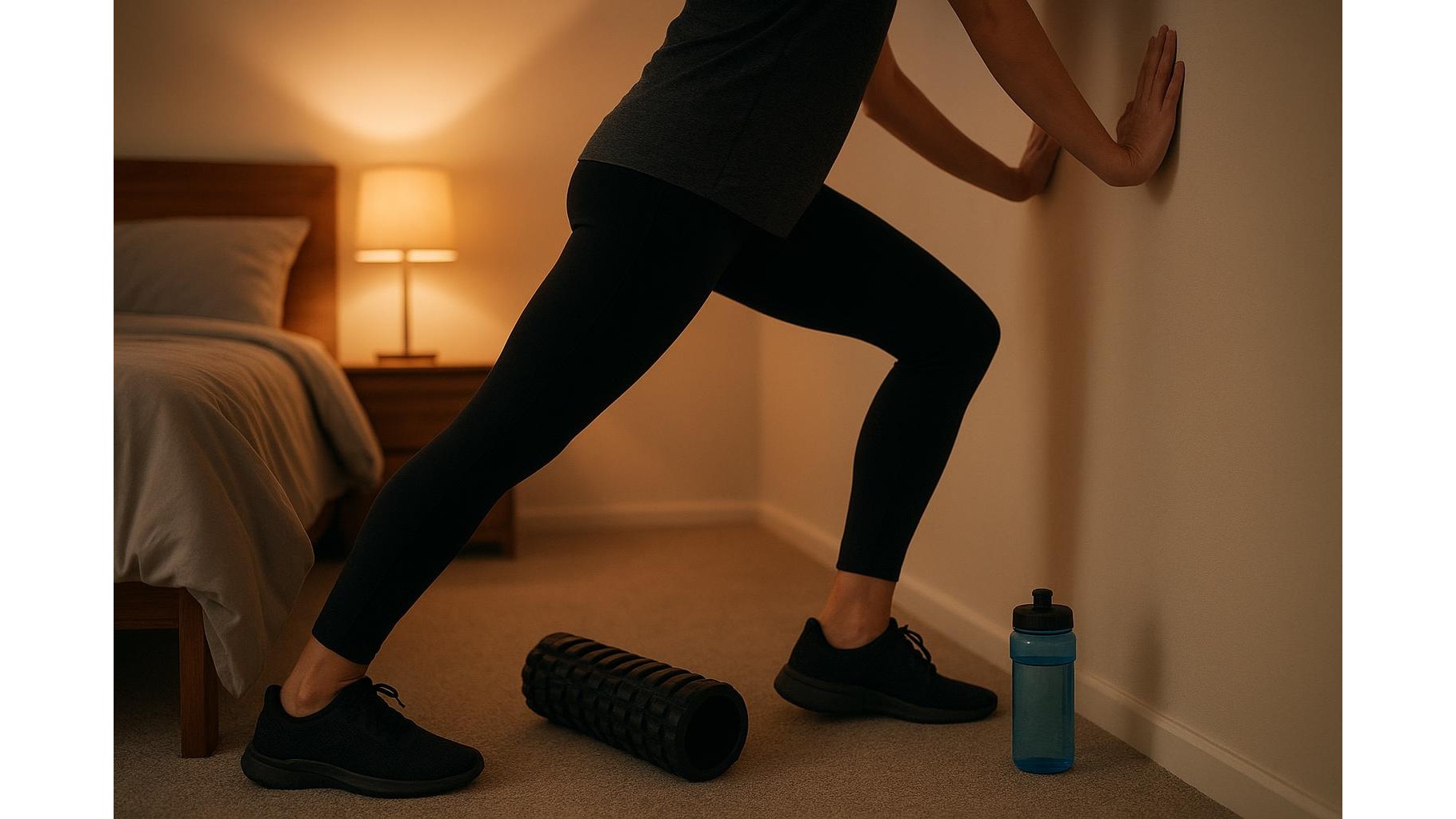
To reduce nocturnal leg cramps, build a five‑ to ten‑minute stretching routine into every home session. Prioritise slow, static holds that lengthen the muscle and signal to your nervous system that it is safe to relax. For calves, stand facing a wall, step one foot back and press the heel down for 30–45 seconds per side, then repeat with a slight knee bend to target the soleus. For hamstrings, a simple lying hamstring stretch with a towel around your foot works well: gently pull the leg towards you without bouncing. Follow with a gentle glute stretch and some light ankle circles. Consistency matters more than complexity: the key is finishing every workout with calm, deep breathing and relaxed muscles, not racing straight from your last rep to the sofa.
Hydration and electrolytes: supporting your muscles from the inside
Even modest home workouts can deplete electrolytes such as magnesium, potassium and sodium, especially if you sweat easily or train in a warm room. Low fluid and electrolyte levels are strongly associated with leg cramps at night. Aim to drink regularly during the day, not just after training, and include a pinch of salt in meals if you sweat heavily and have no medical salt restrictions. Many trainees find that a balanced diet rich in leafy greens, nuts, seeds and fruit, along with a well‑formulated electrolyte drink or magnesium supplement, helps reduce cramp frequency. Always follow the dosage on the label and speak to a health professional if you take medication, but remember: hydration and minerals are as much a part of recovery as stretching.
Using simple tools to release tight tissue
Beyond stretching, basic self‑massage tools can ease tight calves and hamstrings that tend to cramp at night. A quality foam roller can be rolled slowly along the back of the legs for 60–90 seconds per muscle group after training, helping to improve circulation and relieve trigger points. A small massage ball is ideal for targeting stubborn knots around the upper calf or glute area. While these tools do not replace medical treatment, many home trainees report fewer cramps and a more relaxed, heavy‑leg feeling before bed when they use them consistently. Look for products with firm, durable foam and a non‑slip surface so they stay stable on living‑room floors and exercise mats.
Sleep positions that reduce night‑time cramping
Your sleep posture can either calm or aggravate sensitive leg muscles. Lying on your front with feet pointed can keep the calves in a shortened position, making cramps more likely. Instead, try sleeping on your back with a small pillow or rolled towel under your knees, which gently offloads the hamstrings, or on your side with a pillow between your knees to align the hips. Let your ankles fall into a neutral, relaxed position rather than forcing toes to point. If cramps frequently wake you, keep a clear path beside the bed so you can safely stand up and stretch the calf against the floor or wall immediately, which usually stops the spasm faster and reduces lingering soreness.
Night‑time leg cramps after home workouts are not something you simply have to accept. By adding targeted cool‑down stretches, improving everyday hydration and electrolytes, using simple self‑massage tools and optimising your sleep position, you can make a real difference to how your legs feel overnight. Small, consistent changes to your routine are often enough to turn painful, broken sleep into deep, restorative rest that supports your long‑term progress in the home gym.