When you train hard in a home gym, your ability to get stronger, leaner and more explosive doesn’t just depend on sets and reps. It depends on how well you sleep. Turning your bedroom into a true sleep sanctuary – with blackout curtains, sound masking and smart light and temperature habits – is one of the most powerful performance upgrades you can make.
Why home athletes need a sleep-optimised bedroom
Every heavy squat session, long conditioning block or HIIT circuit triggers micro-damage in your muscles and nervous system. Your body repairs this damage and builds new tissue during deep, uninterrupted sleep. Poor sleep quality raises cortisol, blunts testosterone and growth hormone, and makes you feel sore and unmotivated for your next home workout. By optimising your bedroom – especially light control, noise control and temperature – you increase the amount of deep sleep and REM sleep you get, which means better recovery, improved reaction time and more consistent training performance across the week.
Block every ray: blackout curtains for deeper sleep
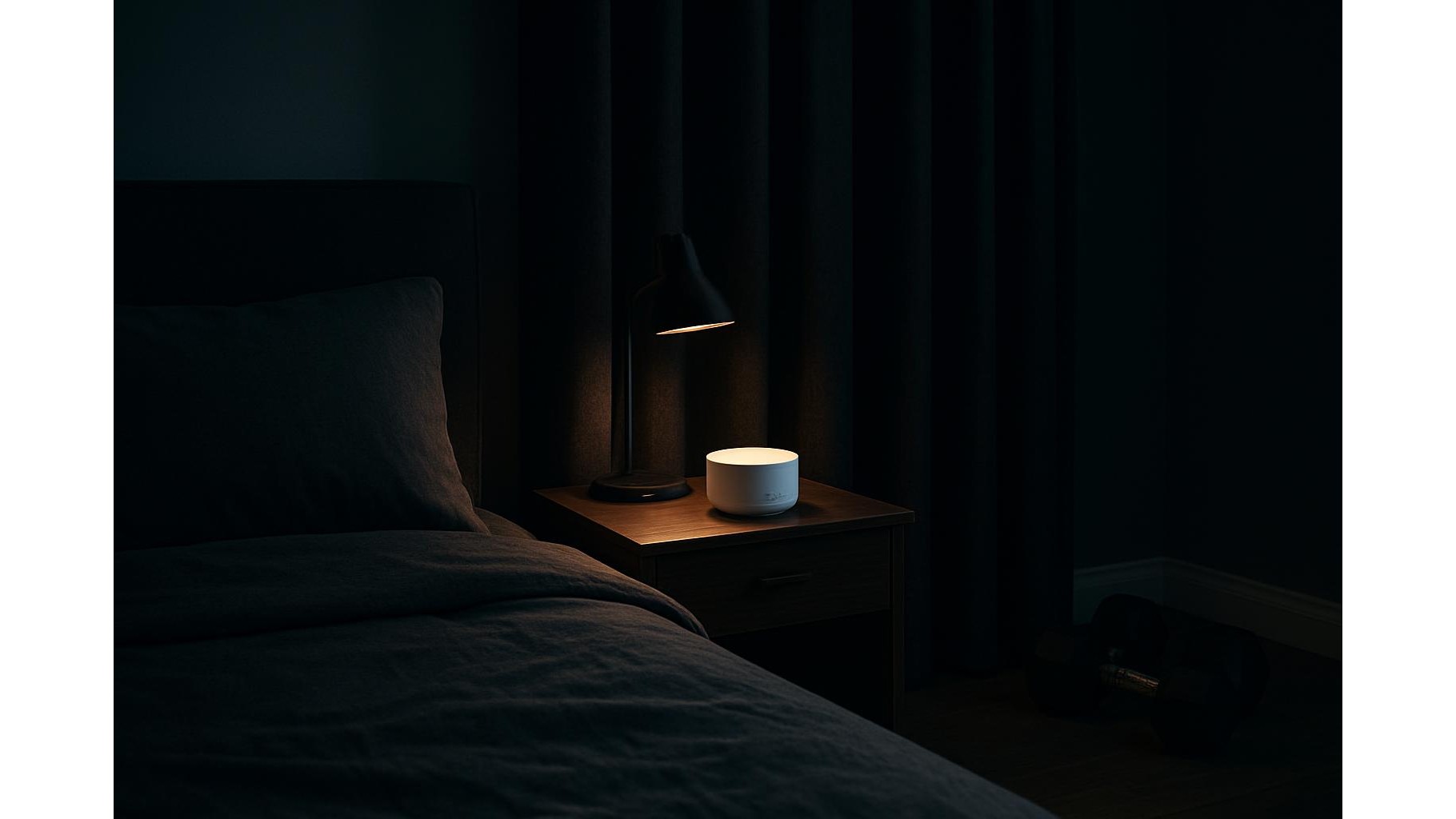
Light is the main signal that sets your circadian rhythm. Even small amounts of street light or early-morning sun slipping through normal curtains can suppress melatonin and fragment your sleep. A set of full-length blackout curtains with a dense lining can transform a bright bedroom into a dark cave ideal for recovery. When you install them, make sure they extend well beyond the window frame on all sides to avoid light leaks. Pair them with a simple eye mask if you train late under bright lights in your home gym, as this can delay your body’s natural “sleep window”. The goal is simple: from the moment you switch the lights off, your room should stay pitch-black until your alarm goes off.
Silence the city: sound masking and white noise
For many home athletes, noise is as disruptive as light. Neighbours, traffic, plumbing or even a partner’s snoring can repeatedly nudge you out of deep sleep without fully waking you up. Instead of chasing total silence – which is almost impossible in modern homes – try sound masking. A compact white noise machine or a bedside fan creates a steady, neutral sound that drowns out sudden peaks in noise. Look for devices with adjustable volume and several sound profiles (white, pink or brown noise, or natural sounds like rain) so you can find what feels most relaxing. Place it between you and the main noise source, and keep it running all night. Many athletes find their sleep becomes more continuous and they wake up feeling far less “wired” even on heavy training weeks.
Light discipline: evening routines for faster shutdown
Gear is powerful, but your behaviour matters just as much. Practise strict light discipline in the two hours before bed. Dim overhead lighting and rely on warm, low-level lamps instead. If you train late in your home gym, switch to softer lighting for cool-down stretches and mobility work to signal to your brain that intensity is over. Avoid bright phone and TV screens, or at least use blue-light reduction modes and keep devices at arm’s length. Consider a warm shower and 5–10 minutes of gentle breathing or stretching in your bedroom with lights low. Over time, this consistent pre-sleep ritual becomes a cue for your nervous system to shift from “fight mode” to “rebuild mode”, shortening the time it takes you to drift off.
Temperature control and bedding for athletic recovery
Your core temperature naturally drops at night, and a slightly cool bedroom – usually around 17–19°C – promotes deeper, more restorative sleep. If you tend to overheat after late training or protein-heavy meals, focus on temperature control. Use breathable, moisture-wicking bedding and a lighter duvet, and consider swapping synthetic pyjamas for cotton or technical sleepwear designed to move sweat away from the body. Keep airflow moving with a fan, and if possible, crack a window to reduce stuffiness. Many home athletes notice that just a few degrees cooler dramatically reduce night sweats, restlessness and the number of times they wake up, leading to more consistent muscle repair and hormone balance.
Putting it all together: your sleep sanctuary game plan
Think of your bedroom the way you think of your home gym: every element should support performance. First, eliminate light leaks with proper blackout curtains. Second, tame unpredictable noise with steady sound masking. Third, protect your circadian rhythm with disciplined evening light habits and a relaxing pre-bed routine. Finally, fine-tune temperature and bedding so you stay comfortably cool through the night. None of these changes are complicated, but together they create a powerful sleep sanctuary that helps you recover faster, train harder and stay consistent with your fitness goals.