
After a tough home leg session, it is common to feel heavy legs, mild swelling around the ankles, or a sense of tightness. A simple, leg-focused self-massage routine can support lymphatic drainage and circulation, helping you recover faster and feel lighter without needing a professional therapist. With a few basic tools and smart positioning, you can turn the last 10–15 minutes of your workout into a powerful recovery ritual.
Why lymphatic drainage matters after leg workouts
Your lymphatic system helps clear metabolic waste, excess fluid and inflammatory molecules that build up during intense leg training such as squats, lunges and cycling intervals. Unlike blood, lymph does not have a central pump; it relies on muscle contractions, breathing and gentle pressure to move. When you sit down immediately after training, fluid can pool in your lower legs, leaving them feeling puffy and sluggish. A few minutes of upward strokes and gentle compression encourages lymph and venous return towards the heart, easing that heavy-leg sensation and supporting long-term joint and tissue health.
Simple positioning: elevate before you massage
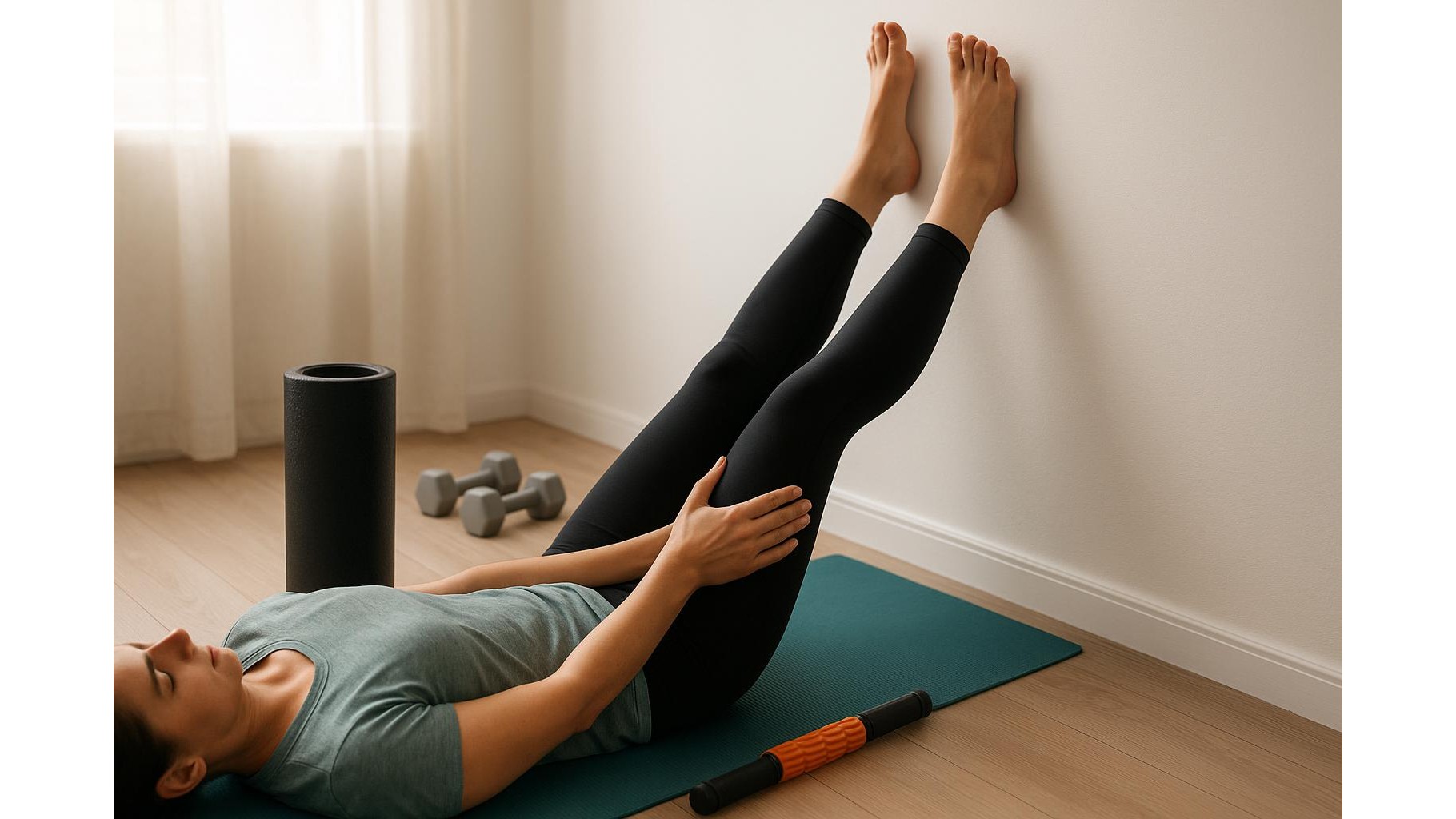
Before you start any self-massage for lymphatic drainage, use gravity in your favour. Lie on your back near a wall and place your calves up so your feet rest higher than your hips, or stack a couple of firm cushions under your lower legs on the sofa. Stay here for 2–3 minutes, taking slow belly breaths. This simple leg elevation helps fluid shift out of the feet and ankles and primes your system for massage. While you rest, gently flex and point your toes, then draw small circles with your ankles to keep the calf pump working without adding extra load to tired muscles.
Hand techniques: a beginner-friendly leg drainage routine
You do not need advanced skills to perform effective lymphatic self-massage; what matters most is direction and light pressure. Start at the upper leg so that higher “stations” are clear before you move fluid from the lower leg. Sitting or lying comfortably, place your hands around the upper inner thigh and use soft, sweeping strokes towards the groin, avoiding direct pressure over sensitive areas. Then move to the outer thigh, again working upwards. For the calves, use both hands to gently glide from ankle to knee, keeping pressure light enough that the skin moves but muscles are not deeply compressed. Finish with light circular strokes just behind the knee and at the front of the hip, where many lymph nodes sit. Spend 5–8 minutes total, always using slow, rhythmic movements and stopping if you feel pain or dizziness.
Optional tools to enhance leg massage at home
Once you are comfortable with hand techniques, you can add simple home massage tools to make your routine more effective and convenient. A smooth foam roller or a basic massage stick can help cover larger areas of the quads and calves with minimal effort, especially if your hands get tired easily. For lymphatic-style work, keep the pressure moderate and continue to roll in long, steady strokes from ankle towards knee and thigh, rather than back-and-forth aggressively as you might for deep tissue work. Avoid bony areas such as the front of the knee and ankle, and never roll directly over varicose veins or areas of sharp pain. These tools are most helpful 1–2 hours after training, or on recovery days when you want a quick circulation boost without a full workout.
Everyday habits that support lighter, more energised legs
A short leg-focused self-massage is only one part of the recovery puzzle. To keep your legs feeling light and responsive session after session, combine this routine with good hydration, a balanced intake of electrolytes, and regular low-intensity movement such as easy walking between desk sessions. Avoid sitting or standing perfectly still for long stretches after heavy leg training; even a few minutes of gentle pacing around your home helps the calf muscle pump keep fluid moving. Consider finishing your shower with a brief burst of cooler water over your calves and thighs to stimulate circulation. Most importantly, be consistent: repeating this simple post-workout ritual several times per week trains your body to clear fluid more efficiently, leaving your legs fresher and better prepared for your next home workout.
By dedicating just a few minutes after each home workout to lymphatic drainage self-massage, you turn recovery into an active, intentional practice. Light, upward strokes, relaxed breathing and smart positioning work together to relieve heavy legs, support joint comfort and maintain circulation. Over time, this simple habit can make your lower body feel less congested, more energised and ready to perform whenever you step back into your home gym.









